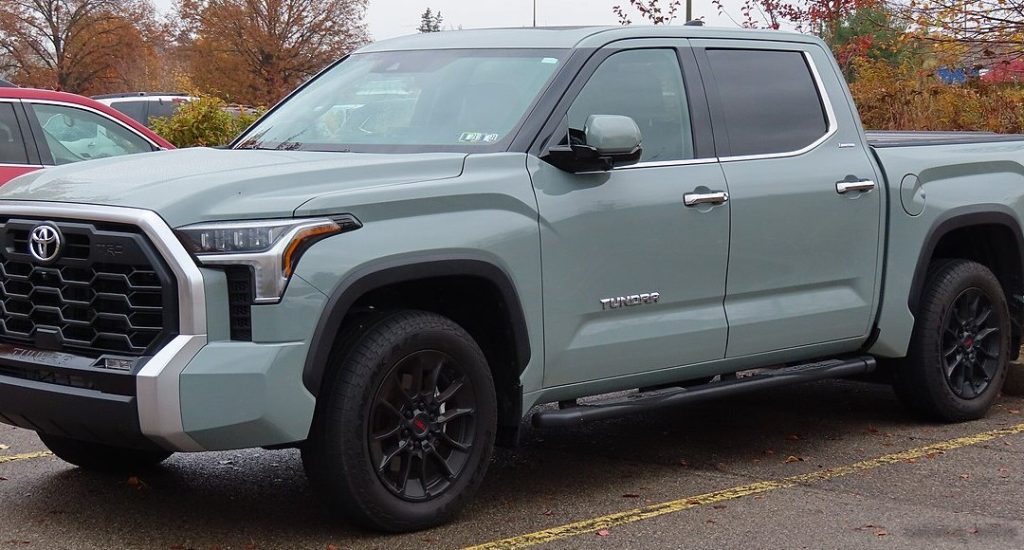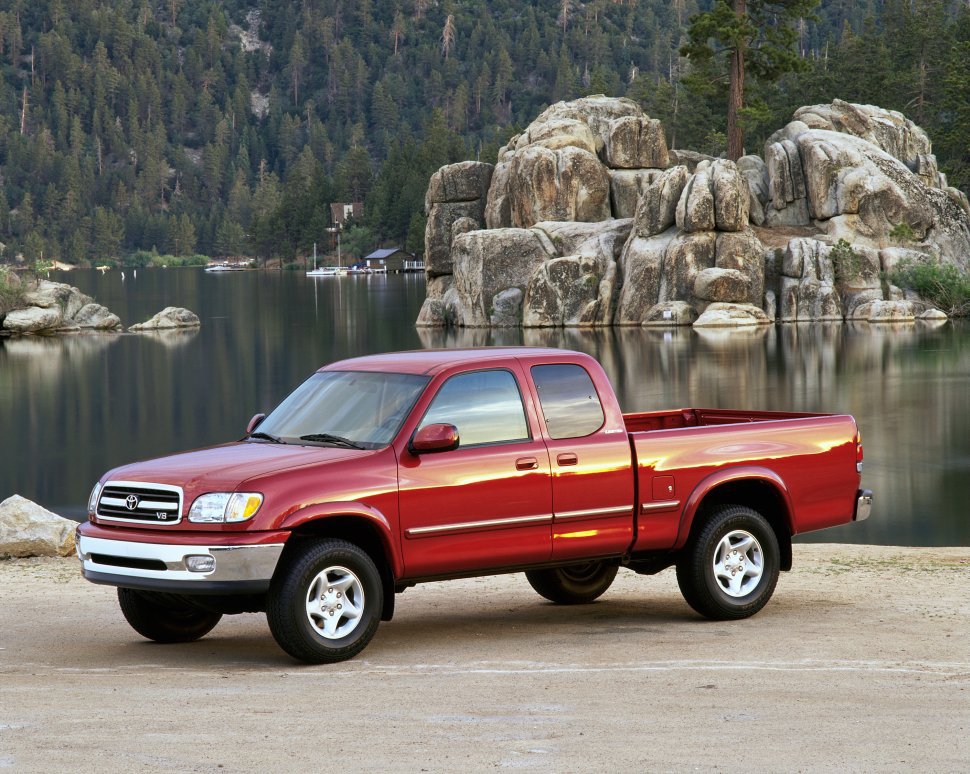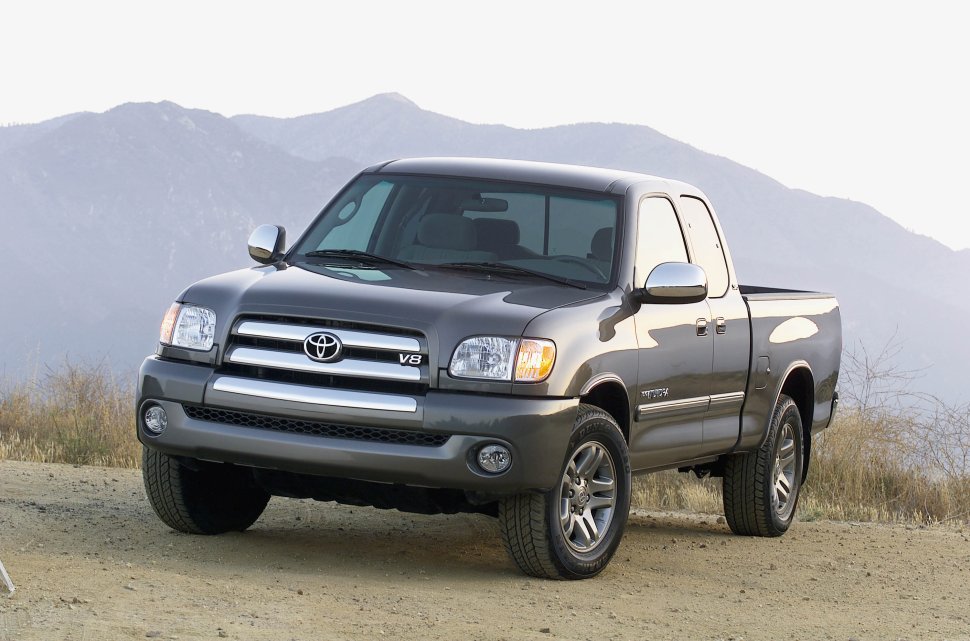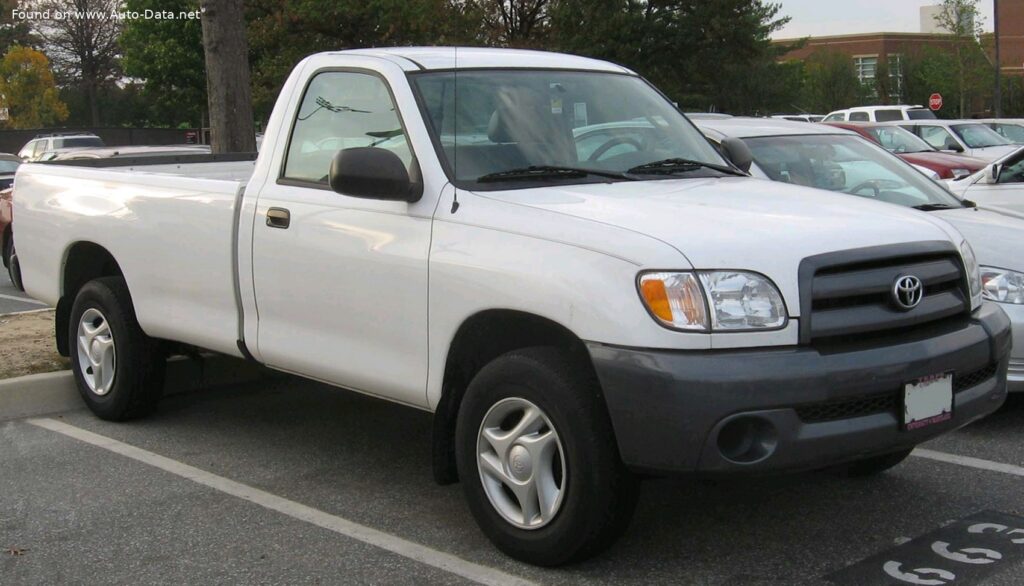
The Toyota Tundra I Regular Cab (facelift 2002) represents Toyota’s initial foray into the full-size pickup truck market in the United States, and a significant step in establishing the brand’s reputation for reliability and durability in this competitive segment. Introduced initially in 1999, the facelifted 2002 model brought refinements to styling and features, solidifying its position as a viable alternative to established American manufacturers like Ford, Chevrolet, and Dodge. This generation Tundra, produced through 2006, was primarily aimed at buyers seeking a robust, capable truck with a focus on longevity and value. The 4.7i V8 4×4 Automatic configuration, detailed here, was a popular choice, offering a balance of power and capability for both work and recreational use.
Toyota Tundra I: A New Contender
The first-generation Tundra was a pivotal model for Toyota, demonstrating the company’s commitment to understanding and catering to the specific needs of the North American truck market. Unlike some earlier attempts by foreign manufacturers, the Tundra was designed specifically for American roads and preferences. The 2002 facelift brought subtle but noticeable changes to the exterior, including revised headlights and a more refined grille, enhancing its aesthetic appeal. The Regular Cab configuration, while less popular than extended or crew cab versions, offered a more compact and affordable option for buyers prioritizing functionality over passenger space. The 4.7-liter V8 engine, coupled with a four-speed automatic transmission and a four-wheel-drive system, provided a compelling combination of performance and capability.
Engine & Performance
At the heart of the 2006 Toyota Tundra I Regular Cab (facelift 2002) 4.7i V8 4×4 Automatic lies the 2UZ-FE 4.7-liter V8 engine. This naturally aspirated powerplant produces 271 horsepower at 4800 rpm and 427 Nm (314.94 lb.-ft.) of torque at 3400 rpm. The engine features a robust cast-iron block and aluminum cylinder heads, contributing to its renowned durability. The 9.6:1 compression ratio and multi-port fuel injection system optimize combustion efficiency. Power is delivered to all four wheels through a five-speed automatic transmission with ECT (Electronic Control Transmission) functionality, allowing for adaptable shifting based on driving conditions. The longitudinal engine layout and 4×4 drivetrain provide excellent traction and stability, making it suitable for a variety of terrains and tasks. While not the fastest truck in its class, the Tundra’s powertrain prioritized reliability and consistent performance over outright speed.
Design & Features
The Toyota Tundra I Regular Cab (facelift 2002) is a traditional body-on-frame pickup truck, offering a rugged and utilitarian design. The two-door configuration provides seating for up to four passengers, although rear seat space is limited. The truck bed offers a substantial 2625 liters (92.7 cubic feet) of cargo volume, making it ideal for hauling materials or equipment. The exterior styling, while conservative by modern standards, was designed to appeal to a broad range of truck buyers. Key features included a robust suspension system – double wishbones at the front and leaf springs in the rear – designed to handle heavy loads and rough terrain. Safety features, while not as comprehensive as those found in modern vehicles, included ABS (Anti-lock Braking System) as standard equipment. The Tundra’s ride height of 269 mm (10.59 inches) provides ample ground clearance for off-road adventures. Approach and departure angles of 28° and 23° respectively, further enhance its off-road capability.
Technical Specifications
| Brand | Toyota |
| Model | Tundra |
| Generation | Tundra I Regular Cab (facelift 2002) |
| Type (Engine) | 4.7i V8 (271 Hp) 4×4 Automatic |
| Start of production | 2006 |
| End of production | 2006 |
| Powertrain Architecture | Internal Combustion engine |
| Body type | Pick-up |
| Seats | 4 |
| Doors | 2 |
| Fuel Type | Petrol (Gasoline) |
| Power | 271 Hp @ 4800 rpm |
| Power per litre | 58.1 Hp/l |
| Torque | 427 Nm @ 3400 rpm / 314.94 lb.-ft. @ 3400 rpm |
| Engine layout | Front, Longitudinal |
| Engine Model/Code | 2UZ-FE |
| Engine displacement | 4664 cm3 / 284.61 cu. in. |
| Number of cylinders | 8 |
| Engine configuration | V-engine |
| Cylinder Bore | 94 mm / 3.7 in. |
| Piston Stroke | 84 mm / 3.31 in. |
| Compression ratio | 9.6:1 |
| Number of valves per cylinder | 4 |
| Fuel injection system | Multi-port manifold injection |
| Engine aspiration | Naturally aspirated engine |
| Valvetrain | DOHC |
| Engine oil capacity | 6.2 l / 6.55 US qt | 5.46 UK qt |
| Coolant | 11.7 l / 12.36 US qt | 10.29 UK qt |
| Trunk (boot) space – maximum | 2625 l / 92.7 cu. ft. |
| Fuel tank capacity | 100 l / 26.42 US gal | 22 UK gal |
| Length | 5545 mm / 218.31 in. |
| Width | 1910 mm / 75.2 in. |
| Height | 1796 mm / 70.71 in. |
| Wheelbase | 3259 mm / 128.31 in. |
| Front track | 1681 mm / 66.18 in. |
| Rear (Back) track | 1648 mm / 64.88 in. |
| Ride height (ground clearance) | 269 mm / 10.59 in. |
| Minimum turning circle (turning diameter) | 13.6 m / 44.62 ft. |
| Approach angle | 28° |
| Departure angle | 23° |
| Drive wheel | All wheel drive (4×4) |
| Number of gears and type of gearbox | 5 gears, automatic transmission ECT |
| Front suspension | Double wishbone |
| Rear suspension | Leaf spring |
| Front brakes | Ventilated discs |
| Rear brakes | Drum |
| Assisting systems | ABS (Anti-lock braking system) |
| Steering type | Steering rack and pinion |
| Tires size | 245/70 R16; 265/70 R16; 265/65 R17 |
| Wheel rims size | 7.0J x 16; 7.5J x 17 |
The Toyota Tundra I Regular Cab (facelift 2002) 4.7i V8 4×4 Automatic, while superseded by newer generations, remains a respected vehicle among truck enthusiasts. Its reputation for reliability, combined with its capable powertrain and durable construction, ensures its continued presence on roads and trails. It represents a significant milestone in Toyota’s expansion into the North American truck market and laid the foundation for the brand’s current success in this segment.