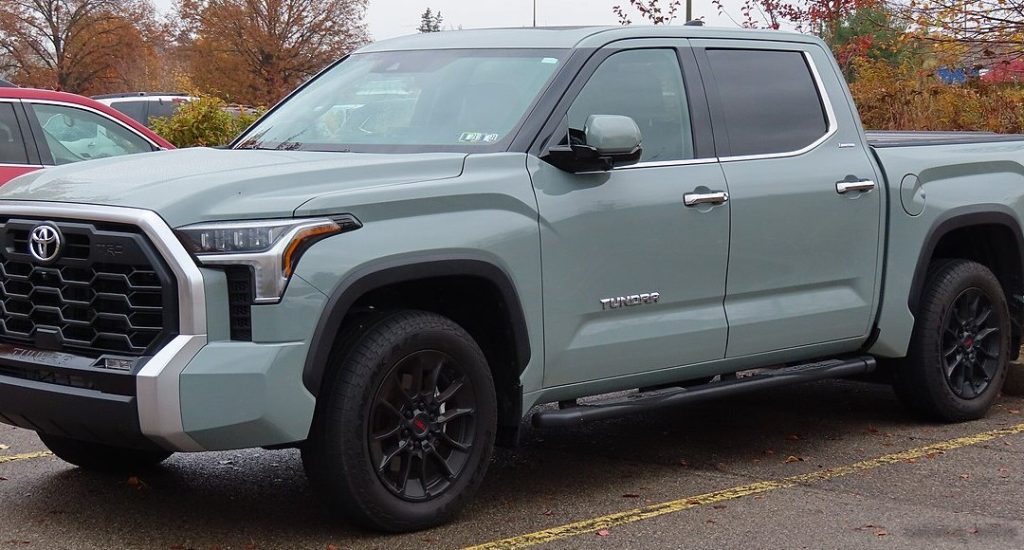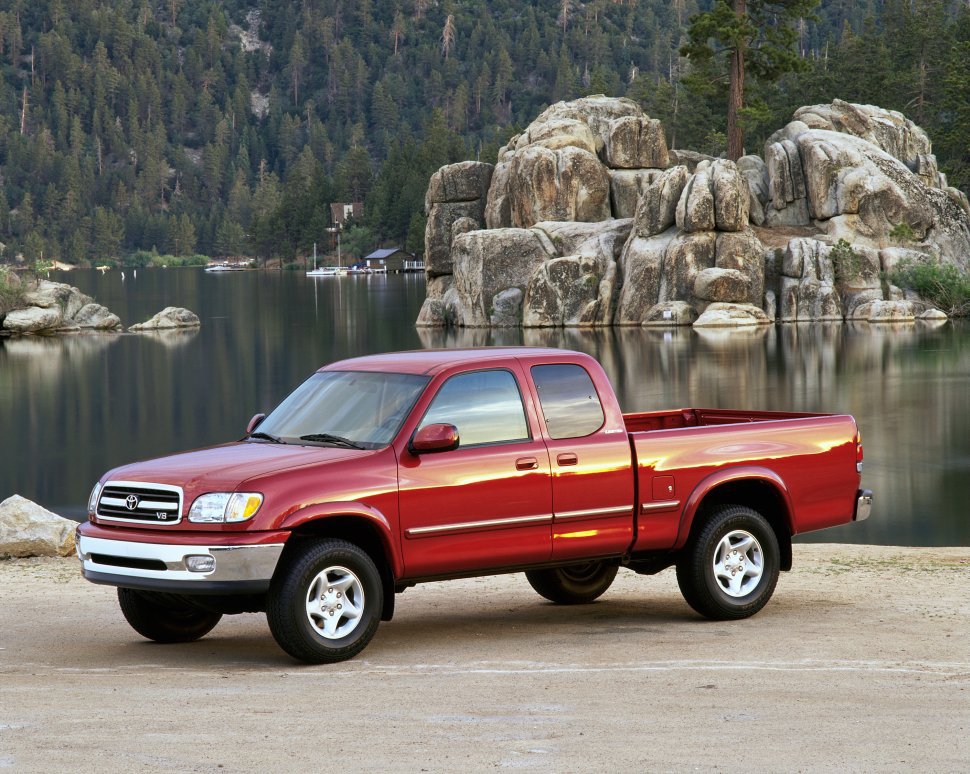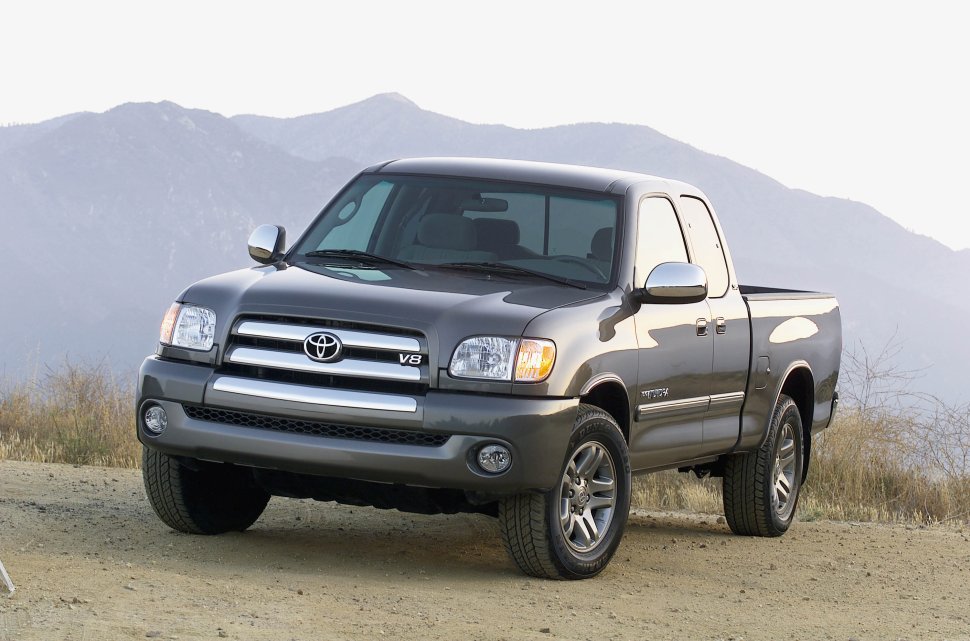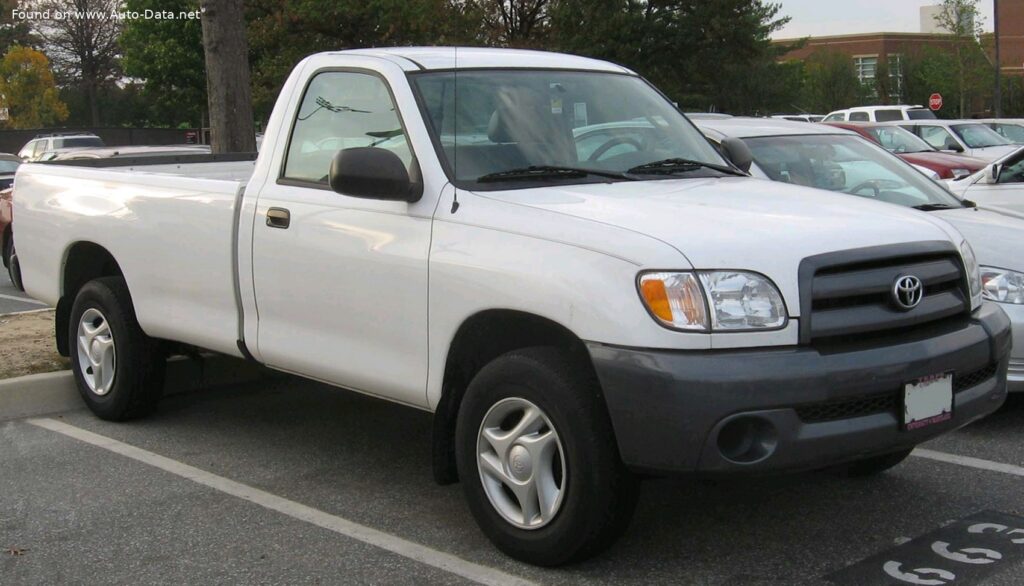
The Toyota Tundra, launched in North America in 1999, represented Toyota’s first serious foray into the full-size pickup truck market. Designed specifically to appeal to American truck buyers, it aimed to offer a blend of Japanese reliability, robust performance, and a comfortable driving experience. The first generation Tundra (UCP30/UCP40) underwent a significant facelift in 2002, and the 2005-2006 model year represents a refinement of that update. The Toyota Tundra I Regular Cab (facelift 2002) 4.7i V8 (282 Hp) 4×4 was positioned as a workhorse, offering a capable and durable option for both personal and commercial use. This model, while not achieving the sales volume of domestic competitors like Ford, Chevrolet, and Dodge, established Toyota as a legitimate contender in the full-size truck segment.
Engine & Performance
The heart of the 2005-2006 Toyota Tundra Regular Cab 4×4 is the 4.7-liter 2UZ-FE V8 engine. This naturally aspirated powerplant produces 282 horsepower at 5400 rpm and 440 Nm (324.53 lb.-ft.) of torque at 3400 rpm. The engine features a robust cast-iron block and aluminum cylinder heads, contributing to its longevity and durability. Power is delivered through a 6-speed manual transmission, providing drivers with precise control. The 4×4 drivetrain ensures excellent traction in a variety of conditions, making it suitable for both on-road and off-road applications. The weight-to-power ratio of 7.7 kg/Hp (130 Hp/tonne) and weight-to-torque ratio of 4.9 kg/Nm (202.8 Nm/tonne) indicate a respectable level of performance for a full-size truck of this era. Fuel economy is rated at 13.8 l/100 km (17 US mpg) in urban driving and 10.6 l/100 km (22.2 US mpg) on the highway.
Design & Features
The Tundra Regular Cab is a two-door pickup truck with seating for four passengers. Its body-on-frame construction provides a solid and durable platform. The 2002 facelift brought updated styling cues, including a revised front grille, headlights, and bumper. The interior, while functional, prioritized durability over luxury. Features were relatively basic compared to some competitors, focusing on providing essential functionality for work and utility. The truck bed offers a substantial 2625 liters (92.7 cu. ft.) of cargo space. Safety features for the time included ABS (Anti-lock Braking System), though modern safety technologies like airbags and stability control were less prevalent. The Tundra’s relatively high ground clearance of 269 mm (10.59 in.) and approach/departure angles of 28°/23° enhance its off-road capability. The Tundra’s design was intentionally conservative, aiming to appeal to buyers who preferred a traditional truck aesthetic.
Market Position
The Toyota Tundra was not initially a high-volume seller in the US market, but it steadily gained a reputation for reliability and build quality. It was often chosen by buyers who prioritized long-term ownership costs and dependability over flashy features or brand prestige. The Regular Cab configuration was particularly popular with commercial users and those who needed a rugged, no-frills work truck. Compared to the larger CrewMax and Double Cab models, the Regular Cab offered a more compact footprint and a lower price point.
Technical Specifications
| Brand | Toyota |
| Model | Tundra |
| Generation | Tundra I Regular Cab (facelift 2002) |
| Type (Engine) | 4.7i V8 (282 Hp) 4×4 |
| Start of production | 2005 |
| End of production | 2006 |
| Powertrain Architecture | Internal Combustion engine |
| Body type | Pick-up |
| Seats | 4 |
| Doors | 2 |
| Fuel consumption (urban) | 13.8 l/100 km (17 US mpg) |
| Fuel consumption (extra urban) | 10.6 l/100 km (22.2 US mpg) |
| Fuel Type | Petrol (Gasoline) |
| Weight-to-power ratio | 7.7 kg/Hp |
| Weight-to-torque ratio | 4.9 kg/Nm |
| Power | 282 Hp @ 5400 rpm |
| Torque | 440 Nm @ 3400 rpm (324.53 lb.-ft. @ 3400 rpm) |
| Engine layout | Front, Longitudinal |
| Engine Model/Code | 2UZ-FE |
| Engine displacement | 4664 cm3 (284.61 cu. in.) |
| Number of cylinders | 8 |
| Engine configuration | V-engine |
| Cylinder Bore | 94 mm (3.7 in.) |
| Piston Stroke | 84 mm (3.31 in.) |
| Compression ratio | 9.6:1 |
| Number of valves per cylinder | 4 |
| Fuel injection system | Multi-port manifold injection |
| Engine aspiration | Naturally aspirated engine |
| Valvetrain | DOHC |
| Engine oil capacity | 6.2 l (6.55 US qt | 5.46 UK qt) |
| Coolant capacity | 11.7 l (12.36 US qt | 10.29 UK qt) |
| Kerb Weight | 2170 kg (4784.03 lbs.) |
| Max. weight | 2857 kg (6298.61 lbs.) |
| Max load | 687 kg (1514.58 lbs.) |
| Trunk (boot) space – maximum | 2625 l (92.7 cu. ft.) |
| Fuel tank capacity | 100 l (26.42 US gal | 22 UK gal) |
| Length | 5545 mm (218.31 in.) |
| Width | 1910 mm (75.2 in.) |
| Height | 1796 mm (70.71 in.) |
| Wheelbase | 3259 mm (128.31 in.) |
| Front track | 1681 mm (66.18 in.) |
| Rear (Back) track | 1648 mm (64.88 in.) |
| Ride height (ground clearance) | 269 mm (10.59 in.) |
| Minimum turning circle | 13.6 m (44.62 ft.) |
| Approach angle | 28° |
| Departure angle | 23° |
| Drive wheel | All wheel drive (4×4) |
| Number of gears | 6 |
| Gearbox type | Manual transmission |
| Front suspension | Double wishbone |
| Rear suspension | Leaf spring |
| Front brakes | Ventilated discs |
| Rear brakes | Drum |
| Assisting systems | ABS (Anti-lock braking system) |
| Steering type | Steering rack and pinion |
| Tires size | 245/70 R16; 265/70 R16; 265/65 R17 |
| Wheel rims size | 7.0J x 16; 7.5J x 17 |