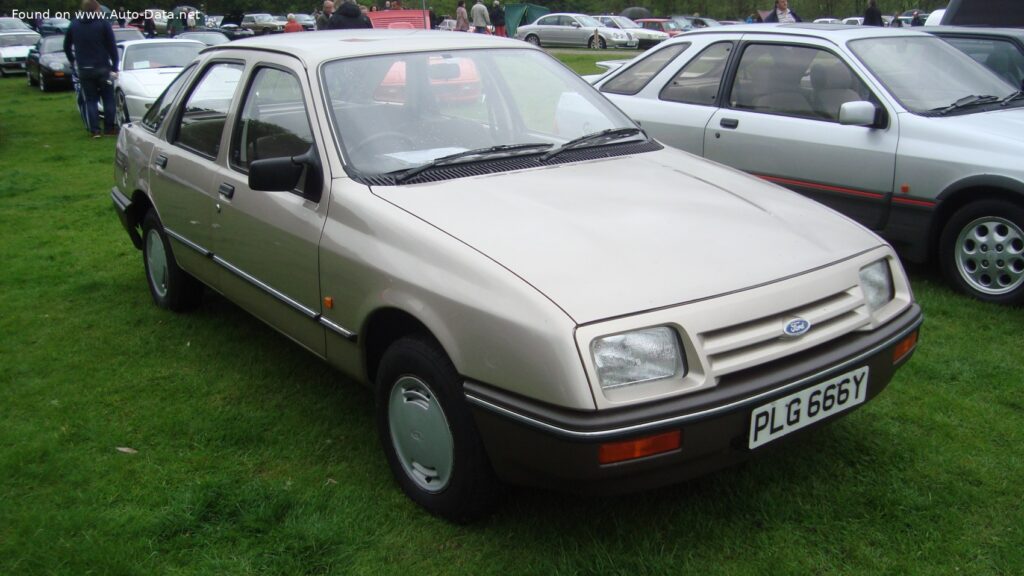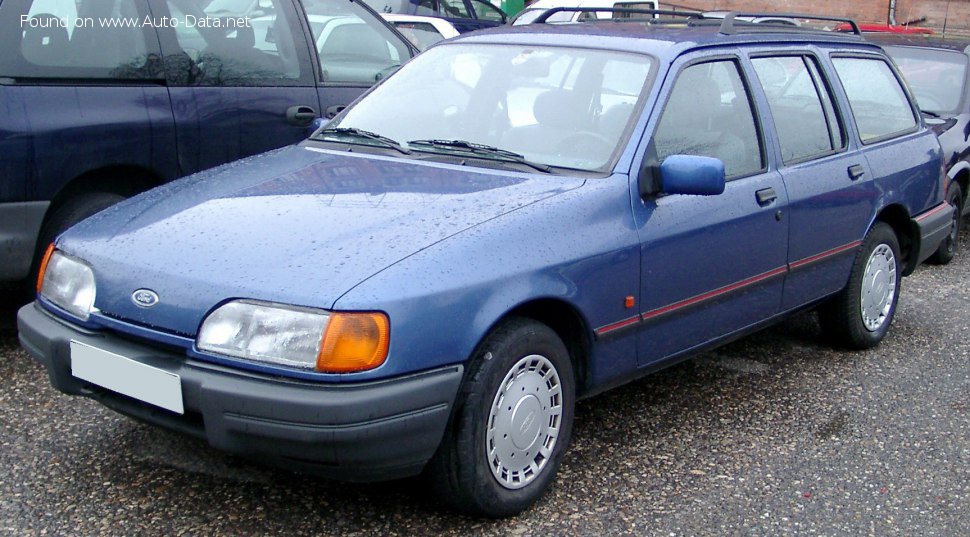
The Ford Sierra Turnier II 2.0 4×4, produced between 1990 and 1993, represents a significant evolution of Ford’s mid-size family car, the Sierra. The Turnier II, essentially a facelift of the original Sierra, offered enhanced styling, improved refinement, and, in the case of the 2.0 4×4, a capable all-wheel-drive system. While not officially sold in the United States, the Sierra was a hugely popular vehicle in Europe, competing with models like the Opel/Vauxhall Vectra, Peugeot 405, and Volkswagen Passat. The Turnier, Ford’s designation for the station wagon (estate) body style, provided a practical and versatile option for families and those requiring ample cargo space. The 2.0 4×4 variant specifically catered to buyers in regions with challenging weather conditions or those seeking added stability and traction.
The Ford Sierra Turnier II 2.0 4×4: A European Family Car
The Sierra, launched in 1982, was a radical departure from its predecessor, the Cortina. It embraced a more modern, aerodynamic design and offered a wider range of engines and trim levels. The Turnier estate version, introduced shortly after the saloon, quickly gained popularity for its practicality. The Turnier II facelift, arriving in 1990, brought subtle but noticeable changes to the exterior, including a revised front grille, headlights, and rear light clusters. The 2.0 4×4 model occupied a niche within the Sierra range, combining the spaciousness of the Turnier estate with the added security of all-wheel drive. This made it a popular choice in countries like the United Kingdom, Ireland, and Scandinavia, where inclement weather is common.
Engine & Performance
The heart of the Sierra Turnier II 2.0 4×4 is a naturally aspirated 2.0-liter inline-four cylinder petrol (gasoline) engine. This engine produced 120 horsepower, providing adequate performance for everyday driving and load-carrying duties. While not a particularly high output by modern standards, the engine’s strength lay in its reliability and relatively low-end torque. The engine is paired with a five-speed manual transmission, allowing drivers to effectively manage the power delivery and optimize fuel efficiency. The all-wheel-drive system, a key feature of this variant, distributes power to all four wheels, enhancing traction on slippery surfaces. This system wasn’t a sophisticated, electronically controlled setup like those found in many modern all-wheel-drive vehicles; rather, it employed a viscous coupling to transfer torque to the rear wheels when front wheel slip was detected. The weight-to-power ratio of 9.8 kg/Hp (or 101.7 Hp/tonne) reflects the car’s modest power output relative to its weight. This resulted in a 0-60 mph time of around 10-11 seconds, which was typical for a family car of this era.
Design & Features
The Sierra Turnier II 2.0 4×4 is a five-door station wagon (estate) with a practical and functional design. Its long roofline and large tailgate provide ample cargo space, making it ideal for families, outdoor enthusiasts, and anyone needing to transport bulky items. The interior is relatively simple and utilitarian, reflecting the car’s focus on practicality rather than luxury. The dashboard layout is straightforward, with clearly labeled controls. The seats are comfortable and supportive, providing adequate cushioning for long journeys. Safety features, while limited by the standards of the early 1990s, included seatbelts for all five occupants. Power steering, utilizing a hydraulic system, was standard, making the car easier to maneuver, especially at low speeds. The exterior styling, while not particularly flamboyant, was clean and modern for its time. The Turnier II facelift brought subtle improvements to the front and rear aesthetics, giving the car a more contemporary look. The 4×4 system added a slightly more rugged appearance, with the absence of driveshafts visible on the rear axle being a key visual differentiator.
Technical Specifications
| Brand | Ford |
| Model | Sierra |
| Generation | Sierra Turnier II |
| Type (Engine) | 2.0 4×4 (120 Hp) |
| Start of production | 1990 year |
| End of production | 1993 year |
| Powertrain Architecture | Internal Combustion engine |
| Body type | Station wagon (estate) |
| Seats | 5 |
| Doors | 5 |
| Fuel Type | Petrol (Gasoline) |
| Weight-to-power ratio | 9.8 kg/Hp |
| Horsepower/tonne | 101.7 Hp/tonne |
| Power | 120 Hp |
| Engine aspiration | Naturally aspirated engine |
| Kerb Weight | 1180 kg |
| Kerb Weight (lbs) | 2601.45 lbs. |
| Fuel tank capacity | 60 l |
| Fuel tank capacity (US gal) | 15.85 US gal |
| Fuel tank capacity (UK gal) | 13.2 UK gal |
| Length | 4511 mm |
| Length (in) | 177.6 in. |
| Width | 1720 mm |
| Width (in) | 67.72 in. |
| Height | 1428 mm |
| Height (in) | 56.22 in. |
| Wheelbase | 2608 mm |
| Wheelbase (in) | 102.68 in. |
| Front track | 1452 mm |
| Front track (in) | 57.17 in. |
| Rear track | 1468 mm |
| Rear track (in) | 57.8 in. |
| Minimum turning circle | 10 m |
| Minimum turning circle (ft) | 32.81 ft. |
| Drive wheel | All wheel drive (4×4) |
| Number of gears | 5 |
| Gearbox type | manual transmission |
| Steering type | Steering rack and pinion |
| Power steering | Hydraulic Steering |
The Ford Sierra Turnier II 2.0 4×4, while not a performance car, offered a compelling combination of practicality, reliability, and all-weather capability. It remains a fondly remembered vehicle for those who owned or drove one, representing a solid and dependable choice in the European family car market of the early 1990s. Its legacy continues through the subsequent generations of Ford estates, which have built upon the foundations laid by the Sierra Turnier.