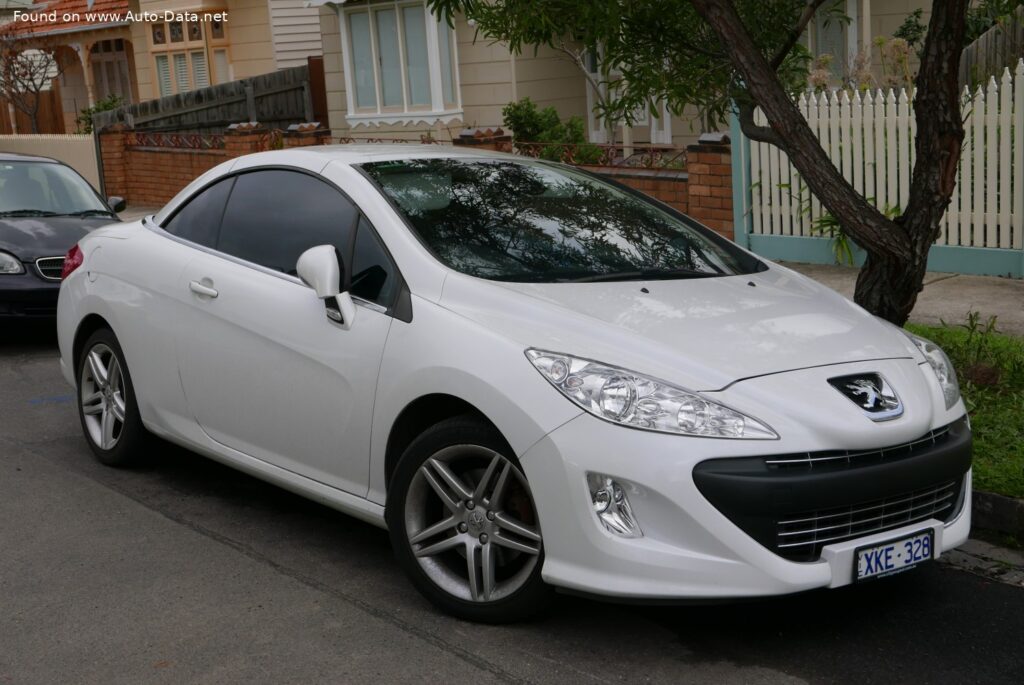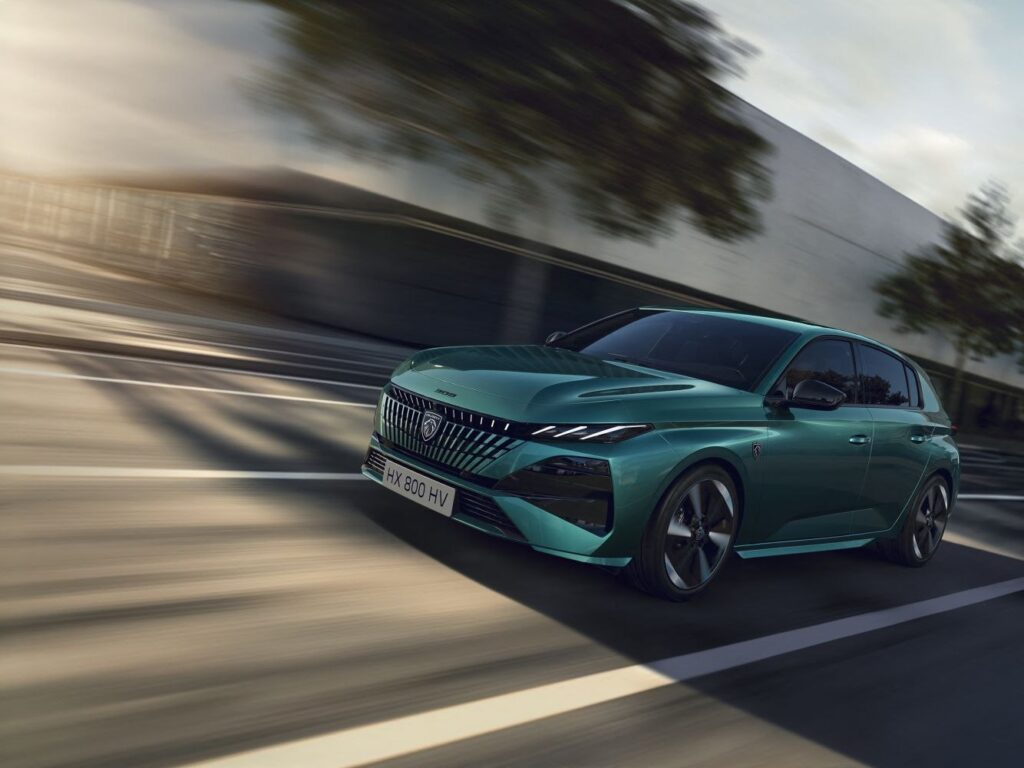
The Peugeot 308 III (Phase II), launched in October 2025, represents the latest iteration of Peugeot’s popular compact hatchback. Positioned within the highly competitive C-segment, the 308 continues to be a key model for the French manufacturer, particularly in Europe where it rivals vehicles like the Volkswagen Golf, Ford Focus, and Opel Astra. The Phase II update brings refinements to styling, technology, and powertrain options, including the 1.5 BlueHDi diesel engine paired with an EAT (Efficient Automatic Transmission). This version aims to balance fuel efficiency with everyday usability for European drivers.
Peugeot 308 III (Phase II): A Refined Compact Hatchback
The third generation Peugeot 308, introduced initially in 2021, marked a significant departure from its predecessors with a more modern design language and a greater emphasis on interior quality and technology. The Phase II update for 2025 builds upon this foundation, focusing on enhancing the driving experience and addressing customer feedback. While not officially sold in the United States, the 308 is a high-volume seller in Europe, known for its stylish design, comfortable ride, and efficient engine options. The 1.5 BlueHDi variant caters to drivers prioritizing fuel economy and lower running costs.
Engine & Performance
The 2025 Peugeot 308 1.5 BlueHDi is powered by a 1.5-liter inline four-cylinder diesel engine, designated YHZ DV5RC. This engine produces 131 horsepower at 3750 rpm and 300 Nm (221.27 lb.-ft.) of torque at 1750 rpm. The engine features a turbocharger and intercooler to optimize performance and efficiency. Power is delivered to the front wheels via an eight-speed EAT automatic transmission. This combination allows for a respectable 0-100 km/h (0-62 mph) acceleration time of 10.6 seconds and a top speed of 207 km/h (128.62 mph). The engine’s design prioritizes fuel efficiency, achieving combined fuel consumption of 4.9 l/100 km (48 US mpg), and CO2 emissions of 129 g/km, adhering to the stringent Euro 6e-bis emission standards. The inclusion of a Start & Stop system further contributes to reducing fuel consumption in urban driving conditions.
Design & Features
The 2025 Peugeot 308 Phase II maintains the sleek, modern aesthetic of the third-generation model. It’s a five-door hatchback with a practical five-seat configuration. Key design elements include Peugeot’s signature lion-claw LED lighting at the front and rear, a prominent grille, and a sculpted body profile. The interior is characterized by Peugeot’s i-Cockpit design, featuring a compact steering wheel and a raised instrument cluster. The Phase II update includes enhancements to the infotainment system and interior materials. Safety features are comprehensive, including ABS, and a range of driver-assistance systems. The 308 offers a trunk (boot) space of 412 liters (14.55 cu. ft.) with the rear seats up, expanding to 1323 liters (46.72 cu. ft.) when folded down. Practicality is further enhanced by a 52-liter (13.74 US gal) fuel tank and a maximum roof load capacity of 85 kg (187.39 lbs).
Technical Specifications
| Brand | Peugeot |
| Model | 308 |
| Generation | 308 III (Phase II, 2025) |
| Type (Engine) | 1.5 BlueHDi (131 Hp) EAT |
| Start of production | October, 2025 |
| Powertrain Architecture | Internal Combustion engine |
| Body type | Hatchback |
| Seats | 5 |
| Doors | 5 |
| Fuel consumption at Low speed (WLTP) | 6.0 l/100 km (39.2 US mpg) |
| Fuel consumption at Medium speed (WLTP) | 4.9 l/100 km (48 US mpg) |
| Fuel consumption at high speed (WLTP) | 4.3 l/100 km (54.7 US mpg) |
| Fuel consumption at very high speed (WLTP) | 5.1 l/100 km (46.1 US mpg) |
| Combined fuel consumption (WLTP) | 4.9 l/100 km (48 US mpg) |
| CO2 emissions (WLTP) | 129 g/km |
| Fuel Type | Diesel |
| Acceleration 0 – 100 km/h | 10.6 sec |
| Acceleration 0 – 62 mph | 10.6 sec |
| Acceleration 0 – 60 mph | 10.1 sec |
| Maximum speed | 207 km/h (128.62 mph) |
| Emission standard | Euro 6e-bis |
| Weight-to-power ratio | 10.5 kg/Hp |
| Weight-to-torque ratio | 4.6 kg/Nm |
| Power | 131 Hp @ 3750 rpm |
| Torque | 300 Nm @ 1750 rpm (221.27 lb.-ft. @ 1750 rpm) |
| Engine layout | Front, Transverse |
| Engine Model/Code | YHZ DV5RC |
| Engine displacement | 1499 cm3 (91.47 cu. in.) |
| Number of cylinders | 4 |
| Engine configuration | Inline |
| Cylinder Bore | 75 mm (2.95 in.) |
| Piston Stroke | 84.8 mm (3.34 in.) |
| Number of valves per cylinder | 4 |
| Fuel injection system | Diesel Commonrail |
| Engine aspiration | Turbocharger, Intercooler |
| Engine oil capacity | 4 l (4.23 US qt | 3.52 UK qt) |
| Kerb Weight | 1378-1483 kg (3037.97 – 3269.46 lbs.) |
| Max. weight | 1940 kg (4276.97 lbs.) |
| Max load | 457-562 kg (1007.51 – 1239 lbs.) |
| Trunk (boot) space – minimum | 412 l (14.55 cu. ft.) |
| Trunk (boot) space – maximum | 1323 l (46.72 cu. ft.) |
| Fuel tank capacity | 52 l (13.74 US gal | 11.44 UK gal) |
| Max. roof load | 85 kg (187.39 lbs.) |
| Permitted trailer load with brakes (12%) | 1550 kg (3417.17 lbs.) |
| Permitted trailer load without brakes | 710 kg (1565.28 lbs.) |
| Permitted towbar download | 70 kg (154.32 lbs.) |
| Length | 4367 mm (171.93 in.) |
| Width | 1852 mm (72.91 in.) |
| Height | 1438 mm (56.61 in.) |
| Wheelbase | 2675 mm (105.31 in.) |
| Front track | 1559 mm (61.38 in.) |
| Rear (Back) track | 1552 mm (61.1 in.) |
| Number of gears and type of gearbox | 8 gears, automatic transmission EAT |
| Front suspension | Independent type McPherson |
| Rear suspension | Independent multi-link suspension |
| Front brakes | Ventilated discs |
| Rear brakes | Disc |
| Tires size | 205/55 R16 90H |
| Wheel rims size | 16 |