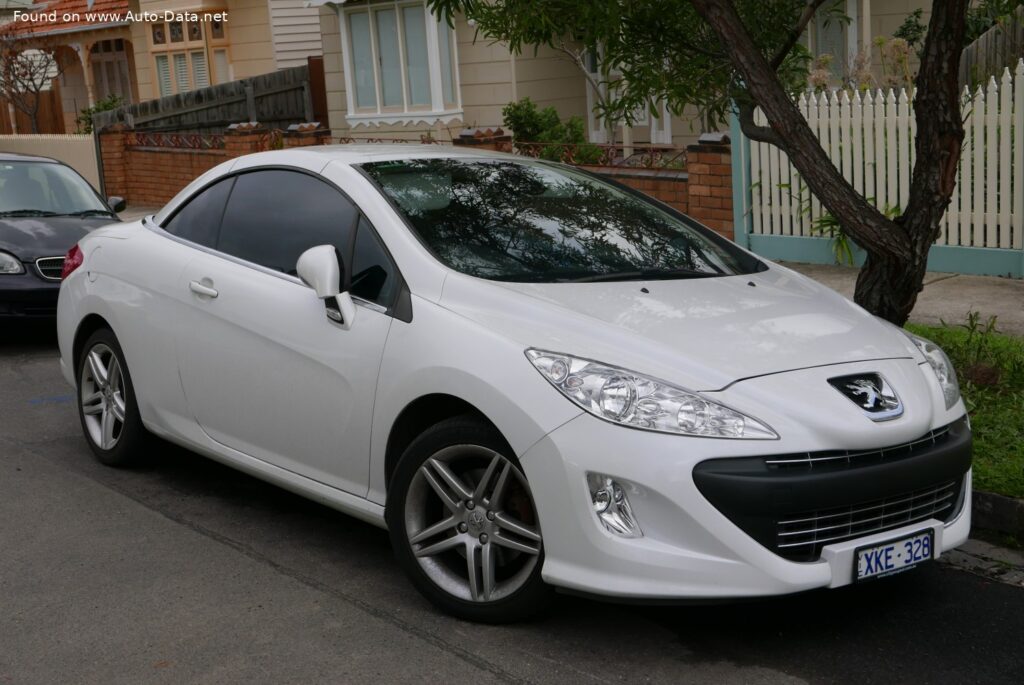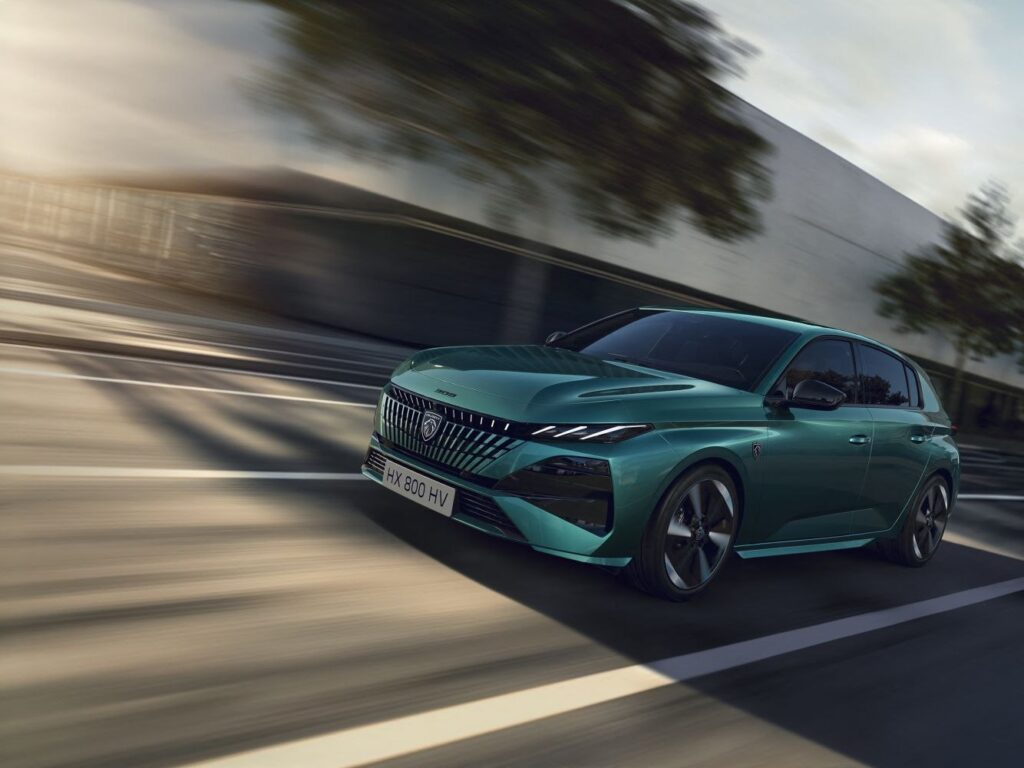
The Peugeot 308 III, particularly the Phase II iteration launched in August 2025, represents the latest evolution of Peugeot’s popular compact hatchback. Positioned within the highly competitive C-segment, the 308 competes with vehicles like the Volkswagen Golf, Ford Focus, and Opel Astra. This generation, introduced in 2021, has been refined with updated styling, enhanced technology, and a focus on electrified powertrains. The 1.6 (195 Hp) Plug-in Hybrid e-DCS model is a key variant, offering a blend of petrol engine efficiency and electric driving capability, catering to the growing demand for lower-emission vehicles in Europe and other markets.
Peugeot 308 III (Phase II, 2025) 1.6 Plug-in Hybrid e-DCS
The Phase II update for the 308 III brings subtle but significant changes to the exterior design, interior materials, and infotainment system. The 1.6 Plug-in Hybrid e-DCS variant is a cornerstone of Peugeot’s strategy to offer a fully electrified range by 2030. This model combines a 1.6-liter petrol engine with an electric motor and a lithium-ion battery pack, allowing for both all-electric driving and extended range when needed. The ‘e-DCS’ designation refers to the dual-clutch transmission used in conjunction with the hybrid system, providing smooth and efficient gear changes.
Engine & Performance
The heart of the 308 III 1.6 Plug-in Hybrid e-DCS is a 1.6-liter, turbocharged inline-four cylinder petrol engine producing 150 horsepower at 5500 rpm and 250 Nm (184.39 lb-ft) of torque at 1750 rpm. This engine is paired with a 125 horsepower electric motor, delivering an additional 118 Nm (87.03 lb-ft) of torque between 300-7320 rpm. The combined system output is 195 horsepower and 360 Nm (265.52 lb-ft) of torque. This powertrain allows for a 0-100 km/h (0-62 mph) acceleration time of 7.6 seconds and a top speed of 225 km/h (139.81 mph). The vehicle achieves a combined fuel consumption of 2.4 l/100 km (98 US mpg / 117.7 UK mpg) and CO2 emissions of 54 g/km (WLTP), making it a highly efficient option. The electric motor is strategically positioned between the combustion engine and the transmission.
Design & Features
The Peugeot 308 III maintains the sleek and modern design language established by recent Peugeot models. As a five-door hatchback, it offers a practical and stylish body style. The Phase II updates include a revised front grille, new headlight designs, and updated interior trim options. Key features of the 308 III include a digital instrument cluster (Peugeot i-Cockpit), a large touchscreen infotainment system, and a range of advanced driver-assistance systems (ADAS). Safety features are comprehensive, including automatic emergency braking, lane-keeping assist, and adaptive cruise control. The interior is designed with a focus on quality materials and a comfortable driving experience. The trunk space is 314 liters (11.09 cu. ft.), providing adequate storage for everyday needs. The battery pack is located under the floor, beneath the rear seats, minimizing intrusion into the passenger or cargo areas.
Technical Specifications
| Brand | Peugeot |
| Model | 308 |
| Generation | 308 III (Phase II, 2025) |
| Type (Engine) | 1.6 (195 Hp) Plug-in Hybrid e-DCS |
| Start of production | August, 2025 |
| Powertrain Architecture | PHEV (Plug-in Hybrid Electric Vehicle) |
| Body type | Hatchback |
| Seats | 5 |
| Doors | 5 |
| Combined fuel consumption (WLTP) | 2.4 l/100 km (98 US mpg / 117.7 UK mpg / 41.7 km/l) |
| CO2 emissions (WLTP) | 54 g/km |
| Fuel Type | Petrol / electricity |
| Acceleration 0 – 100 km/h | 7.6 sec |
| Acceleration 0 – 62 mph | 7.6 sec |
| Acceleration 0 – 60 mph | 7.2 sec |
| Maximum speed | 225 km/h (139.81 mph) |
| Emission standard | Euro 6e |
| Weight-to-power ratio | 8.4 kg/Hp, 119.3 Hp/tonne |
| Weight-to-torque ratio | 4.5 kg/Nm, 220.2 Nm/tonne |
| Gross battery capacity | 17.2 kWh |
| Battery voltage | 400 V |
| Battery technology | Lithium-ion (Li-Ion) |
| Battery weight | 141 kg (310.85 lbs) |
| Battery location | Below the floor, under the rear seats |
| All-electric range (WLTP) | 85 km (52.82 mi) |
| Electric motor power | 125 Hp @ 2500 rpm |
| Electric motor Torque | 118 Nm @ 300-7320 rpm (87.03 lb.-ft. @ 300-7320 rpm) |
| Electric motor location | Between the combustion engine and the transmission |
| Electric motor type | Synchronous |
| System power | 195 Hp |
| System torque | 360 Nm (265.52 lb.-ft) |
| Power | 150 Hp @ 5500 rpm |
| Torque | 250 Nm @ 1750 rpm (184.39 lb.-ft. @ 1750 rpm) |
| Engine layout | Front, Transverse |
| Engine Model/Code | 5G11 |
| Engine displacement | 1598 cm3 (97.52 cu. in) |
| Number of cylinders | 4 |
| Engine configuration | Inline |
| Number of valves per cylinder | 4 |
| Fuel injection system | Direct injection |
| Engine aspiration | Turbocharger, Intercooler |
| Engine oil capacity | 4.25 l (4.49 US qt | 3.74 UK qt) |
| Kerb Weight | 1635 kg (3604.56 lbs) |
| Max. weight | 2140 kg (4717.89 lbs) |
| Max load | 505 kg (1113.33 lbs) |
| Trunk (boot) space – minimum | 314 l (11.09 cu. ft) |
| Fuel tank capacity | 40 l (10.57 US gal | 8.8 UK gal) |
| Permitted trailer load with brakes (12%) | 1360 kg (2998.29 lbs) |
| Length | 4360 mm (171.65 in) |
| Width | 1850 mm (72.83 in) |
| Height | 1480 mm (58.27 in) |
| Wheelbase | 2730 mm (107.48 in) |
| Drag coefficient (Cd) | 0.29 |
| Minimum turning circle (turning diameter) | 10.95 m (35.93 ft) |
| Drivetrain Architecture | Front wheel drive. PHEV. ICE and electric motor drive front wheels. |
| Drive wheel | Front wheel drive |
| Number of gears and type of gearbox | 7 gears, automatic transmission e-DCS |
| Front suspension | Independent type McPherson |
| Rear suspension | Torsion |
| Front brakes | Ventilated discs, 330×30 mm |
| Rear brakes | Disc, 290×12 mm |
| Assisting systems | ABS (Anti-lock braking system) |
| Steering type | Steering rack and pinion |
| Power steering | Electric Steering |
| Tires size | 225/45 R17 V; 225/40 R18 Y |
| Wheel rims size | 17; 18 |