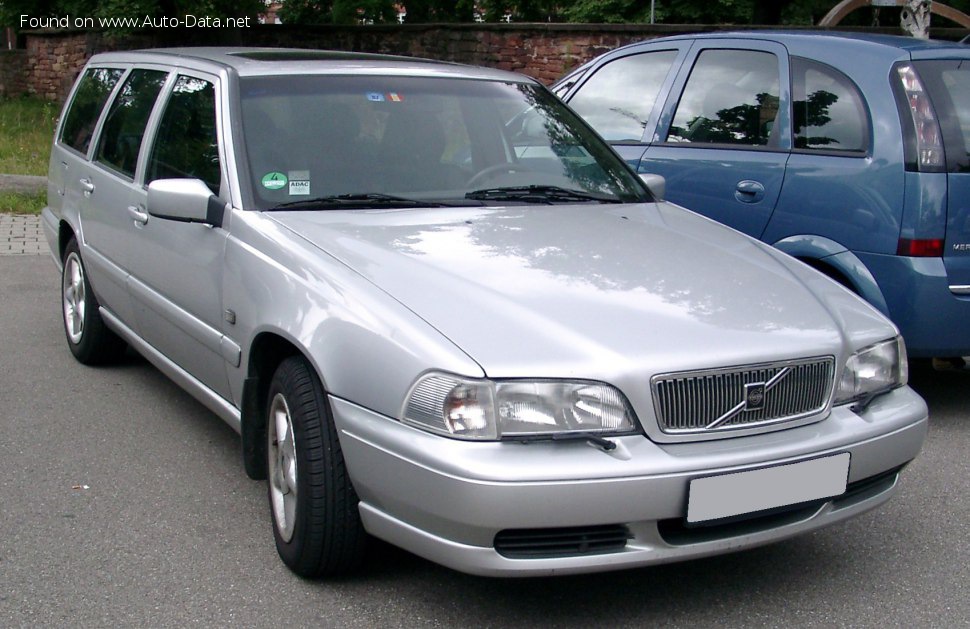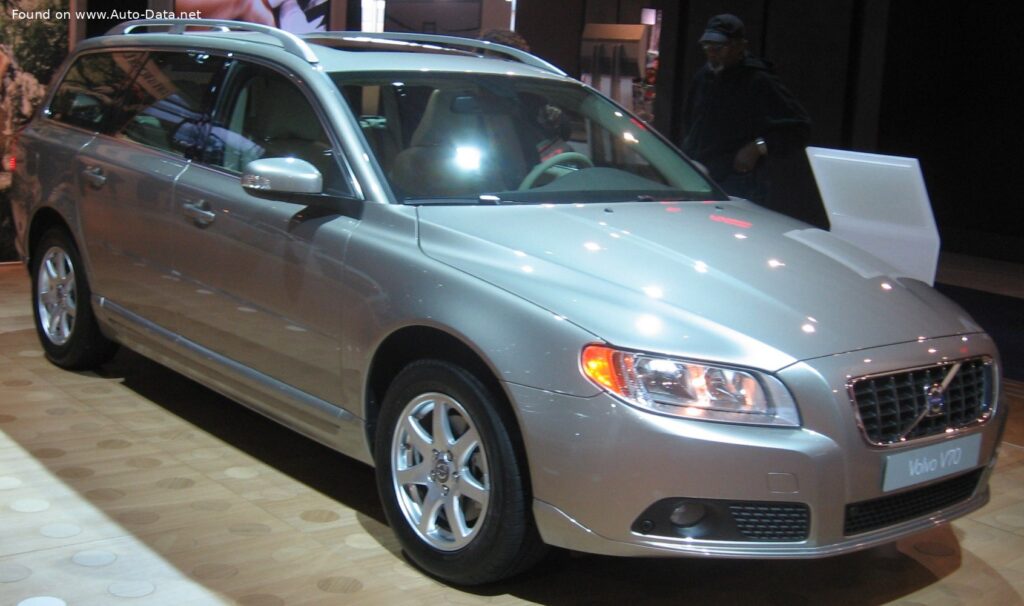
The Volvo V70 III 2.5 FT (231 Hp) Ethanol, produced between 2009 and 2012, represents the third generation of Volvo’s popular station wagon, the V70. Positioned within the mid-size executive wagon segment, the V70 aimed to combine practicality, safety, and Scandinavian design. This particular variant is notable for its flexible-fuel capability, designed to run on both gasoline and E85 ethanol, catering to markets with incentives for biofuel use. While not widely sold in the United States, the V70 held a significant position in the European market as a premium alternative to more mainstream offerings, known for its comfortable ride and spacious interior.
Volvo V70 III 2.5 FT: A Detailed Overview
The V70 III built upon the success of its predecessors, offering a refined and sophisticated package. It shared its platform with the Volvo S80, providing a solid foundation for a comfortable and capable vehicle. The 2.5 FT model, with its turbocharged five-cylinder engine, offered a balance of performance and fuel efficiency, particularly when utilizing E85 fuel. Volvo’s commitment to safety remained a core tenet of the V70 III, incorporating numerous advanced safety features for its time.
Engine & Performance
At the heart of the V70 III 2.5 FT lies a 2.5-liter inline five-cylinder turbocharged engine, designated the B5254T11. This engine produces 231 horsepower at 4800 rpm and 340 Nm (250.77 lb.-ft.) of torque between 1680 and 4800 rpm. The turbocharger and intercooler work in tandem to deliver responsive performance across a broad rev range. The engine’s flexible-fuel capability allows it to run on gasoline or E85 ethanol, or any blend thereof. When running on E85, fuel consumption increases to 12.3 l/100 km, but the engine benefits from the higher octane rating, potentially offering slightly improved performance. The engine is transversely mounted and features multi-port fuel injection and a double overhead camshaft (DOHC) valvetrain with four valves per cylinder. Acceleration from 0 to 100 km/h (0-62 mph) takes 7.7 seconds, while 0-60 mph is achieved in approximately 7.3 seconds. The V70 III 2.5 FT boasts a maximum speed of 210 km/h (130.49 mph).
Design & Features
The Volvo V70 III embodies the classic Scandinavian design aesthetic – understated elegance and functional practicality. Its station wagon (estate) body style provides a generous cargo capacity of 575 liters (20.31 cu. ft.) with the rear seats up, expanding significantly when folded down. The vehicle seats five passengers comfortably and features five doors for easy access. The interior is characterized by its clean lines, high-quality materials, and ergonomic design. Key features include a spacious cabin, comfortable seating, and a well-integrated infotainment system for its time. Safety was paramount, and the V70 III included features such as Anti-lock Braking System (ABS), side impact protection system (SIPS), and a robust chassis designed to protect occupants in the event of a collision. The vehicle’s drag coefficient of 0.31 contributes to its aerodynamic efficiency. The V70 III also offered a range of optional features, including leather upholstery, premium audio systems, and advanced climate control.
Technical Specifications
| Brand | Volvo |
| Model | V70 |
| Generation | V70 III |
| Type (Engine) | 2.5 FT (231 Hp) Ethanol |
| Start of production | 2009 |
| End of production | 2012 |
| Powertrain Architecture | Internal Combustion engine |
| Body type | Station wagon (estate) |
| Seats | 5 |
| Doors | 5 |
| Fuel consumption (economy) – combined | 8.8 l/100 km |
| Fuel consumption (economy) – combined (Ethanol – E85) | 12.3 l/100 km |
| CO2 emissions | 209 g/km |
| CO2 emissions (Ethanol – E85) | 201 g/km |
| Fuel Type | Petrol / Ethanol – E85 |
| Acceleration 0 – 100 km/h | 7.7 sec |
| Acceleration 0 – 62 mph | 7.7 sec |
| Acceleration 0 – 60 mph | 7.3 sec |
| Maximum speed | 210 km/h (130.49 mph) |
| Power | 231 Hp @ 4800 rpm |
| Torque | 340 Nm @ 1680-4800 rpm (250.77 lb.-ft. @ 1680-4800 rpm) |
| Maximum engine speed | 6500 rpm |
| Engine layout | Front, Transverse |
| Engine Model/Code | B5254T11 |
| Engine displacement | 2521 cm3 (153.84 cu. in.) |
| Number of cylinders | 5 |
| Engine configuration | Inline |
| Cylinder Bore | 83 mm (3.27 in.) |
| Piston Stroke | 93.2 mm (3.67 in.) |
| Compression ratio | 9:1 |
| Number of valves per cylinder | 4 |
| Fuel injection system | Multi-port manifold injection |
| Engine aspiration | Turbocharger, Intercooler |
| Valvetrain | DOHC |
| Engine oil capacity | 5.5 l (5.81 US qt | 4.84 UK qt) |
| Coolant | 9 l (9.51 US qt | 7.92 UK qt) |
| Kerb Weight | 1577 kg (3476.69 lbs.) |
| Max. weight | 2260 kg (4982.45 lbs.) |
| Max load | 683 kg (1505.76 lbs.) |
| Trunk (boot) space – minimum | 575 l (20.31 cu. ft.) |
| Fuel tank capacity | 70 l (18.49 US gal | 15.4 UK gal) |
| Max. roof load | 100 kg (220.46 lbs.) |
| Permitted trailer load with brakes (12%) | 1600 kg (3527.4 lbs.) |
| Permitted trailer load without brakes | 750 kg (1653.47 lbs.) |
| Permitted towbar download | 75 kg (165.35 lbs.) |
| Length | 4823 mm (189.88 in.) |
| Width | 1861 mm (73.27 in.) |
| Width with mirrors folded | 1907 mm (75.08 in.) |
| Width including mirrors | 2106 mm (82.91 in.) |
| Height | 1547 mm (60.91 in.) |
| Wheelbase | 2816 mm (110.87 in.) |
| Front track | 1588 mm (62.52 in.) |
| Rear (Back) track | 1586 mm (62.44 in.) |
| Front overhang | 978 mm (38.5 in.) |
| Rear overhang | 1029 mm (40.51 in.) |
| Ride height (ground clearance) | 151 mm (5.94 in.) |
| Drag coefficient (Cd) | 0.31 |
| Minimum turning circle (turning diameter) | 11.7 m (38.39 ft.) |
| Drive wheel | Front wheel drive |
| Number of gears and type of gearbox | 6 gears, manual transmission |
| Front suspension | Independent, type McPherson with coil spring and anti-roll bar |
| Rear suspension | Independent multi-link spring suspension with stabilizer |
| Front brakes | Ventilated discs |
| Rear brakes | Disc |
| Assisting systems | ABS (Anti-lock braking system) |
| Steering type | Steering rack and pinion |
| Power steering | Hydraulic Steering |
| Tires size | 225/55 R16 |
| Wheel rims size | 7J x 16 |