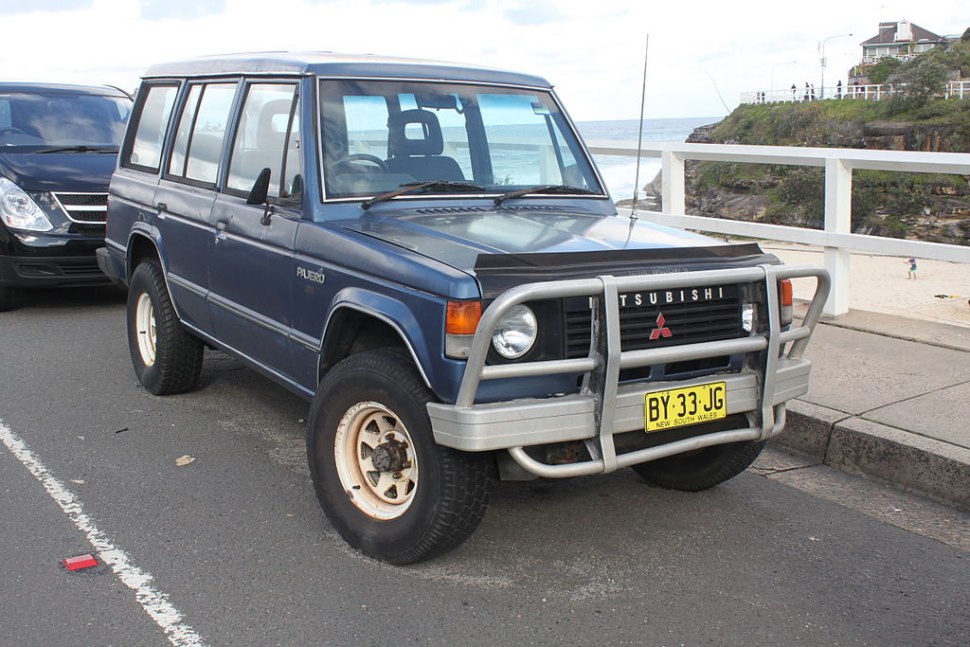
The Mitsubishi Pajero II Canvas Top (V2_W, V4_W) represents a unique iteration of Mitsubishi’s highly capable Pajero SUV, produced from 1994 to 2000. While the Pajero nameplate was known in the United States as the Montero, the Canvas Top variant was primarily aimed at markets outside North America, particularly Australia, Europe, and Asia. This model distinguished itself with a removable canvas top, offering an open-air driving experience combined with the Pajero’s renowned off-road prowess. The Pajero II generation, launched in 1991, significantly improved upon its predecessor with enhanced refinement, more powerful engines, and a more sophisticated four-wheel-drive system. The Canvas Top version catered to buyers seeking adventure and a connection with the outdoors, blending practicality with a sense of freedom. It occupied the mid-size SUV segment, competing with vehicles like the Toyota Land Cruiser Prado and Nissan Patrol.
Mitsubishi Pajero II Canvas Top: A Detailed Overview
The Pajero II, and specifically the Canvas Top variant, built upon the success of the original Pajero, which had established Mitsubishi as a serious contender in the off-road SUV market. The second generation brought a more modern aesthetic and a host of mechanical improvements. The Canvas Top, with its removable roof section, offered a distinctive appeal, particularly in regions with favorable climates. It allowed for open-air motoring while retaining the security and weather protection of a traditional SUV when the top was in place. This model wasn’t simply a cosmetic variation; it shared the same robust mechanical underpinnings as other Pajero II models, ensuring it could handle challenging terrain. The V2_W and V4_W designations refer to variations within the series, often relating to minor equipment differences or regional specifications.
Engine & Performance
The Mitsubishi Pajero II Canvas Top 3.0 V6 24V was typically powered by a 3.0-liter V6 gasoline engine, producing 181 horsepower. This engine, while not exceptionally powerful by modern standards, provided ample torque for both on-road driving and off-road excursions. The 24-valve configuration contributed to improved breathing and efficiency compared to earlier iterations. The engine was naturally aspirated, meaning it did not utilize a turbocharger or supercharger, relying instead on displacement and valve timing for its performance. Power was delivered through a four-speed automatic or a five-speed manual transmission, depending on the market and specific model year.
The Pajero II’s strength lay in its sophisticated four-wheel-drive system. It typically featured a selectable four-wheel-drive mode with low range gearing, enabling it to tackle steep inclines, rocky terrain, and muddy conditions. Many models also included a limited-slip differential, further enhancing traction. The suspension system, consisting of independent double wishbones at the front and a multi-link setup at the rear, provided a comfortable ride on paved roads while maintaining excellent articulation for off-road capability. While performance figures varied slightly depending on transmission and regional specifications, the Pajero II Canvas Top offered a balanced combination of on-road refinement and off-road prowess.
Design & Features
The Pajero II Canvas Top retained the classic SUV silhouette of the time, characterized by a boxy shape and a high ride height. The key distinguishing feature, of course, was the removable canvas top, which consisted of a multi-panel section that could be easily detached, transforming the vehicle into an open-air vehicle. When the top was removed, it offered a spacious and airy cabin experience. The body-on-frame construction provided exceptional durability and torsional rigidity, essential for off-road driving.
Inside, the Pajero II Canvas Top offered a practical and functional interior. While not luxurious, it provided comfortable seating for five passengers. Features typically included air conditioning, power windows, and a basic audio system. Safety features, while limited by the standards of the 1990s, generally included seatbelts and, in some markets, anti-lock brakes. The interior was designed with durability in mind, utilizing robust materials that could withstand the rigors of off-road use. The Canvas Top variant often featured reinforced roll bars integrated into the chassis for added safety in the event of a rollover. The Pajero II’s design prioritized functionality and practicality, making it a versatile vehicle for both everyday use and adventurous expeditions.
Technical Specifications
| Brand | Mitsubishi |
| Model | Pajero |
| Generation | Pajero II Canvas Top (V2_W, V4_W) |
| Type (Engine) | 3.0 V6 24V (181 Hp) |
| Start of production | 1994 |
| End of production | 2000 |
| Powertrain Architecture | Internal Combustion engine |
| Body type | SUV |
| Fuel Type | Petrol (Gasoline) |
| Power | 181 Hp |
| Engine aspiration | Naturally aspirated engine |
The Mitsubishi Pajero II Canvas Top, while not widely available in the United States, remains a popular and respected SUV in many parts of the world. Its combination of off-road capability, open-air enjoyment, and robust construction has earned it a loyal following. The Pajero II represents a significant step forward in Mitsubishi’s SUV development, laying the groundwork for future generations of the Pajero and solidifying its reputation as a capable and reliable off-road vehicle. Its enduring appeal lies in its ability to offer a unique and adventurous driving experience, blending practicality with a sense of freedom.