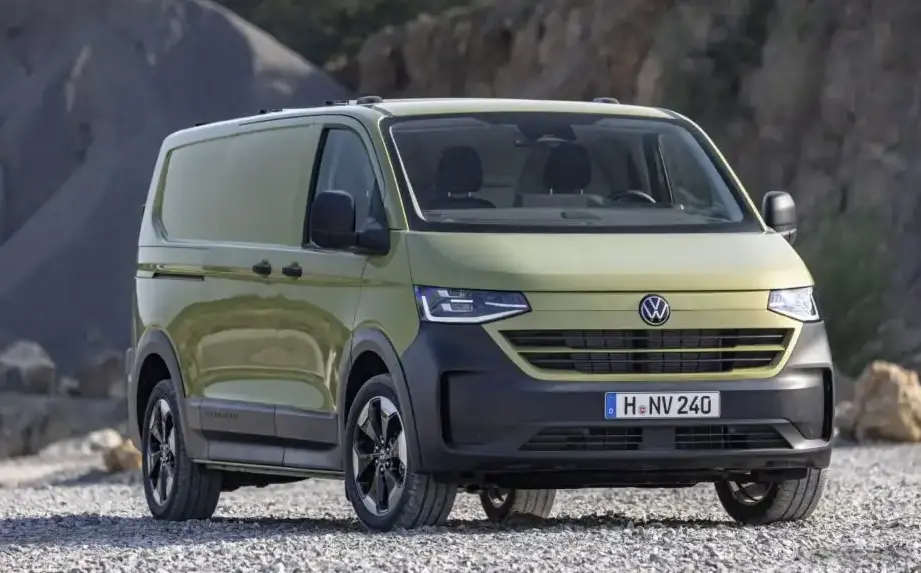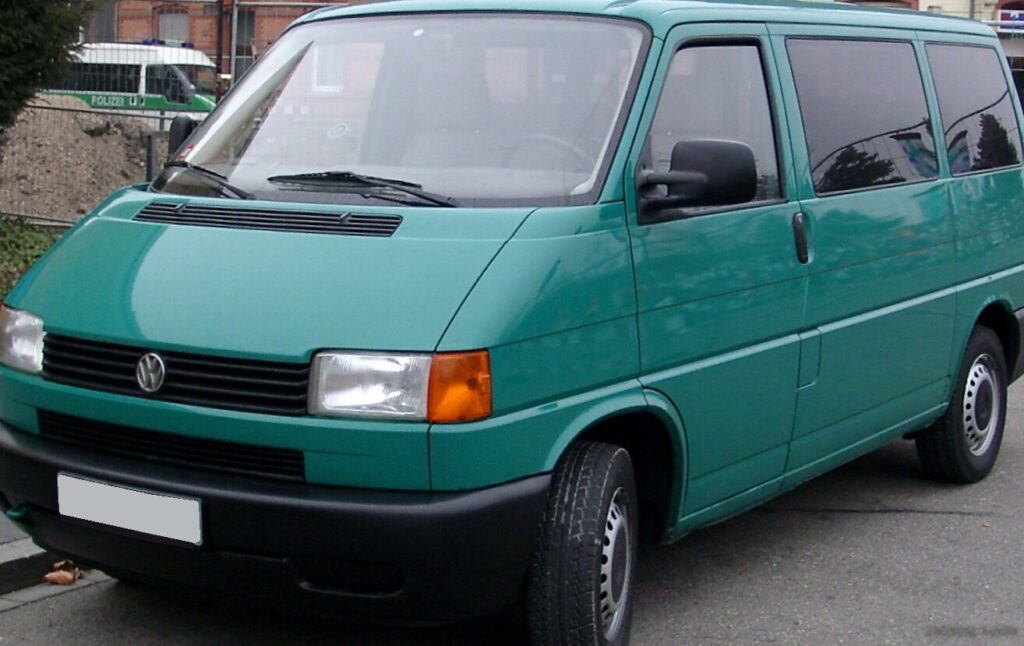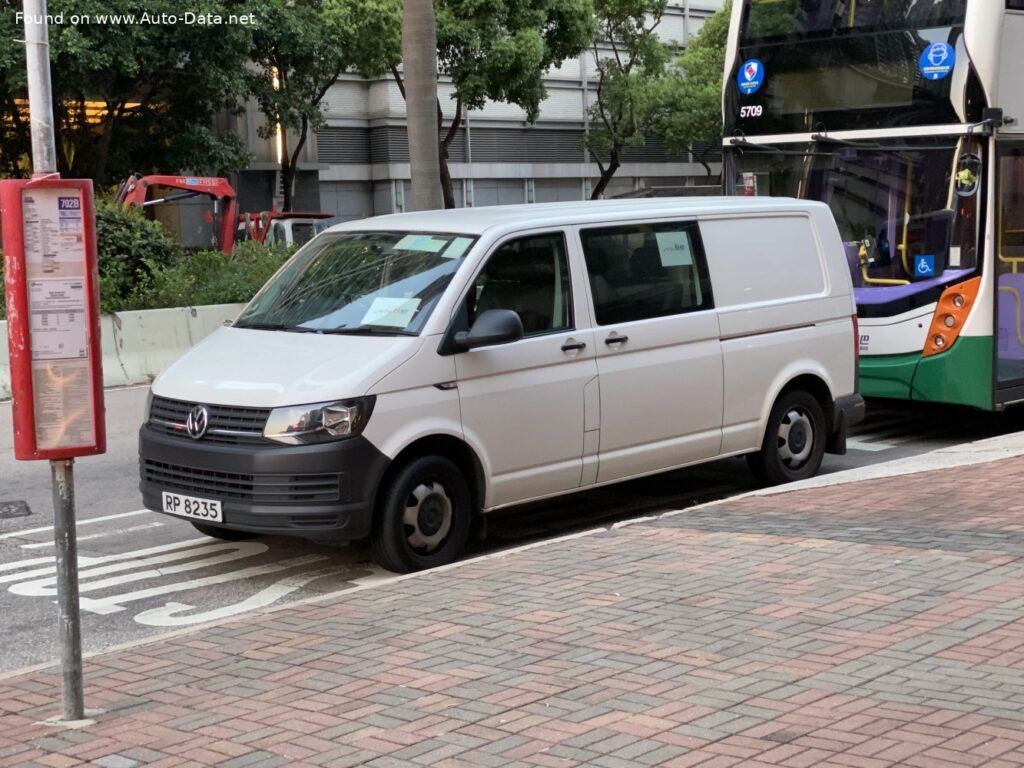
The Volkswagen Transporter (T6) Kombi Doka Plus 2.0 TSI (150 Hp) L2H1 represents a significant iteration in Volkswagen’s long-running Transporter lineage. Produced from 2015 to 2019, this variant caters to a diverse range of commercial and personal transport needs, particularly within the European market. While not widely sold in the United States due to import restrictions and differing market preferences for larger vans, the T6 Transporter is renowned for its versatility, build quality, and efficient engine options. The “Kombi” designation signifies a passenger-carrying configuration, while “Doka Plus” indicates a crew cab layout with a reinforced cargo area, and “L2H1” denotes the vehicle’s length and roof height – a long wheelbase and a low roof.
Volkswagen Transporter (T6) Kombi Doka Plus: An Overview
The T6 generation of the Transporter built upon the success of its predecessors, offering improved fuel efficiency, enhanced safety features, and a more refined driving experience. It served as a workhorse for tradespeople, a family vehicle, and a base for campervan conversions. The 2.0 TSI engine, producing 150 horsepower, provided a balance between performance and economy, making it a popular choice for those requiring a practical and reliable vehicle. The T6 Transporter competed with other European vans like the Ford Transit, Mercedes-Benz Vito, and Fiat Ducato, offering a compelling alternative with its characteristic Volkswagen engineering.
Engine & Performance
The heart of the Transporter (T6) Kombi Doka Plus 2.0 TSI (150 Hp) L2H1 is a 2.0-liter turbocharged inline-four cylinder gasoline engine, identified by the engine code CJKB. This engine, part of the EA888 family, delivers a maximum power output of 150 horsepower at 3750-6000 rpm and a torque of 280 Nm (206.52 lb.-ft.) between 1500-3750 rpm. The direct injection system and turbocharger contribute to both performance and fuel efficiency. Power is sent to the front wheels via a six-speed manual transmission. Acceleration from 0 to 100 km/h (0-62 mph) takes approximately 11 seconds, while 0-60 mph is achieved in around 10.5 seconds. The vehicle boasts a top speed of 182 km/h (113.09 mph). Fuel consumption, measured using the NEDC standard, ranges from 9.1 to 9.8 liters per 100 kilometers (25.8 to 24 US mpg), with CO2 emissions between 208 and 224 g/km. The engine’s power-to-weight ratio is 78.9 hp per tonne, and the torque-to-weight ratio is 147.4 Nm per tonne.
Design & Features
The T6 Transporter Kombi Doka Plus L2H1 is a van characterized by its practical and functional design. It features a four or five-door configuration and offers seating for five to six passengers. The “Doka Plus” variant includes a reinforced cargo area behind the crew cab, making it suitable for carrying tools, equipment, or luggage. The L2H1 designation indicates a long wheelbase (3400 mm / 133.86 in.) and a low roof height (1990 mm / 78.35 in.). The vehicle’s dimensions are 5304 mm (208.82 in.) in length and 1904 mm (74.96 in.) in width. The T6 incorporated modern safety features for its time, including ABS (Anti-lock Braking System) and driver/passenger airbags. Interior features focused on practicality and durability, with hard-wearing materials and a functional dashboard layout. The large cargo area, with a maximum capacity of 4400 liters (155.38 cu. ft.), is a key selling point. Other notable features include a 80-liter (21.13 US gal) fuel tank, a Start & Stop system for improved fuel economy, and a maximum roof load capacity of 100 kg (220.46 lbs).
Technical Specifications
| Brand | Volkswagen |
| Model | Transporter |
| Generation | Transporter (T6) Kombi Doka Plus |
| Type (Engine) | 2.0 TSI (150 Hp) L2H1 |
| Start of production | 2015 year |
| End of production | 2019 year |
| Powertrain Architecture | Internal Combustion engine |
| Body type | Van |
| Seats | 5-6 |
| Doors | 4-5 |
| Fuel consumption (economy) – urban (NEDC) | 12.2-12.7 l/100 km (19.3 – 18.5 US mpg) |
| Fuel consumption (economy) – extra urban (NEDC) | 7.4-8.2 l/100 km (31.8 – 28.7 US mpg) |
| Fuel consumption (economy) – combined (NEDC) | 9.1-9.8 l/100 km (25.8 – 24 US mpg) |
| CO2 emissions (NEDC) | 208-224 g/km |
| Fuel Type | Petrol (Gasoline) |
| Acceleration 0 – 100 km/h | 11 sec |
| Acceleration 0 – 62 mph | 11 sec |
| Acceleration 0 – 60 mph | 10.5 sec |
| Maximum speed | 182 km/h (113.09 mph) |
| Emission standard | Euro 6 |
| Weight-to-power ratio | 12.7 kg/Hp |
| Weight-to-torque ratio | 6.8 kg/Nm |
| Power | 150 Hp @ 3750-6000 rpm |
| Torque | 280 Nm @ 1500-3750 rpm (206.52 lb.-ft.) |
| Engine layout | Front, Transverse |
| Engine Model/Code | EA888 / CJKB |
| Engine displacement | 1984 cm3 (121.07 cu. in.) |
| Number of cylinders | 4 |
| Engine configuration | Inline |
| Cylinder Bore | 82.5 mm (3.25 in.) |
| Piston Stroke | 92.8 mm (3.65 in.) |
| Compression ratio | 9.8:1 |
| Number of valves per cylinder | 4 |
| Fuel injection system | Direct injection |
| Engine aspiration | Turbocharger, Intercooler |
| Valvetrain | DOHC |
| Engine oil capacity | 5.7 l (6.02 US qt | 5.02 UK qt) |
| Kerb Weight | 1900-2244 kg (4188.78 – 4947.17 lbs.) |
| Max. weight | 3000-3200 kg (6613.87 – 7054.79 lbs.) |
| Max load | 956-1100 kg (2107.62 – 2425.08 lbs.) |
| Trunk (boot) space – maximum | 4400 l (155.38 cu. ft.) |
| Fuel tank capacity | 80 l (21.13 US gal | 17.6 UK gal) |
| Max. roof load | 100 kg (220.46 lbs.) |
| Permitted trailer load with brakes (12%) | 2500 kg (5511.56 lbs.) |
| Permitted trailer load without brakes | 750 kg (1653.47 lbs.) |
| Length | 5304 mm (208.82 in.) |
| Width | 1904 mm (74.96 in.) |
| Width including mirrors | 2297 mm (90.43 in.) |
| Height | 1990 mm (78.35 in.) |
| Wheelbase | 3400 mm (133.86 in.) |
| Front overhang | 908 mm (35.75 in.) |
| Rear overhang | 993 mm (39.09 in.) |
| Ride height (ground clearance) | 202 mm (7.95 in.) |
| Minimum turning circle (turning diameter) | 13.2 m (43.31 ft.) |
| Drivetrain Architecture | Front wheel drive |
| Number of gears and type of gearbox | 6 gears, manual transmission |
The Volkswagen Transporter (T6) Kombi Doka Plus 2.0 TSI (150 Hp) L2H1 remains a popular choice in the used vehicle market, offering a blend of practicality, reliability, and reasonable running costs. Its versatility and robust construction ensure its continued relevance for both commercial and personal use.