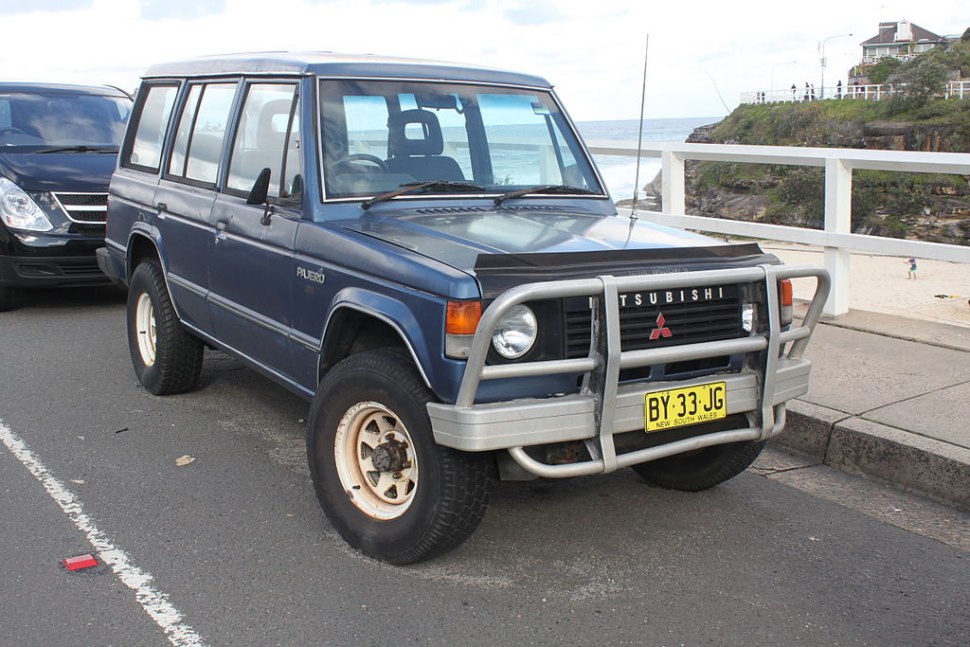
The Mitsubishi Pajero II Canvas Top (V2_W, V4_W) represents a unique iteration of Mitsubishi’s highly capable Pajero SUV, produced between 1990 and 1995. While the Pajero nameplate wasn’t widely marketed in the United States during this period, the Pajero II, and specifically the Canvas Top variant, was a significant vehicle in markets like Australia, Europe, and Asia. It built upon the success of the first-generation Pajero, offering increased refinement, improved off-road capability, and a distinctive open-air experience thanks to its retractable canvas roof. This generation solidified the Pajero’s reputation as a robust and versatile SUV, capable of tackling both challenging terrain and everyday driving duties. The Canvas Top version catered to those seeking a blend of adventure and open-air freedom, setting it apart from more conventional SUV offerings.
Mitsubishi Pajero II Canvas Top: A Detailed Overview
The Pajero II, launched in 1990, marked a substantial leap forward for Mitsubishi’s SUV line. It was larger, more comfortable, and more technologically advanced than its predecessor. The Canvas Top variant, designated with chassis codes V2_W and V4_W (with specific engine codes like V23W, V43W, and V23C), distinguished itself with a retractable canvas roof section over the rear passenger area. This feature provided an open-air driving experience, appealing to enthusiasts and those living in warmer climates. The Pajero II was available in both short-wheelbase (V2_W) and long-wheelbase (V4_W) configurations, offering varying levels of passenger and cargo space. The model was positioned as a competitor to vehicles like the Toyota Land Cruiser, Nissan Patrol, and Land Rover Discovery, offering a compelling combination of off-road prowess and on-road comfort.
Engine & Performance
The Pajero II Canvas Top 3.0 V6 (V23W, V43W, V23C) was powered by a naturally aspirated 3.0-liter V6 gasoline engine. This engine produced 150 horsepower, providing adequate power for both on-road cruising and off-road adventures. While not a high-output engine by modern standards, it delivered a respectable amount of torque, particularly useful for navigating challenging terrain. The engine was typically paired with either a 5-speed manual transmission or a 4-speed automatic transmission, allowing drivers to choose a configuration that suited their preferences. The Pajero II featured a robust four-wheel-drive system, typically with selectable modes for 2H (two-wheel drive high range), 4H (four-wheel drive high range), and 4L (four-wheel drive low range). This system, combined with a sturdy chassis and capable suspension, made the Pajero II a highly competent off-road vehicle. The low range gearing provided increased torque for crawling over obstacles, while the high range gearing allowed for comfortable highway driving. The vehicle’s suspension, often featuring coil springs and shock absorbers, was designed to absorb bumps and provide a relatively smooth ride, even on rough surfaces.
Design & Features
The Pajero II Canvas Top boasted a classic SUV design, characterized by its boxy shape and rugged appearance. The Canvas Top feature added a unique element, allowing the rear section of the roof to be retracted, creating an open-air experience for passengers. The body-on-frame construction provided a high degree of durability and torsional rigidity, essential for off-road driving. The interior of the Pajero II was designed with practicality in mind. It offered seating for up to five passengers, depending on the configuration. The interior materials were generally durable and easy to clean, reflecting the vehicle’s intended use. Features typically included air conditioning, power windows, and a basic audio system. Safety features, while limited by the standards of the early 1990s, generally included seatbelts and a steering wheel airbag in some markets. The Pajero II’s design prioritized functionality and durability over outright luxury. The vehicle’s exterior was often equipped with features like roof rails, side steps, and a rear-mounted spare tire carrier, enhancing its practicality and off-road appeal. The Canvas Top mechanism was relatively simple and reliable, allowing for easy operation of the retractable roof section.
Legacy and Market Position
The Pajero II Canvas Top, while not a common sight in North America, played a significant role in establishing the Pajero’s reputation as a capable and versatile SUV in other parts of the world. It offered a unique combination of off-road capability, on-road comfort, and open-air enjoyment. The vehicle’s robust construction and reliable powertrain ensured its longevity, and many examples remain in use today. The Pajero II helped to pave the way for subsequent generations of the Pajero, which continued to build upon its strengths and expand its global reach. The Canvas Top variant, in particular, remains a sought-after model among enthusiasts who appreciate its distinctive styling and open-air driving experience. It represents a unique chapter in the Pajero’s history, showcasing Mitsubishi’s commitment to innovation and versatility in the SUV segment.
Technical Specifications
| Brand | Mitsubishi |
| Model | Pajero |
| Generation | Pajero II Canvas Top (V2_W, V4_W) |
| Type (Engine) | 3.0 V6 (V23W, V43W, V23C) (150 Hp) |
| Start of production | 1990 |
| End of production | 1995 |
| Powertrain Architecture | Internal Combustion engine |
| Body type | SUV |
| Fuel Type | Petrol (Gasoline) |
| Power | 150 Hp |
| Engine aspiration | Naturally aspirated engine |