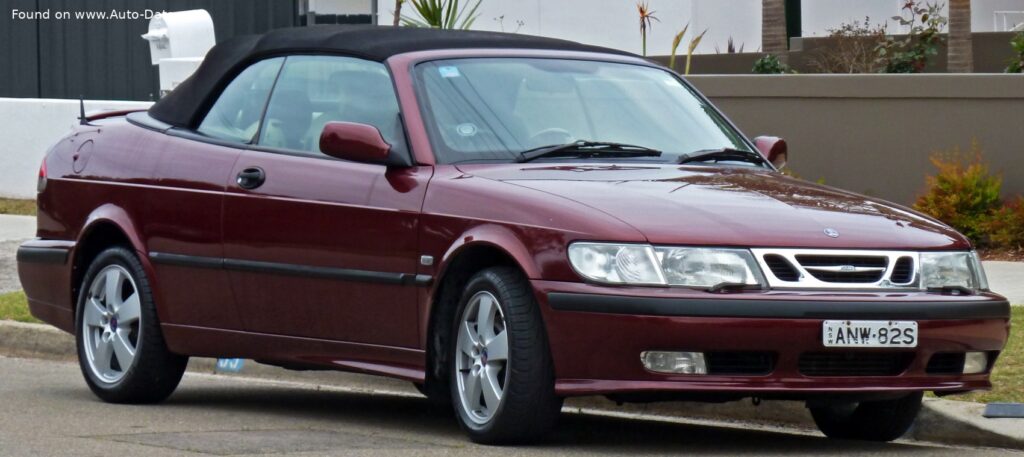
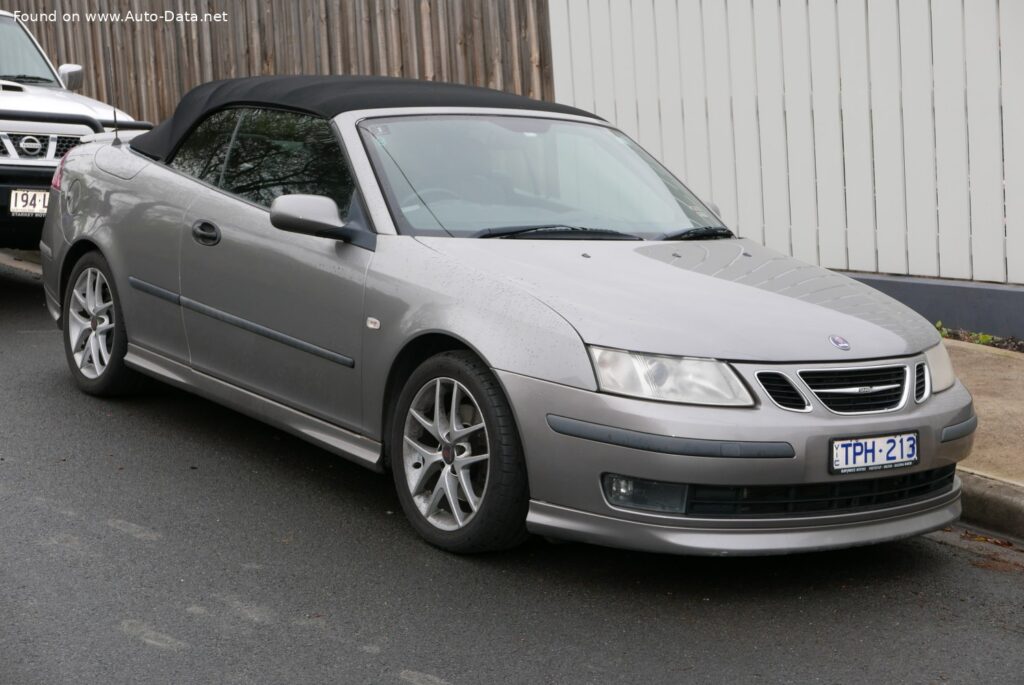
The Saab 9-3 Sport Combi II 1.8 i 16V, produced between 2005 and 2007, represents a refined iteration of Saab’s compact executive car. This model, a station wagon (estate) body style, was primarily marketed in Europe as a practical and stylish alternative to more conventional offerings. While Saab as a brand had a relatively limited presence in the United States, the 9-3 series, including the Sport Combi, was known for its distinctive Scandinavian design and focus on driver safety and comfort. The 1.8 i 16V variant offered a balance between fuel efficiency and adequate performance for everyday driving.
Saab 9-3 Sport Combi II: Overview
The Sport Combi II designation signifies the second generation of the 9-3 wagon, building upon the foundation laid by its predecessor. It aimed to provide a versatile vehicle suitable for families and individuals requiring ample cargo space without sacrificing the Saab brand’s core values of innovation and driver engagement. The 1.8-liter engine option positioned this variant as an entry point into the 9-3 range, appealing to buyers prioritizing economy and practicality.
Engine & Performance
Powering the Saab 9-3 Sport Combi II 1.8 i 16V is a 1.8-liter inline four-cylinder gasoline engine, designated the Z18XE. This naturally aspirated engine produces 122 horsepower at 5800 rpm and 167 Nm (123.17 lb.-ft.) of torque at 3800 rpm. While not a performance-oriented engine, it provides sufficient power for typical commuting and highway driving. The engine features multi-port fuel injection and a double overhead camshaft (DOHC) valvetrain, contributing to its relatively smooth operation. Acceleration from 0 to 100 km/h (0-62 mph) takes 12.5 seconds, while 0 to 60 mph is achieved in approximately 11.9 seconds. The vehicle boasts a maximum speed of 195 km/h (121.17 mph). The engine’s power-to-weight ratio is 11.5 kg/Hp, and the torque-to-weight ratio is 8.4 kg/Nm. Fuel economy is rated at 10.5 l/100 km (22.4 US mpg) in urban conditions and 6.1 l/100 km (38.6 US mpg) on the extra-urban cycle.
Design & Features
The Saab 9-3 Sport Combi II is characterized by its distinctive station wagon silhouette. The design incorporates Saab’s signature styling cues, including a wraparound windshield and a sculpted body. The five-door configuration provides easy access to both the passenger compartment and the generous cargo area. The interior is designed with a focus on ergonomics and functionality, offering comfortable seating for five occupants. Key features include a spacious trunk with a minimum capacity of 419 liters (14.8 cu. ft.) expanding to 1273 liters (44.96 cu. ft.) with the rear seats folded down. Safety features, a hallmark of Saab vehicles, include an Anti-lock Braking System (ABS). The vehicle’s dimensions are 4654 mm (183.23 in.) in length, 1782 mm (70.16 in.) in width, and 1507 mm (59.33 in.) in height. The wheelbase measures 2675 mm (105.31 in.).
Technical Specifications
| Brand | Saab |
| Model | 9-3 |
| Generation | 9-3 Sport Combi II |
| Type (Engine) | 1.8 i 16V (122 Hp) |
| Start of production | 2005 |
| End of production | 2007 |
| Powertrain Architecture | Internal Combustion engine |
| Body type | Station wagon (estate) |
| Seats | 5 |
| Doors | 5 |
| Fuel consumption (urban) | 10.5 l/100 km (22.4 US mpg) |
| Fuel consumption (extra urban) | 6.1 l/100 km (38.6 US mpg) |
| Fuel Type | Petrol (Gasoline) |
| Acceleration 0 – 100 km/h | 12.5 sec |
| Acceleration 0 – 62 mph | 12.5 sec |
| Acceleration 0 – 60 mph | 11.9 sec |
| Maximum speed | 195 km/h (121.17 mph) |
| Weight-to-power ratio | 11.5 kg/Hp |
| Weight-to-torque ratio | 8.4 kg/Nm |
| Power | 122 Hp @ 5800 rpm |
| Torque | 167 Nm @ 3800 rpm (123.17 lb.-ft. @ 3800 rpm) |
| Engine layout | Front, Transverse |
| Engine Model/Code | Z18XE |
| Engine displacement | 1797 cm3 (109.66 cu. in.) |
| Number of cylinders | 4 |
| Engine configuration | Inline |
| Cylinder Bore | 80.5 mm (3.17 in.) |
| Piston Stroke | 88.5 mm (3.48 in.) |
| Compression ratio | 10.5:1 |
| Number of valves per cylinder | 4 |
| Fuel injection system | Multi-port manifold injection |
| Engine aspiration | Naturally aspirated engine |
| Valvetrain | DOHC |
| Engine oil capacity | 4.3 l (4.54 US qt | 3.78 UK qt) |
| Coolant capacity | 6.8 l (7.19 US qt | 5.98 UK qt) |
| Kerb Weight | 1405 kg (3097.49 lbs.) |
| Max. weight | 1940 kg (4276.97 lbs.) |
| Max load | 535 kg (1179.47 lbs.) |
| Trunk (boot) space – minimum | 419 l (14.8 cu. ft.) |
| Trunk (boot) space – maximum | 1273 l (44.96 cu. ft.) |
| Fuel tank capacity | 62 l (16.38 US gal | 13.64 UK gal) |
| Length | 4654 mm (183.23 in.) |
| Width | 1782 mm (70.16 in.) |
| Height | 1507 mm (59.33 in.) |
| Wheelbase | 2675 mm (105.31 in.) |
| Front track | 1524 mm (60 in.) |
| Rear track | 1506 mm (59.29 in.) |
| Drivetrain Architecture | Front wheel drive |
| Number of gears | 5 |
| Gearbox type | Manual transmission |
| Front suspension | Spring Strut |
| Rear suspension | Spring Strut |
| Front brakes | Ventilated discs |
| Rear brakes | Disc |
| Assisting systems | ABS (Anti-lock braking system) |
| Steering type | Steering rack and pinion |
| Tires size | 195/65 R15 |
| Wheel rims size | 15 |
The Saab 9-3 Sport Combi II 1.8 i 16V, while not a high-performance vehicle, offered a compelling package for buyers seeking a practical, safe, and stylish station wagon. Its blend of Scandinavian design, reasonable fuel economy, and ample cargo space made it a popular choice in its target market.