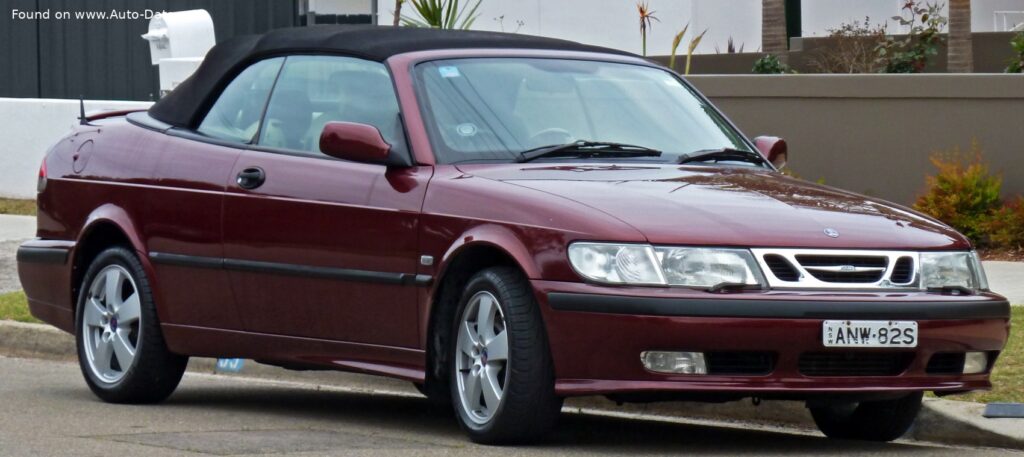
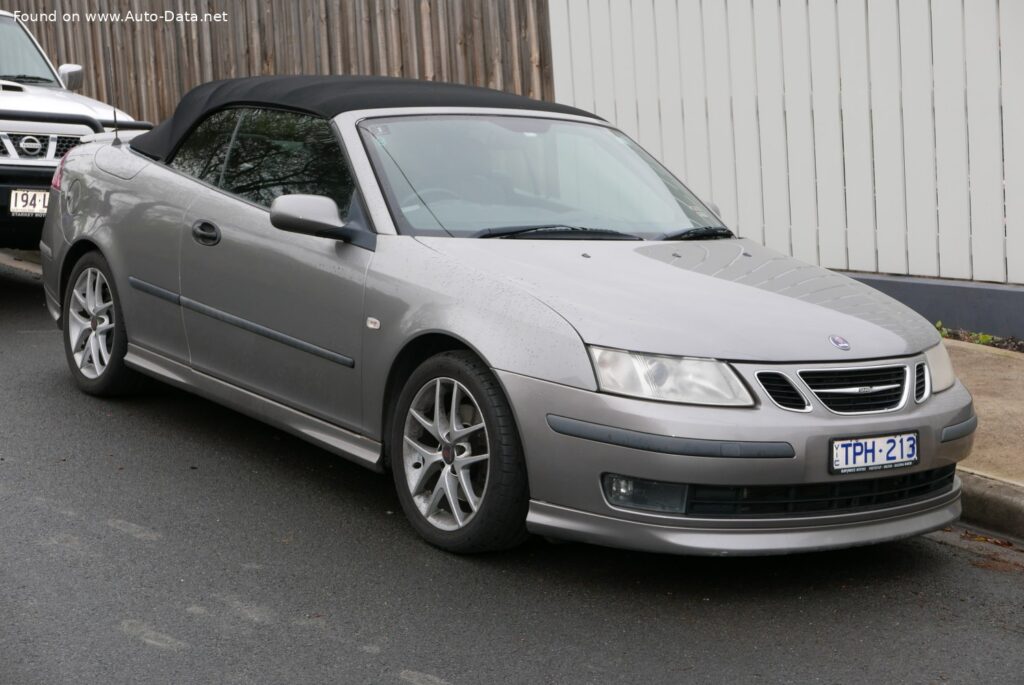
The Saab 9-3 Sport Combi II 1.8 i 16V Bio (175 Hp) Sentronic, produced between 2005 and 2007, represents a significant iteration of Saab’s compact executive car. This model, a station wagon (estate) body style, was primarily aimed at the European market, offering a blend of practicality, Scandinavian design, and a focus on driver engagement. While Saab as a brand ultimately ceased production in 2011, the 9-3 series, and particularly the Sport Combi, remains a fondly remembered vehicle for its unique character and engineering. The “Bio” designation indicates the engine’s compatibility with biofuels, reflecting a growing environmental awareness during its production run.
The Saab 9-3 Sport Combi II: A Detailed Overview
The 9-3 Sport Combi II occupied a competitive segment, facing rivals like the Audi A4 Avant, BMW 3 Series Touring, and Volvo V60. However, Saab differentiated itself through its distinctive styling, emphasis on safety, and a somewhat unconventional approach to automotive engineering. The Sport Combi body style, offering increased cargo capacity compared to the sedan, appealed to families and those requiring versatile transportation. The Sentronic automatic transmission provided a convenient driving experience, while the 1.8-liter turbocharged engine aimed to balance performance with fuel efficiency.
Engine & Performance
At the heart of the Saab 9-3 Sport Combi II 1.8 i 16V Bio lies a 1.8-liter inline four-cylinder engine, designated the B207E. This engine produces 175 horsepower at 5500 rpm and 265 Nm (195.45 lb.-ft.) of torque at 2500 rpm. The engine features a turbocharger and intercooler, enhancing power output and responsiveness. The power-to-liter ratio is a respectable 97.4 hp/l. Power is delivered to the front wheels via a five-speed automatic transmission (Sentronic). Acceleration from 0 to 100 km/h (0-62 mph) takes 9.7 seconds, while the 0-60 mph sprint is achieved in approximately 9.2 seconds. The vehicle boasts a maximum speed of 210 km/h (130.49 mph). The engine’s compatibility with biofuels was a notable feature, aligning with increasing environmental concerns and regulations in Europe.
Design & Features
The Saab 9-3 Sport Combi II is instantly recognizable by its distinctive Scandinavian design language. The station wagon body style provides a generous 419 liters (14.8 cu. ft.) of trunk space with the rear seats up, expanding to a substantial 1273 liters (44.96 cu. ft.) when the rear seats are folded down. The vehicle comfortably seats five passengers. Safety was a key consideration in the 9-3’s design, incorporating features such as an Anti-lock Braking System (ABS). The vehicle’s dimensions are as follows: length 4654 mm (183.23 in), width 1782 mm (70.16 in), and height 1507 mm (59.33 in). The wheelbase measures 2675 mm (105.31 in). The interior, while functional, prioritized ergonomics and a driver-focused layout, characteristic of Saab’s design philosophy. The 15-inch wheel rims are fitted with 195/65 R15 tires.
Technical Specifications
| Brand | Saab |
| Model | 9-3 |
| Generation | 9-3 Sport Combi II |
| Type (Engine) | 1.8 i 16V Bio (175 Hp) Sentronic |
| Start of production | 2005 |
| End of production | 2007 |
| Powertrain Architecture | Internal Combustion engine |
| Body type | Station wagon (estate) |
| Seats | 5 |
| Doors | 5 |
| Fuel consumption (urban) | 16.9 l/100 km (13.9 US mpg / 16.7 UK mpg / 5.9 km/l) |
| Fuel consumption (extra urban) | 8.6 l/100 km (27.4 US mpg / 32.8 UK mpg / 11.6 km/l) |
| Fuel consumption (combined) | 11.6 l/100 km (20.3 US mpg / 24.4 UK mpg / 8.6 km/l) |
| Fuel Type | Petrol (Gasoline) |
| Acceleration 0 – 100 km/h | 9.7 sec |
| Acceleration 0 – 62 mph | 9.7 sec |
| Acceleration 0 – 60 mph | 9.2 sec |
| Maximum speed | 210 km/h (130.49 mph) |
| Emission standard | Euro 4 |
| Weight-to-power ratio | 8 kg/Hp, 124.6 Hp/tonne |
| Weight-to-torque ratio | 5.3 kg/Nm, 188.6 Nm/tonne |
| Power | 175 Hp @ 5500 rpm |
| Power per litre | 97.4 Hp/l |
| Torque | 265 Nm @ 2500 rpm (195.45 lb.-ft. @ 2500 rpm) |
| Engine layout | Front, Transverse |
| Engine Model/Code | B207E |
| Engine displacement | 1796 cm3 (109.6 cu. in.) |
| Number of cylinders | 4 |
| Engine configuration | Inline |
| Cylinder Bore | 80.5 mm (3.17 in.) |
| Piston Stroke | 88.3 mm (3.48 in.) |
| Compression ratio | 10.5:1 |
| Number of valves per cylinder | 4 |
| Fuel injection system | Multi-port manifold injection |
| Engine aspiration | Turbocharger, Intercooler |
| Valvetrain | DOHC |
| Engine oil capacity | 6 l (6.34 US qt | 5.28 UK qt) |
| Coolant | 7.5 l (7.93 US qt | 6.6 UK qt) |
| Kerb Weight | 1405 kg (3097.49 lbs.) |
| Max. weight | 1940 kg (4276.97 lbs.) |
| Max load | 535 kg (1179.47 lbs.) |
| Trunk (boot) space – minimum | 419 l (14.8 cu. ft.) |
| Trunk (boot) space – maximum | 1273 l (44.96 cu. ft.) |
| Fuel tank capacity | 62 l (16.38 US gal | 13.64 UK gal) |
| Length | 4654 mm (183.23 in.) |
| Width | 1782 mm (70.16 in.) |
| Height | 1507 mm (59.33 in.) |
| Wheelbase | 2675 mm (105.31 in.) |
| Front track | 1524 mm (60 in.) |
| Rear (Back) track | 1506 mm (59.29 in.) |
| Drivetrain Architecture | The Internal combustion engine (ICE) drives the front wheels of the vehicle. |
| Drive wheel | Front wheel drive |
| Number of gears and type of gearbox | 5 gears, automatic transmission |
| Front suspension | Spring Strut |
| Rear suspension | Spring Strut |
| Front brakes | Ventilated discs |
| Rear brakes | Disc |
| Assisting systems | ABS (Anti-lock braking system) |
| Steering type | Steering rack and pinion |
| Tires size | 195/65 R15 |
| Wheel rims size | 15 |
The Saab 9-3 Sport Combi II 1.8 i 16V Bio, while no longer in production, remains a testament to Saab’s innovative spirit and commitment to creating vehicles that offered a unique driving experience. Its blend of practicality, performance, and Scandinavian design continues to appeal to enthusiasts and collectors alike.