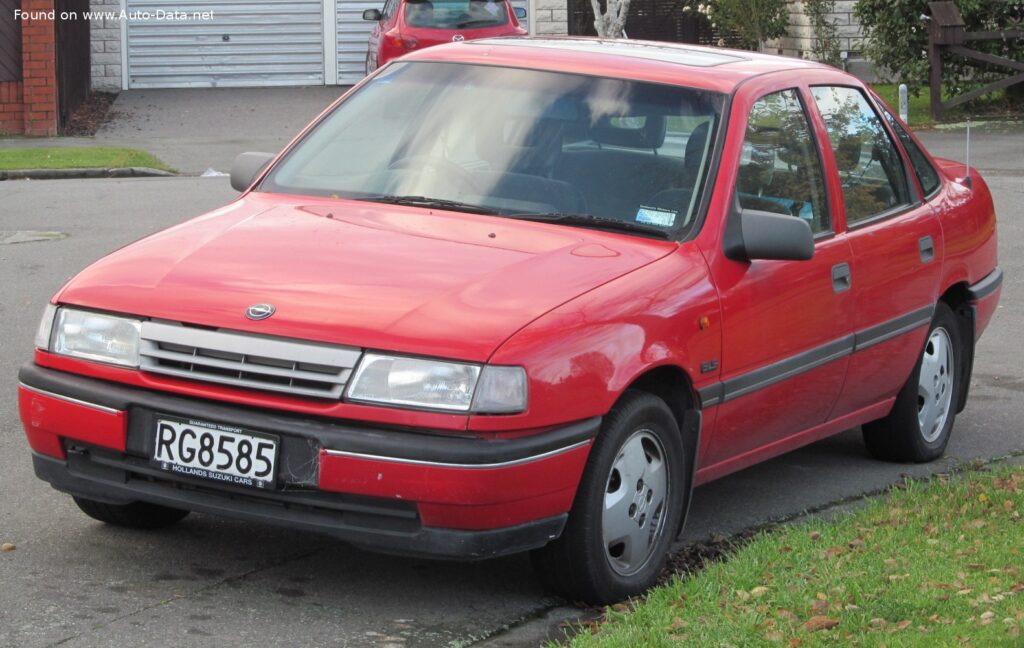
The Opel Vectra B CC 2.0 DTI 16V, produced between 1997 and 1998, represents a significant iteration in Opel’s mid-size family car lineage. As part of the Vectra B generation (1995-2002), the “CC” designation denotes the *Coupé Comfort* body style – a five-door hatchback offering a more streamlined and practical alternative to the traditional sedan. While not officially sold in the United States, the Vectra was a popular choice in Europe, competing with vehicles like the Ford Mondeo and Volkswagen Passat. This particular variant, powered by a 2.0-liter turbocharged diesel engine, aimed to balance fuel efficiency with reasonable performance for the European market.
Opel Vectra B CC: A European Family Car
The Vectra B series marked a substantial leap forward for Opel, moving away from the more angular designs of the previous generation. The CC version, with its hatchback configuration, prioritized versatility and cargo space, appealing to families and those needing a practical vehicle. The 2.0 DTI 16V engine was a key component of Opel’s diesel offerings during this period, designed to meet increasingly stringent emissions standards while providing acceptable power and torque for everyday driving. The Vectra B, in general, was a commercially successful model for Opel, contributing to the brand’s presence in the competitive European automotive landscape.
Engine & Performance
The heart of the Vectra B CC 2.0 DTI 16V is its 1995 cc inline-four cylinder diesel engine, designated the X20DTH. This engine utilizes a turbocharger and a diesel commonrail fuel injection system to produce 101 horsepower at 4300 rpm and 205 Nm (151.2 lb.-ft.) of torque at a relatively low 1650 rpm. The commonrail injection system, a relatively new technology at the time, allowed for more precise fuel delivery, resulting in improved combustion efficiency and reduced emissions. The engine’s power-to-liter ratio is 50.6 hp/l. Performance figures include a 0-100 km/h (0-62 mph) acceleration time of 13 seconds and a maximum speed of 195 km/h (121.17 mph). The five-speed manual transmission delivers power to the front wheels. The weight-to-power ratio of 13.2 kg/Hp and weight-to-torque ratio of 6.5 kg/Nm indicate a reasonable balance between weight and output for a vehicle of its class and era.
Design & Features
The Opel Vectra B CC is a five-door hatchback, offering a practical and accessible cabin layout. Its design emphasized aerodynamic efficiency, contributing to improved fuel economy. The interior focused on providing a comfortable and functional space for five occupants. Key features for this model year included a coil spring suspension on both the front and rear axles, ventilated disc brakes at the front, and disc brakes at the rear. Safety features, while not as comprehensive as modern standards, included an Anti-lock Braking System (ABS) as standard equipment. The hydraulic power steering provided ease of maneuverability. The trunk offered a minimum capacity of 480 liters (16.95 cu. ft.), expandable to 790 liters (27.9 cu. ft.) with the rear seats folded down, highlighting the practicality of the hatchback body style. The vehicle’s dimensions are 4495 mm (176.97 in.) in length, 1707 mm (67.2 in.) in width, and 1425 mm (56.1 in.) in height.
Technical Specifications
| Brand | Opel |
| Model | Vectra |
| Generation | Vectra B CC |
| Type (Engine) | 2.0 DTI 16V (101 Hp) |
| Start of production | 1997 |
| End of production | November, 1998 |
| Powertrain Architecture | Internal Combustion engine |
| Body type | Hatchback |
| Seats | 5 |
| Doors | 5 |
| Fuel consumption (urban) | 8.1 l/100 km (29 US mpg / 34.9 UK mpg / 12.3 km/l) |
| Fuel consumption (extra urban) | 4.8 l/100 km (49 US mpg / 58.9 UK mpg / 20.8 km/l) |
| Fuel Type | Diesel |
| Acceleration 0 – 100 km/h | 13 sec |
| Acceleration 0 – 62 mph | 13 sec |
| Acceleration 0 – 60 mph | 12.4 sec |
| Maximum speed | 195 km/h (121.17 mph) |
| Weight-to-power ratio | 13.2 kg/Hp |
| Weight-to-torque ratio | 6.5 kg/Nm |
| Power | 101 Hp @ 4300 rpm |
| Power per litre | 50.6 Hp/l |
| Torque | 205 Nm @ 1650 rpm (151.2 lb.-ft. @ 1650 rpm) |
| Engine layout | Front, Transverse |
| Engine Model/Code | X20DTH |
| Engine displacement | 1995 cm3 (121.74 cu. in.) |
| Number of cylinders | 4 |
| Engine configuration | Inline |
| Cylinder Bore | 84 mm (3.31 in.) |
| Piston Stroke | 90 mm (3.54 in.) |
| Compression ratio | 18.5:1 |
| Number of valves per cylinder | 4 |
| Fuel injection system | Diesel Commonrail |
| Engine aspiration | Turbocharger |
| Valvetrain | OHC |
| Engine oil capacity | 5.5 l (5.81 US qt | 4.84 UK qt) |
| Coolant | 7.2 l (7.61 US qt | 6.34 UK qt) |
| Kerb Weight | 1335 kg (2943.17 lbs.) |
| Max. weight | 1950 kg (4299.01 lbs.) |
| Max load | 615 kg (1355.84 lbs.) |
| Trunk (boot) space – minimum | 480 l (16.95 cu. ft.) |
| Trunk (boot) space – maximum | 790 l (27.9 cu. ft.) |
| Fuel tank capacity | 60 l (15.85 US gal | 13.2 UK gal) |
| Length | 4495 mm (176.97 in.) |
| Width | 1707 mm (67.2 in.) |
| Width including mirrors | 1841 mm (72.48 in.) |
| Height | 1425 mm (56.1 in.) |
| Wheelbase | 2637 mm (103.82 in.) |
| Front track | 1484 mm (58.43 in.) |
| Rear (Back) track | 1487 mm (58.54 in.) |
| Drivetrain Architecture | The Internal combustion engine (ICE) drives the front wheels of the vehicle. |
| Drive wheel | Front wheel drive |
| Number of gears and type of gearbox | 5 gears, manual transmission |
| Front suspension | Coil spring |
| Rear suspension | Coil spring |
| Front brakes | Ventilated discs |
| Rear brakes | Disc |
| Assisting systems | ABS (Anti-lock braking system) |
| Steering type | Steering rack and pinion |
| Power steering | Hydraulic Steering |
| Tires size | 195/65 R15 |
| Wheel rims size | 15 |