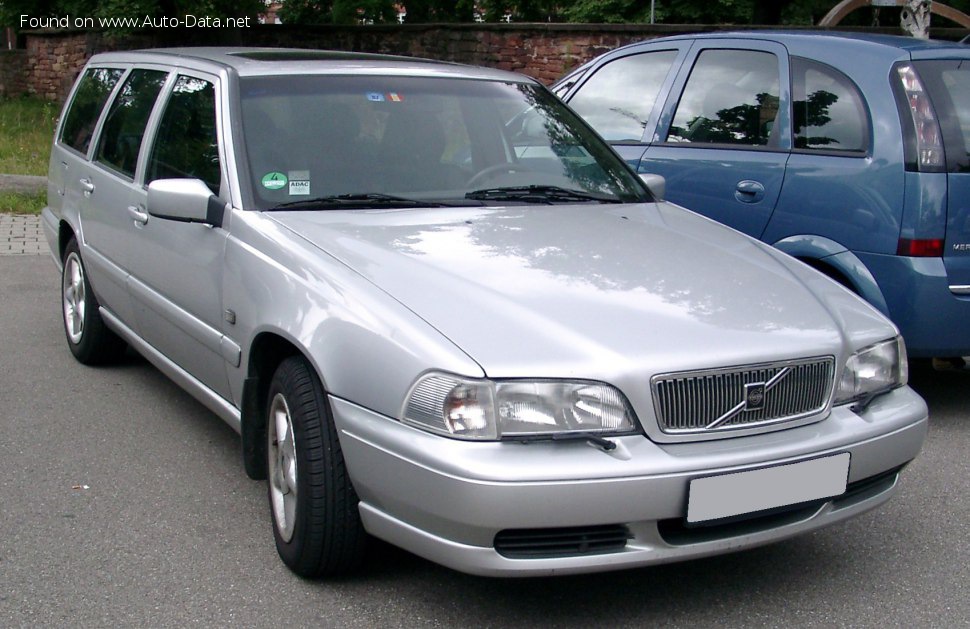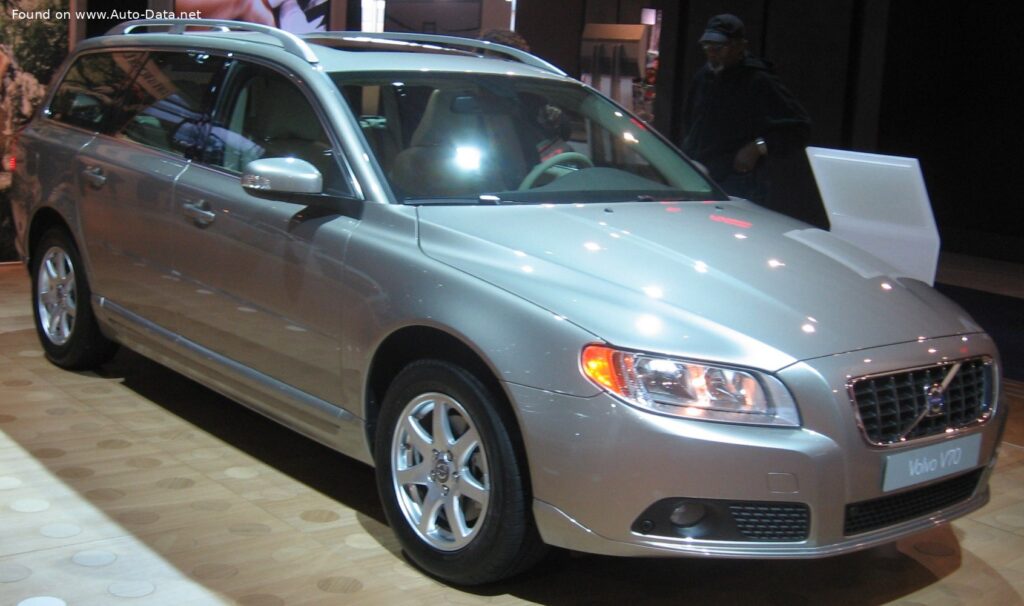
The Volvo V70 III 3.2 (243 Hp) Automatic, produced between 2011 and 2013, represents the third generation of Volvo’s popular station wagon, known as the V70. This model continued Volvo’s tradition of building practical, safe, and comfortable vehicles, primarily aimed at the European market where the estate car (station wagon) body style remains highly favored. While not directly sold in the United States during this generation, the V70’s design and engineering principles heavily influenced Volvo’s offerings in North America, particularly the XC70 crossover. The V70 III 3.2 offered a blend of performance, fuel efficiency, and spaciousness, making it a compelling choice for families and individuals needing a versatile vehicle.
Volvo V70 III 3.2: An Overview
The V70 III, built on the Volvo P24 platform shared with other models like the S80 and XC60, was designed to offer a premium experience in the mid-size station wagon segment. The “3.2” designation refers to the engine displacement, a 3.2-liter inline-six cylinder engine. This generation focused on refining the previous V70’s strengths, improving ride quality, and incorporating advanced safety features. The automatic transmission was a key component, providing smooth and convenient operation for everyday driving.
Engine & Performance
The heart of the V70 III 3.2 is its 3.2-liter inline-six cylinder engine, designated the B6324S5. This naturally aspirated engine produces 243 horsepower at 6400 rpm and 320 Nm (236.02 lb.-ft.) of torque at 3180 rpm. The engine features a turbocharger and intercooler, contributing to its responsive performance. Power is delivered to the front wheels via a six-speed automatic transmission. This powertrain configuration allows for a 0-100 km/h (0-62 mph) acceleration time of 8.4 seconds and a top speed of 235 km/h (146.02 mph). The engine’s power-to-weight ratio is 6.4 kg/Hp, and the torque-to-weight ratio is 4.9 kg/Nm, indicating a well-balanced vehicle. Fuel consumption is rated at 9.2 liters per 100 kilometers (25.6 US mpg), with CO2 emissions of 214 g/km.
Design & Features
The Volvo V70 III maintains the classic station wagon profile, characterized by a long roofline and a spacious cargo area. The vehicle is a five-door, five-seater, offering ample room for passengers and luggage. The interior is designed with Scandinavian minimalism in mind, emphasizing comfort and functionality. Key features include a comfortable and supportive seating arrangement, a well-designed dashboard with intuitive controls, and a generous amount of storage space throughout the cabin. Safety was a paramount concern for Volvo, and the V70 III is equipped with a comprehensive suite of safety features, including ABS (Anti-lock Braking System), side impact protection, and a robust chassis designed to absorb impact energy. The trunk offers a minimum capacity of 575 liters (20.31 cu. ft.), expanding significantly when the rear seats are folded down. The vehicle’s drag coefficient of 0.31 contributes to its aerodynamic efficiency.
Safety and Technology
Volvo has long been synonymous with safety, and the V70 III 3.2 is no exception. Beyond the standard ABS, the vehicle incorporates advanced stability control systems and a reinforced body structure. The focus on occupant protection extends to features like whiplash protection system (WHIPS) and side impact protection system (SIPS). While not boasting the cutting-edge infotainment systems found in more modern vehicles, the V70 III offered a respectable level of technology for its time, including a capable audio system and climate control. The vehicle’s design prioritized driver comfort and visibility, contributing to a safe and enjoyable driving experience.
Technical Specifications
| Brand | Volvo |
| Model | V70 |
| Generation | V70 III |
| Type (Engine) | 3.2 (243 Hp) Automatic |
| Start of production | 2011 |
| End of production | 2013 |
| Powertrain Architecture | Internal Combustion engine |
| Body type | Station wagon (estate) |
| Seats | 5 |
| Doors | 5 |
| Fuel consumption (combined) | 9.2 l/100 km |
| Fuel consumption (US mpg) | 25.6 US mpg |
| Fuel consumption (UK mpg) | 30.7 UK mpg |
| CO2 emissions | 214 g/km |
| Fuel Type | Petrol (Gasoline) |
| Acceleration 0 – 100 km/h | 8.4 sec |
| Acceleration 0 – 62 mph | 8.4 sec |
| Acceleration 0 – 60 mph | 8 sec |
| Maximum speed | 235 km/h (146.02 mph) |
| Weight-to-power ratio | 6.4 kg/Hp |
| Weight-to-torque ratio | 4.9 kg/Nm |
| Power | 243 Hp @ 6400 rpm |
| Torque | 320 Nm @ 3180 rpm (236.02 lb.-ft. @ 3180 rpm) |
| Maximum engine speed | 6500 rpm |
| Engine layout | Front, Transverse |
| Engine Model/Code | B6324S5 |
| Engine displacement | 3192 cm3 (194.79 cu. in.) |
| Number of cylinders | 6 |
| Engine configuration | Inline |
| Cylinder Bore | 84 mm (3.31 in.) |
| Piston Stroke | 96 mm (3.78 in.) |
| Compression ratio | 10.8:1 |
| Number of valves per cylinder | 4 |
| Engine aspiration | Turbocharger, Intercooler |
| Valvetrain | DOHC |
| Engine oil capacity | 6.8 l (7.19 US qt | 5.98 UK qt) |
| Coolant | 8.9 l (9.4 US qt | 7.83 UK qt) |
| Kerb Weight | 1567 kg (3454.64 lbs.) |
| Max. weight | 2180 kg (4806.08 lbs.) |
| Max load | 613 kg (1351.43 lbs.) |
| Trunk (boot) space – minimum | 575 l (20.31 cu. ft.) |
| Fuel tank capacity | 70 l (18.49 US gal | 15.4 UK gal) |
| Max. roof load | 100 kg (220.46 lbs.) |
| Permitted trailer load with brakes (12%) | 1800 kg (3968.32 lbs.) |
| Permitted trailer load without brakes | 750 kg (1653.47 lbs.) |
| Length | 4823 mm (189.88 in.) |
| Width with mirrors folded | 1907 mm (75.08 in.) |
| Width including mirrors | 2106 mm (82.91 in.) |
| Height | 1547 mm (60.91 in.) |
| Wheelbase | 2816 mm (110.87 in.) |
| Front track | 1588 mm (62.52 in.) |
| Rear (Back) track | 1586 mm (62.44 in.) |
| Ride height (ground clearance) | 151 mm (5.94 in.) |
| Drag coefficient (Cd) | 0.31 |
| Minimum turning circle (turning diameter) | 11.7 m (38.39 ft.) |
| Drivetrain Architecture | ICE, Front wheel drive |
| Number of gears and type of gearbox | 6 gears, automatic transmission |
| Front suspension | Independent, type McPherson with coil spring and anti-roll bar |
| Rear suspension | Independent coil spring |
| Front brakes | Ventilated discs |
| Rear brakes | Disc |