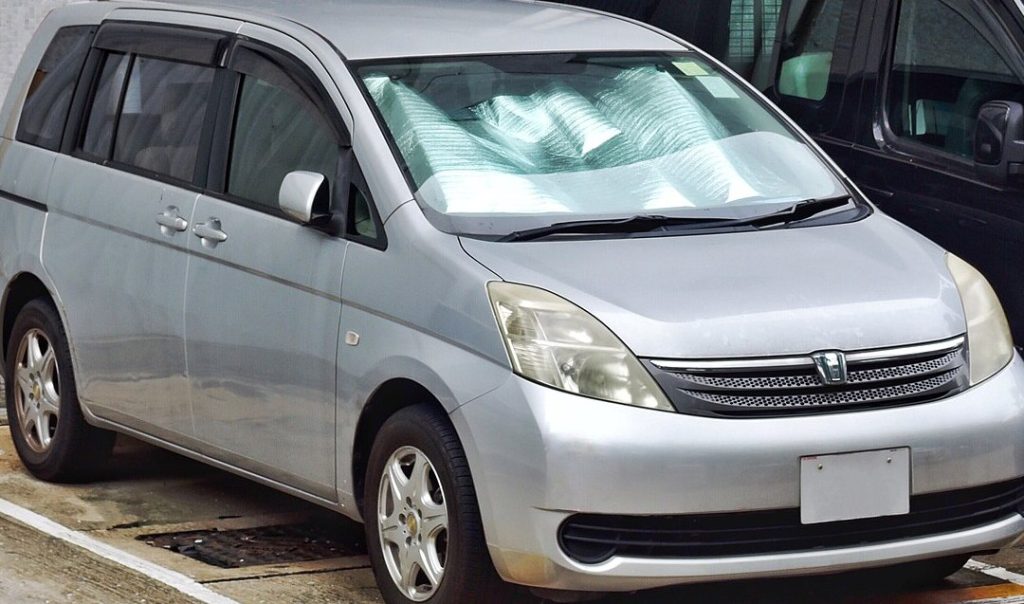
The Toyota Isis, known as the Toyota Avanza in some markets, is a compact minivan produced by the Japanese automaker Toyota from 2004 to 2009. While not officially sold in the United States, the Isis was a significant vehicle in Japan and parts of Asia and Europe, offering a practical and versatile seven-seat configuration in a relatively small footprint. This article details the specifications and characteristics of the 2.0-liter version of the Isis, a popular choice within the model range.
Toyota Isis 2.0: An Overview
The Toyota Isis occupied a niche market segment, bridging the gap between smaller, more economical hatchbacks and larger, more expensive multi-purpose vehicles (MPVs). It was designed to appeal to families seeking a flexible and space-efficient vehicle for urban driving. The first generation Isis, covered here, was known for its distinctive styling, particularly its large windows and relatively upright stance. It competed with vehicles like the Honda Freed and Nissan Serena in its primary markets.
Engine & Performance
The 2.0-liter Toyota Isis is powered by the 1AZ-FSE engine, a naturally aspirated, inline-four cylinder gasoline engine. This engine produces 155 horsepower at 6000 rpm and 192 Nm (141.61 lb.-ft.) of torque at 4000 rpm. The engine features multi-port fuel injection and a double overhead camshaft (DOHC) valvetrain with four valves per cylinder. This configuration provides a reasonable balance between power and fuel efficiency. The power-to-weight ratio of 9 kg/Hp and 110.7 Hp/tonne indicates adequate performance for everyday driving, while the torque-to-weight ratio of 7.3 kg/Nm and 137.1 Nm/tonne suggests acceptable acceleration. The engine’s 1998 cm3 (121.93 cu. in.) displacement places it within a common size range for compact MPVs. The engine requires 4.2 liters (4.44 US qt | 3.7 UK qt) of engine oil and 6.5 liters (6.87 US qt | 5.72 UK qt) of coolant for optimal operation.
Design & Features
The Toyota Isis is a five-door minivan with a seven-seat layout. Its design prioritized interior space and practicality. The large windows contribute to a bright and airy cabin, enhancing the feeling of spaciousness. The rear doors often featured sliding mechanisms, a common feature on minivans, facilitating easier access in tight parking spaces. The interior was designed with family use in mind, offering flexible seating arrangements and ample storage compartments. Safety features, while typical for the early 2000s, included an Anti-lock Braking System (ABS) as standard equipment. The Isis’s dimensions – 4610 mm (181.5 in.) in length, 1695 mm (66.73 in.) in width, and 1640 mm (64.57 in.) in height – positioned it as a relatively compact MPV, making it manageable in urban environments. The wheelbase of 2785 mm (109.65 in.) contributes to a stable ride. The minimum turning circle is 10.8 m (35.43 ft).
Technical Specifications
| Brand | Toyota |
| Model | Isis |
| Generation | Isis |
| Type (Engine) | 2.0 (155 Hp) |
| Start of production | September, 2004 |
| End of production | December, 2009 |
| Powertrain Architecture | Internal Combustion engine |
| Body type | Minivan |
| Seats | 7 |
| Doors | 5 |
| Fuel Type | Petrol (Gasoline) |
| Weight-to-power ratio | 9 kg/Hp |
| Weight-to-torque ratio | 7.3 kg/Nm |
| Power | 155 Hp @ 6000 rpm |
| Power per litre | 77.6 Hp/l |
| Torque | 192 Nm @ 4000 rpm |
| Torque (lb.-ft.) | 141.61 lb.-ft. @ 4000 rpm |
| Engine layout | Front, Transverse |
| Engine Model/Code | 1AZ-FSE |
| Engine displacement | 1998 cm3 |
| Engine displacement (cu. in.) | 121.93 cu. in. |
| Number of cylinders | 4 |
| Engine configuration | Inline |
| Cylinder Bore | 86 mm |
| Cylinder Bore (in.) | 3.39 in. |
| Piston Stroke | 86 mm |
| Piston Stroke (in.) | 3.39 in. |
| Compression ratio | 9.8:1 |
| Number of valves per cylinder | 4 |
| Fuel injection system | Multi-port manifold injection |
| Engine aspiration | Naturally aspirated engine |
| Valvetrain | DOHC |
| Engine oil capacity | 4.2 l |
| Engine oil capacity (US qt) | 4.44 US qt |
| Engine oil capacity (UK qt) | 3.7 UK qt |
| Coolant | 6.5 l |
| Coolant (US qt) | 6.87 US qt |
| Coolant (UK qt) | 5.72 UK qt |
| Kerb Weight | 1400 kg |
| Kerb Weight (lbs.) | 3086.47 lbs. |
| Fuel tank capacity | 60 l |
| Fuel tank capacity (US gal) | 15.85 US gal |
| Fuel tank capacity (UK gal) | 13.2 UK gal |
| Length | 4610 mm |
| Length (in.) | 181.5 in. |
| Width | 1695 mm |
| Width (in.) | 66.73 in. |
| Height | 1640 mm |
| Height (in.) | 64.57 in. |
| Wheelbase | 2785 mm |
| Wheelbase (in.) | 109.65 in. |
| Minimum turning circle | 10.8 m |
| Minimum turning circle (ft) | 35.43 ft. |
| Drivetrain Architecture | ICE drives front wheels |
| Drive wheel | Front wheel drive |
| Number of gears | 4 |
| Type of gearbox | automatic transmission |
| Front suspension | Coil spring |
| Rear suspension | Torsion |
| Front brakes | Ventilated discs |
| Rear brakes | Drum |
| Assisting systems | ABS (Anti-lock braking system) |
| Tires size | 195/65 R15 |
| Wheel rims size | 6J x 15 |
The Toyota Isis 2.0, while not a vehicle commonly found in the United States, represented a practical and well-engineered solution for families in its target markets. Its combination of space, efficiency, and reliability made it a popular choice in a competitive segment.