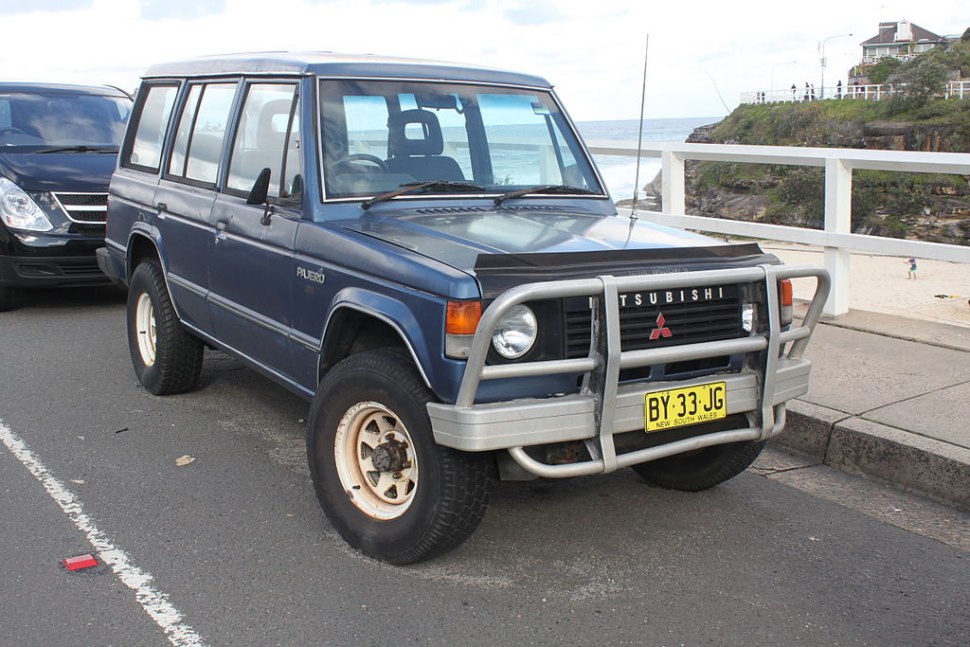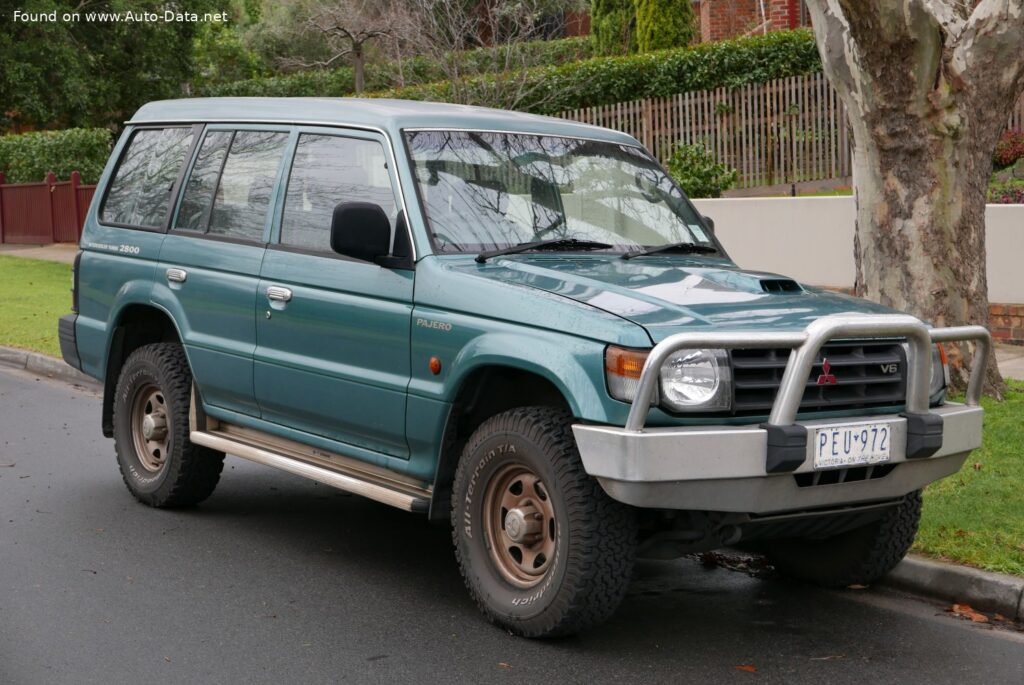
The Mitsubishi Pajero II (V2_W, V4_W) 2.4i, produced between 1991 and 1999, represents a significant evolution in Mitsubishi’s renowned off-road vehicle lineage. This second-generation Pajero, largely unseen in the North American market, was a cornerstone of the brand’s success in Europe, Australia, and Asia, establishing a reputation for robust reliability and capable four-wheel-drive performance. Positioned as a mid-size SUV, the Pajero II offered a compelling blend of on-road comfort and genuine off-road prowess, catering to a diverse range of drivers seeking adventure and practicality. It was a vehicle designed to tackle challenging terrains while providing a comfortable and spacious interior for families.
Mitsubishi Pajero II (V2_W, V4_W) 2.4i: A Detailed Overview
The Pajero II marked a substantial departure from its predecessor, featuring a more refined design, improved interior space, and enhanced mechanical components. While not officially sold in the United States, the Pajero II gained a loyal following in other parts of the world due to its durability and versatility. It competed with vehicles like the Toyota Land Cruiser Prado and Nissan Patrol in international markets, offering a compelling alternative with its unique blend of features and capabilities. The 2.4i variant, powered by the 4G64 engine, was a popular choice, balancing performance with fuel efficiency.
Engine & Performance
The heart of the Pajero II 2.4i is the 4G64 2.4-liter inline-four cylinder gasoline engine. This naturally aspirated powerplant delivers 147 horsepower at 5700 rpm and 211 Nm (155.63 lb.-ft.) of torque at 3500 rpm. The engine utilizes a multi-port fuel injection system and a double overhead camshaft (DOHC) valvetrain, contributing to its relatively smooth operation and respectable power output for its displacement. With a compression ratio of 11.5:1, the 4G64 engine provides a good balance between power and efficiency. The engine’s 62.6 horsepower per liter demonstrates a reasonable level of specific output for the early 1990s. Power is delivered to all four wheels via a robust four-wheel-drive system and a five-speed manual transmission. The weight-to-power ratio of 12.8 kg/Hp and 78.4 Hp/tonne indicates a capable, though not exceptionally quick, vehicle. The weight-to-torque ratio of 8.9 kg/Nm and 112.5 Nm/tonne highlights the engine’s usable torque for off-road situations and everyday driving.
Design & Features
The Mitsubishi Pajero II is a five-door SUV with seating for up to seven passengers. Its body-on-frame construction provides a solid foundation for both on-road comfort and off-road durability. The exterior design is characterized by its boxy, utilitarian shape, typical of SUVs from that era. The Pajero II’s interior prioritizes practicality and space, offering ample headroom and legroom for all occupants. The rear seats can be folded down to create a larger cargo area, expanding the trunk space from a minimum of 1080 liters (38.14 cu. ft.) to a maximum of 2050 liters (72.4 cu. ft.). Safety features for the time included an Anti-lock Braking System (ABS) and hydraulic power steering. The Pajero II’s suspension system, featuring torsion bars at the front and coil springs at the rear, is designed to provide a comfortable ride on paved roads while maintaining off-road capability. The vehicle rides on 235/75 R15 tires, providing a good balance of grip and durability.
Technical Specifications
| Brand | Mitsubishi |
| Model | Pajero |
| Generation | Pajero II (V2_W, V4_W) |
| Type (Engine) | 2.4i (147 Hp) |
| Start of production | 1991 |
| End of production | 1999 |
| Powertrain Architecture | Internal Combustion engine |
| Body type | SUV |
| Seats | 7 |
| Doors | 5 |
| Fuel Type | Petrol (Gasoline) |
| Weight-to-power ratio | 12.8 kg/Hp |
| Weight-to-torque ratio | 8.9 kg/Nm |
| Power | 147 Hp @ 5700 rpm |
| Power per litre | 62.6 Hp/l |
| Torque | 211 Nm @ 3500 rpm / 155.63 lb.-ft. @ 3500 rpm |
| Engine layout | Front, Transverse |
| Engine Model/Code | 4G64 |
| Engine displacement | 2350 cm3 / 143.41 cu. in. |
| Number of cylinders | 4 |
| Engine configuration | Inline |
| Cylinder Bore | 86.5 mm / 3.41 in. |
| Piston Stroke | 100 mm / 3.94 in. |
| Compression ratio | 11.5:1 |
| Number of valves per cylinder | 4 |
| Fuel injection system | Multi-port manifold injection |
| Engine aspiration | Naturally aspirated engine |
| Valvetrain | DOHC |
| Kerb Weight | 1875 kg / 4133.67 lbs |
| Max. weight | 2650 kg / 5842.25 lbs |
| Max load | 775 kg / 1708.58 lbs |
| Trunk (boot) space – minimum | 1080 l / 38.14 cu. ft. |
| Trunk (boot) space – maximum | 2050 l / 72.4 cu. ft. |
| Fuel tank capacity | 75 l / 19.81 US gal | 16.5 UK gal |
| Length | 4655 mm / 183.27 in. |
| Width | 1695 mm / 66.73 in. |
| Height | 1855 mm / 73.03 in. |
| Wheelbase | 2725 mm / 107.28 in. |
| Front track | 1420 mm / 55.91 in. |
| Rear (Back) track | 1435 mm / 56.5 in. |
| Drive wheel | All wheel drive (4×4) |
| Number of gears and type of gearbox | 5 gears, manual transmission |
| Front suspension | Torsion |
| Rear suspension | Coil spring |
| Front brakes | Ventilated discs |
| Rear brakes | Disc |
| Assisting systems | ABS (Anti-lock braking system) |
| Power steering | Hydraulic Steering |
| Tires size | 235/75 R15 |
The Mitsubishi Pajero II 2.4i remains a respected vehicle among off-road enthusiasts and those seeking a durable and practical SUV. Its blend of capability, reliability, and spaciousness ensured its success in markets outside of North America, cementing its place as a significant model in Mitsubishi’s history.