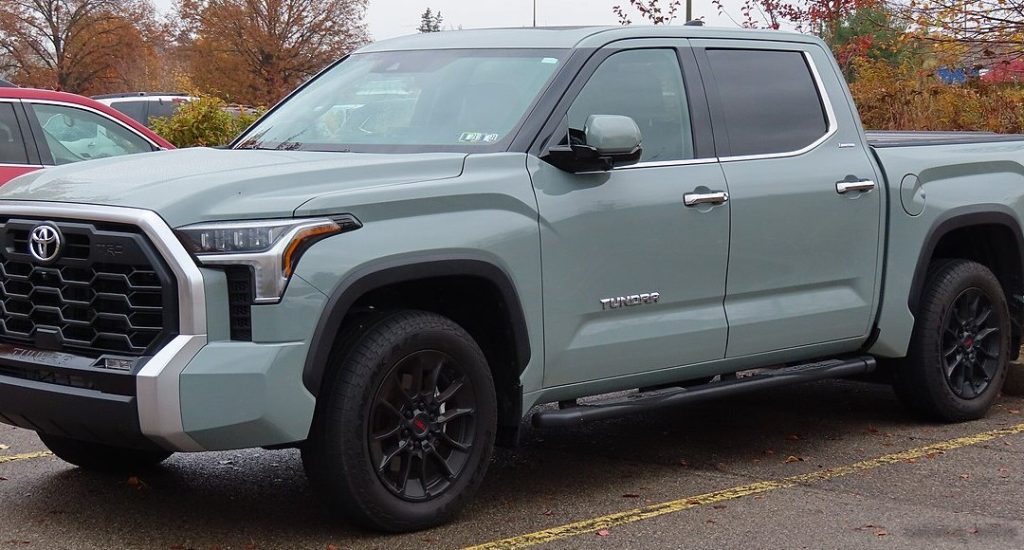
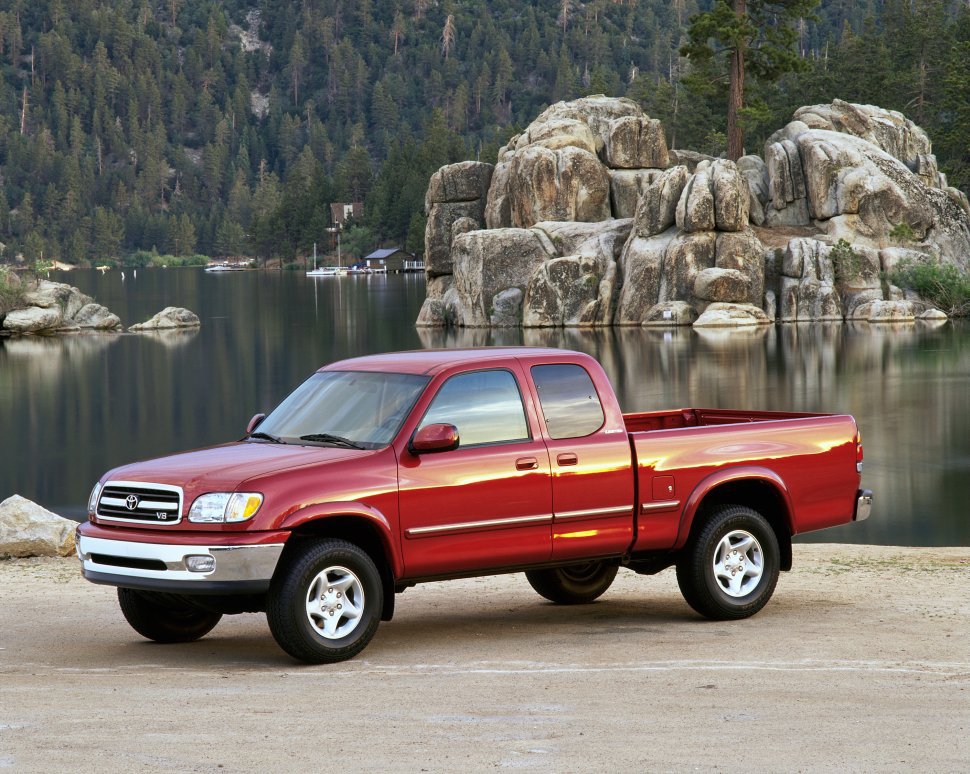
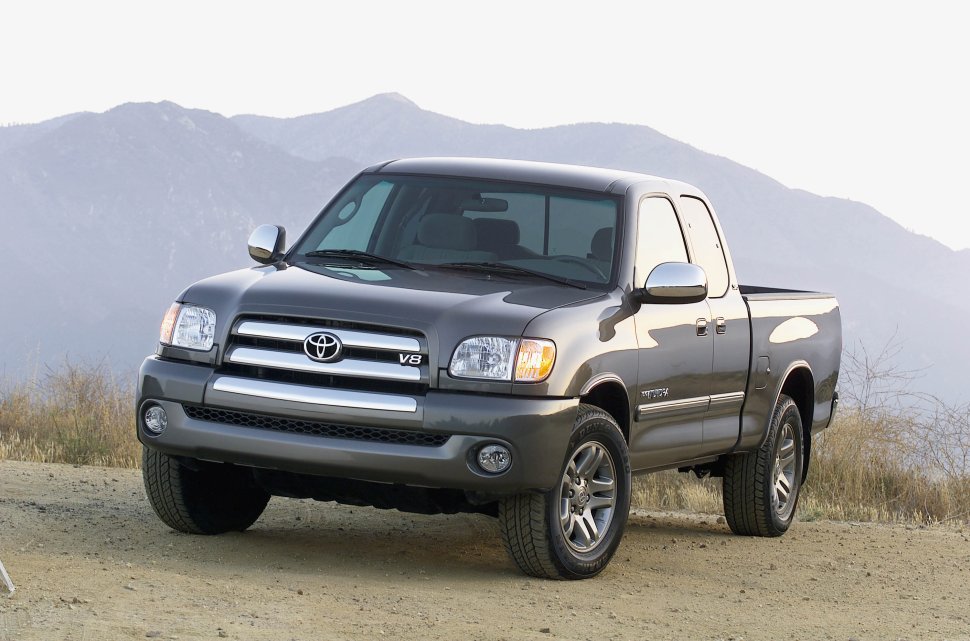
The Toyota Tundra II Double Cab, produced from 2006 to 2009, represents Toyota’s second-generation full-size pickup truck. Introduced to directly challenge established American manufacturers like Ford, Chevrolet, and Dodge, the Tundra II aimed to offer a compelling combination of reliability, capability, and comfort. The Double Cab configuration specifically catered to buyers needing more passenger space than a traditional regular cab pickup, offering a second row of seating suitable for families or work crews. This generation marked a significant increase in size and refinement compared to its predecessor, and the 4.0-liter V6 engine option provided a balance between power and fuel efficiency for a wide range of applications.
Toyota Tundra II Double Cab: An Overview
The Tundra II Double Cab was positioned as a versatile work and family vehicle. While not as widely adopted as its domestic rivals in the United States, it gained a reputation for durability and strong resale value. The Double Cab body style, with its extended cab, offered increased interior space and usability, making it a practical choice for those needing to transport both passengers and cargo. The 4.0-liter V6 engine, while not the most powerful option in the Tundra lineup (a 5.7-liter V8 was also available), provided adequate performance for everyday driving and towing needs.
Engine & Performance
The heart of the 2006-2009 Toyota Tundra II Double Cab 4.0 V6 is the 1GR-FE 4.0-liter V6 engine. This naturally aspirated engine produces 236 horsepower at 5200 rpm and 361 Nm (266.26 lb.-ft.) of torque at 4000 rpm. The engine features a double overhead camshaft (DOHC) valvetrain with four valves per cylinder, and utilizes a multi-port fuel injection system. The engine’s longitudinal front-engine layout contributes to a balanced weight distribution. Power is delivered to the rear wheels via a 5-speed automatic transmission. The weight-to-power ratio of 9.5 kg/Hp (105.5 Hp/tonne) and weight-to-torque ratio of 6.2 kg/Nm (161.4 Nm/tonne) indicate a reasonably efficient powertrain for its size and class. Fuel economy is rated at 13.8 l/100 km (17 US mpg) in urban driving and 11.7 l/100 km (20.1 US mpg) in extra-urban conditions. The engine displacement of 3956 cm3 (241.41 cu. in.) provides a good balance between power output and fuel consumption.
Design & Features
The Toyota Tundra II Double Cab is a four-door pickup truck with a body-on-frame construction, typical of full-size trucks. It offers seating for five to six passengers, depending on the configuration. The Double Cab configuration features extended rear doors for easier access to the second-row seats. The truck’s design emphasized a robust and functional aesthetic, with a prominent grille and muscular body lines. Key features included ventilated front disc brakes and drum brakes in the rear, complemented by an Anti-lock Braking System (ABS) for enhanced safety. The suspension system utilizes a double wishbone setup at the front and a traditional leaf spring configuration at the rear, optimized for both ride comfort and load-carrying capacity. The hydraulic power steering provides responsive and controlled handling. Available tire sizes ranged from 255/70 R18 to 275/65 R18 and 275/55 R20, mounted on 8.0J x 18 or 8.0J x 20 inch wheel rims. Ground clearance is a substantial 274 mm (10.79 in), enhancing its off-road capability. Approach and departure angles of 28° and 25° respectively, further contribute to its ability to navigate challenging terrain.
Technical Specifications
| Brand | Toyota |
| Model | Tundra |
| Generation | Tundra II Double Cab |
| Type (Engine) | 4.0 V6 24V (236 Hp) Automatic |
| Start of production | 2006 |
| End of production | 2009 |
| Powertrain Architecture | Internal Combustion engine |
| Body type | Pick-up |
| Seats | 5-6 |
| Doors | 4 |
| Fuel consumption (urban) | 13.8 l/100 km (17 US mpg) |
| Fuel consumption (extra urban) | 11.7 l/100 km (20.1 US mpg) |
| Fuel Type | Petrol (Gasoline) |
| Weight-to-power ratio | 9.5 kg/Hp |
| Weight-to-torque ratio | 6.2 kg/Nm |
| Power | 236 Hp @ 5200 rpm |
| Torque | 361 Nm @ 4000 rpm (266.26 lb.-ft. @ 4000 rpm) |
| Engine layout | Front, Longitudinal |
| Engine Model/Code | 1GR-FE |
| Engine displacement | 3956 cm3 (241.41 cu. in.) |
| Number of cylinders | 6 |
| Engine configuration | V-engine |
| Cylinder Bore | 94 mm (3.7 in.) |
| Piston Stroke | 95 mm (3.74 in.) |
| Number of valves per cylinder | 4 |
| Fuel injection system | Multi-port manifold injection |
| Engine aspiration | Naturally aspirated engine |
| Valvetrain | DOHC |
| Engine oil capacity | 5.2 l (5.49 US qt | 4.58 UK qt) |
| Coolant capacity | 9.6 l (10.14 US qt | 8.45 UK qt) |
| Kerb Weight | 2236 kg (4929.54 lbs.) |
| Max. weight | 2903 kg (6400.02 lbs.) |
| Max load | 667 kg (1470.48 lbs.) |
| Fuel tank capacity | 100 l (26.42 US gal | 22 UK gal) |
| Permitted trailer load with brakes (12%) | 2177 kg (4799.46 lbs.) |
| Length | 5809 mm (228.7 in.) |
| Width | 2030 mm (79.92 in.) |
| Height | 1925 mm (75.79 in.) |
| Wheelbase | 3700 mm (145.67 in.) |
| Front track | 1725 mm (67.91 in.) |
| Rear track | 1725 mm (67.91 in.) |
| Ride height (ground clearance) | 274 mm (10.79 in.) |
| Minimum turning circle | 13.6 m (44.62 ft.) |
| Drivetrain Architecture | Rear wheel drive |
| Number of gears | 5 |
| Gearbox type | Automatic transmission |
| Front suspension | Double wishbone |
| Rear suspension | Leaf spring |
| Front brakes | Ventilated discs |
| Rear brakes | Drum |
| Assisting systems | ABS (Anti-lock braking system) |
| Steering type | Steering rack and pinion |
| Power steering | Hydraulic Steering |
| Tires size | 255/70 R18; 275/65 R18; 275/55 R20 |
| Wheel rims size | 8.0J x 18; 8.0J x 20 |
The Toyota Tundra II Double Cab 4.0 V6 offered a compelling package for buyers seeking a full-size pickup with a focus on reliability and practicality. While it didn’t achieve the same sales figures as some of its American competitors, it established Toyota as a serious contender in the full-size truck segment and continues to be appreciated for its durability and long-term value.