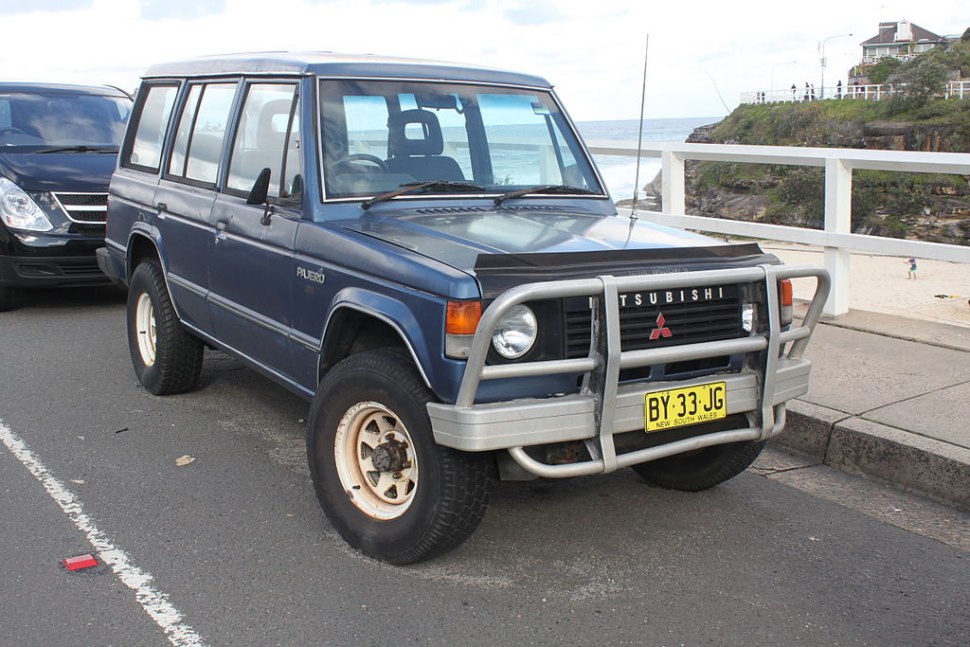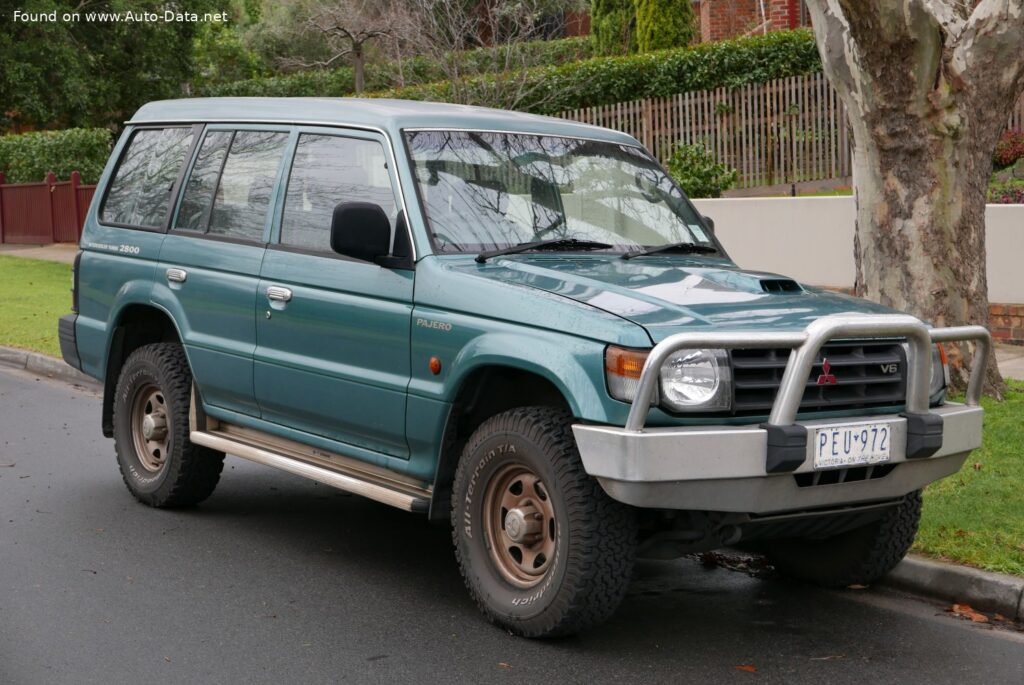
The Mitsubishi Pajero II (V2_W, V4_W) is a mid-size SUV produced by Mitsubishi Motors from 1994 to 2000. Representing the second generation of the Pajero lineage, this vehicle was primarily marketed in Europe, Asia, and Australia, where robust, capable SUVs were in high demand. While not officially sold in the United States under the Pajero name, it’s a significant model in the history of Mitsubishi’s off-road vehicles, known for its blend of practicality, durability, and increasingly sophisticated features. The 2.8 TD GLX variant, powered by a 2.8-liter turbocharged diesel engine producing 125 horsepower, was a popular choice for those seeking a balance between fuel efficiency and off-road performance.
Mitsubishi Pajero II: A Legacy of Off-Road Capability
The Pajero II marked a substantial evolution over its predecessor. It retained the body-on-frame construction crucial for off-road durability but incorporated improvements in refinement and technology. The V2_W and V4_W designations refer to short and long wheelbase versions respectively, offering different levels of passenger and cargo space. The GLX trim level typically included features like power windows, central locking, and upgraded interior appointments, making it a more comfortable option for everyday use. The Pajero II competed with vehicles like the Toyota Land Cruiser Prado, Nissan Patrol, and Land Rover Discovery, establishing itself as a strong contender in the growing mid-size SUV segment.
Engine & Performance
The heart of the Pajero II 2.8 TD GLX is a 2.8-liter inline-four cylinder diesel engine. This engine utilizes a precombustion chamber injection system and is equipped with a turbocharger, allowing it to produce 125 horsepower at 4000 rpm and 292 Nm (215.37 lb.-ft.) of torque at 2000 rpm. While not a powerhouse in terms of outright speed, the engine’s torque output provides ample pulling power for off-road adventures and towing. Acceleration from 0 to 100 km/h (0-62 mph) takes approximately 17.3 seconds, and it reaches a maximum speed of 150 km/h (93.21 mph). The engine’s fuel consumption is rated at 12.3 l/100 km (19.1 US mpg) combined, with figures of 15.2 l/100 km (15.5 US mpg) in urban settings and 9.7 l/100 km (24.2 US mpg) on the open road. The engine’s longitudinal front-mounted layout contributes to the vehicle’s balanced handling characteristics. The weight-to-power ratio of 17 kg/Hp and weight-to-torque ratio of 7.3 kg/Nm highlight the engine’s focus on usable power rather than outright performance.
Design & Features
The Mitsubishi Pajero II is a classic five-door SUV with a body-on-frame construction, providing excellent durability and off-road capability. Its design is functional and robust, reflecting its intended purpose. The vehicle offers seating for five passengers and boasts a spacious interior, particularly in the long-wheelbase V4_W variant. A key feature is its versatile cargo area, offering a minimum of 1080 liters (38.14 cu. ft.) of space that expands to 2050 liters (72.4 cu. ft.) with the rear seats folded down. The Pajero II’s four-wheel-drive system, coupled with its high ground clearance, makes it a capable off-road vehicle. Safety features for the era included an Anti-lock Braking System (ABS) and hydraulic power steering. The vehicle’s robust suspension system, featuring torsion bars at the front and coil springs at the rear, ensures a comfortable ride even on rough terrain. The 235/75 R15 tires provide adequate grip for both on and off-road driving.
Technical Specifications
| Brand | Mitsubishi |
| Model | Pajero |
| Generation | Pajero II (V2_W, V4_W) |
| Type (Engine) | 2.8 TD GLX (125 Hp) |
| Start of production | 1994 |
| End of production | 2000 |
| Powertrain Architecture | Internal Combustion engine |
| Body type | SUV |
| Seats | 5 |
| Doors | 5 |
| Fuel consumption (urban) | 15.2 l/100 km (15.5 US mpg, 18.6 UK mpg, 6.6 km/l) |
| Fuel consumption (extra urban) | 9.7 l/100 km (24.2 US mpg, 29.1 UK mpg, 10.3 km/l) |
| Fuel consumption (combined) | 12.3 l/100 km (19.1 US mpg, 23 UK mpg, 8.1 km/l) |
| Fuel Type | Diesel |
| Acceleration 0 – 100 km/h | 17.3 sec |
| Acceleration 0 – 62 mph | 17.3 sec |
| Acceleration 0 – 60 mph | 16.4 sec |
| Maximum speed | 150 km/h (93.21 mph) |
| Weight-to-power ratio | 17 kg/Hp |
| Weight-to-torque ratio | 7.3 kg/Nm |
| Power | 125 Hp @ 4000 rpm |
| Power per litre | 44.1 Hp/l |
| Torque | 292 Nm @ 2000 rpm (215.37 lb.-ft. @ 2000 rpm) |
| Engine layout | Front, Longitudinal |
| Engine displacement | 2835 cm3 (173 cu. in.) |
| Number of cylinders | 4 |
| Engine configuration | Inline |
| Cylinder Bore | 95 mm (3.74 in.) |
| Piston Stroke | 100 mm (3.94 in.) |
| Compression ratio | 21:1 |
| Number of valves per cylinder | 2 |
| Fuel injection system | Precombustion chamber injection |
| Engine aspiration | Turbocharger |
| Valvetrain | OHC |
| Kerb Weight | 2129 kg (4693.64 lbs.) |
| Max. weight | 2720 kg (5996.57 lbs.) |
| Max load | 591 kg (1302.93 lbs.) |
| Trunk (boot) space – minimum | 1080 l (38.14 cu. ft.) |
| Trunk (boot) space – maximum | 2050 l (72.4 cu. ft.) |
| Fuel tank capacity | 92 l (24.3 US gal, 20.24 UK gal) |
| Length | 4700 mm (185.04 in.) |
| Width | 1695 mm (66.73 in.) |
| Height | 1855 mm (73.03 in.) |
| Wheelbase | 2725 mm (107.28 in.) |
| Front track | 1420 mm (55.91 in.) |
| Rear (Back) track | 1435 mm (56.5 in.) |
| Drive wheel | All wheel drive (4×4) |
| Number of gears and type of gearbox | 5 gears, manual transmission |
| Front suspension | Torsion |
| Rear suspension | Coil spring |
| Front brakes | Ventilated discs |
| Rear brakes | Disc |
| Assisting systems | ABS (Anti-lock braking system) |
| Power steering | Hydraulic Steering |
| Tires size | 235/75 R15 R |
The Mitsubishi Pajero II 2.8 TD GLX remains a popular choice among enthusiasts and those seeking a reliable and capable off-road vehicle. Its blend of durability, practicality, and relatively simple mechanicals makes it a compelling alternative to more modern SUVs, particularly for those who value off-road performance and a classic driving experience.