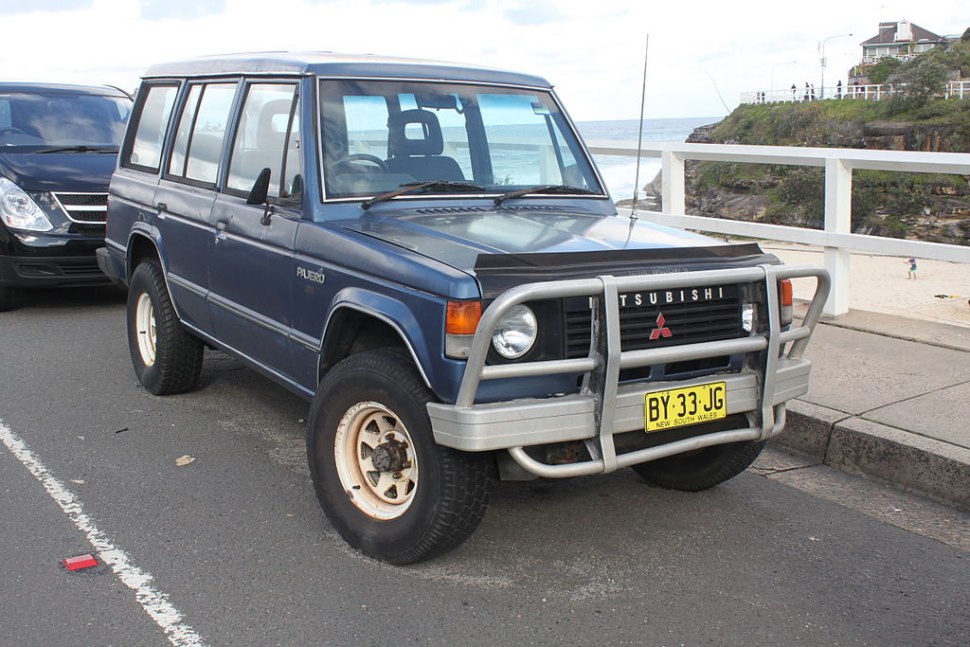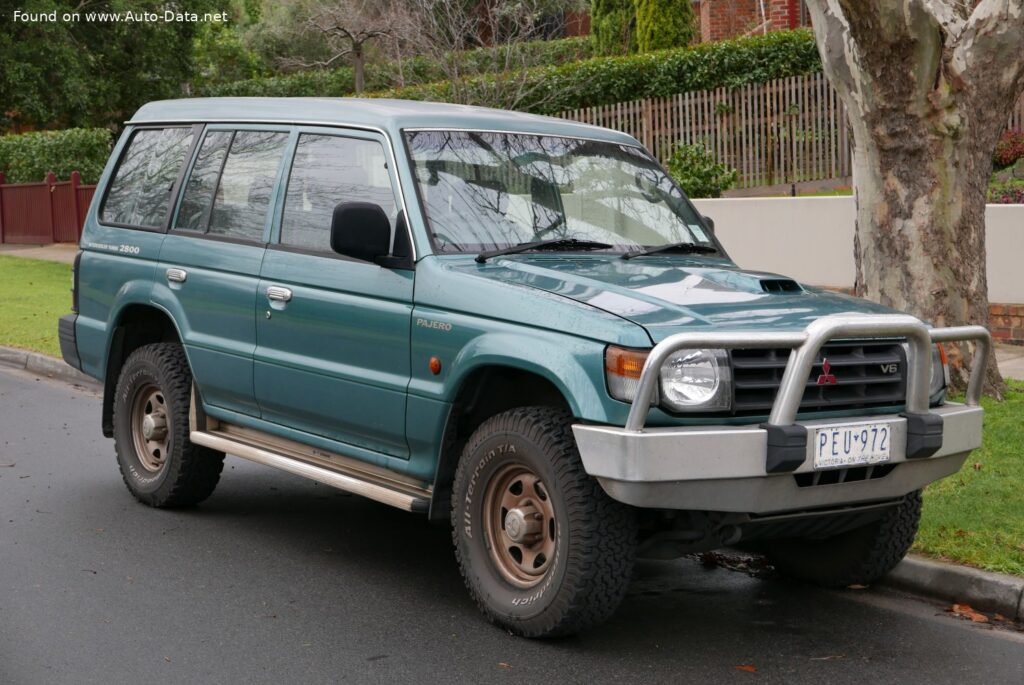
The Mitsubishi Pajero II (V2_W, V4_W) represents a significant evolution in Mitsubishi’s long-running Pajero (Montero in some markets) lineage. Produced between 1996 and 2000, this second-generation model built upon the success of its predecessor, offering increased refinement, improved off-road capability, and a more spacious interior. While not officially sold in the United States, the Pajero II was a highly popular and respected SUV in markets across Europe, Asia, Australia, and Latin America, known for its robust construction and dependable performance. It competed with vehicles like the Toyota Land Cruiser Prado, Nissan Patrol, and Land Rover Discovery, offering a compelling blend of on-road comfort and serious off-road prowess.
Mitsubishi Pajero II: A Detailed Overview
The Pajero II marked a shift towards a more sophisticated SUV, appealing to buyers who desired both practicality and a degree of luxury. It retained the body-on-frame construction that characterized the original Pajero, ensuring durability and off-road strength, but incorporated improvements in suspension technology and interior appointments. The V2_W and V4_W designations refer to variations within the second generation, primarily relating to engine options and minor equipment differences. The model offered seating for up to seven passengers, making it a versatile choice for families and those requiring ample cargo space.
Engine & Performance
The 3.0 i V6 24V engine, featured in this iteration of the Pajero II, is a naturally aspirated 2.972-liter (181.36 cubic inches) V6 producing 181 horsepower at 5500 rpm and 255 Nm (188.08 lb-ft) of torque at 4500 rpm. This engine provided a good balance of power and fuel efficiency for its time. The engine’s longitudinal front-engine layout contributed to a balanced weight distribution, enhancing handling both on and off-road. Acceleration from 0 to 100 km/h (0-62 mph) takes approximately 12.1 seconds, while reaching 0 to 60 mph requires around 11.5 seconds. The Pajero II achieves a maximum speed of 175 km/h (108.74 mph). The power-to-weight ratio of 11.3 kg/Hp and torque-to-weight ratio of 8 kg/Nm demonstrate a respectable level of performance for a vehicle of its size and intended purpose. The engine utilizes a multi-port fuel injection system and a double overhead camshaft (DOHC) valvetrain, contributing to its smooth operation and relatively efficient combustion.
Design & Features
The Mitsubishi Pajero II is a five-door SUV with a traditional body-on-frame construction. Its design emphasizes practicality and ruggedness, with a boxy silhouette and generous ground clearance. The vehicle’s dimensions – 4725 mm (186.02 in) in length, 1785 mm (70.28 in) in width, and 1895 mm (74.61 in) in height – provide ample interior space. A key feature of the Pajero II is its four-wheel-drive system, offering selectable drive modes for optimal traction in various conditions. The suspension system, featuring torsion bars at the front and coil springs at the rear, provides a comfortable ride and good off-road articulation. Safety features for the era included an Anti-lock Braking System (ABS) and hydraulic power steering. The interior was designed with durability and functionality in mind, offering comfortable seating for seven passengers and a practical cargo area. The 265/70 R15 H tires provide adequate grip for both on-road and off-road driving.
Technical Specifications
| Brand | Mitsubishi |
| Model | Pajero |
| Generation | Pajero II (V2_W, V4_W) |
| Type (Engine) | 3.0 i V6 24V (181 Hp) |
| Start of production | 1996 |
| End of production | 2000 |
| Powertrain Architecture | Internal Combustion engine |
| Body type | SUV |
| Seats | 7 |
| Doors | 5 |
| Fuel consumption (combined) | 13.9 l/100 km |
| Fuel consumption (US mpg) | 16.9 US mpg |
| Fuel consumption (UK mpg) | 20.3 UK mpg |
| Fuel consumption (km/l) | 7.2 km/l |
| Fuel Type | Petrol (Gasoline) |
| Acceleration 0 – 100 km/h | 12.1 sec |
| Acceleration 0 – 62 mph | 12.1 sec |
| Acceleration 0 – 60 mph | 11.5 sec |
| Maximum speed | 175 km/h (108.74 mph) |
| Weight-to-power ratio | 11.3 kg/Hp |
| Hp/tonne | 88.7 Hp/tonne |
| Weight-to-torque ratio | 8 kg/Nm |
| Nm/tonne | 125 Nm/tonne |
| Power | 181 Hp @ 5500 rpm |
| Power per litre | 60.9 Hp/l |
| Torque | 255 Nm @ 4500 rpm (188.08 lb.-ft. @ 4500 rpm) |
| Engine layout | Front, Longitudinal |
| Engine displacement | 2972 cm3 (181.36 cu. in.) |
| Number of cylinders | 6 |
| Engine configuration | V-engine |
| Cylinder Bore | 91.1 mm (3.59 in.) |
| Piston Stroke | 76 mm (2.99 in.) |
| Compression ratio | 9:1 |
| Number of valves per cylinder | 4 |
| Fuel injection system | Multi-port manifold injection |
| Engine aspiration | Naturally aspirated engine |
| Valvetrain | DOHC |
| Kerb Weight | 2040 kg (4497.43 lbs.) |
| Max. weight | 2650 kg (5842.25 lbs.) |
| Max load | 610 kg (1344.82 lbs.) |
| Fuel tank capacity | 92 l (24.3 US gal | 20.24 UK gal) |
| Length | 4725 mm (186.02 in.) |
| Width | 1785 mm (70.28 in.) |
| Height | 1895 mm (74.61 in.) |
| Wheelbase | 2725 mm (107.28 in.) |
| Front track | 1465 mm (57.68 in.) |
| Rear track | 1480 mm (58.27 in.) |
| Drive wheel | All wheel drive (4×4) |
| Number of gears | 5 gears, manual transmission |
| Front suspension | Torsion |
| Rear suspension | Coil spring |
| Front brakes | Ventilated discs |
| Rear brakes | Disc |
| Assisting systems | ABS (Anti-lock braking system) |
| Power steering | Hydraulic Steering |
| Tires size | 265/70 R15 H |