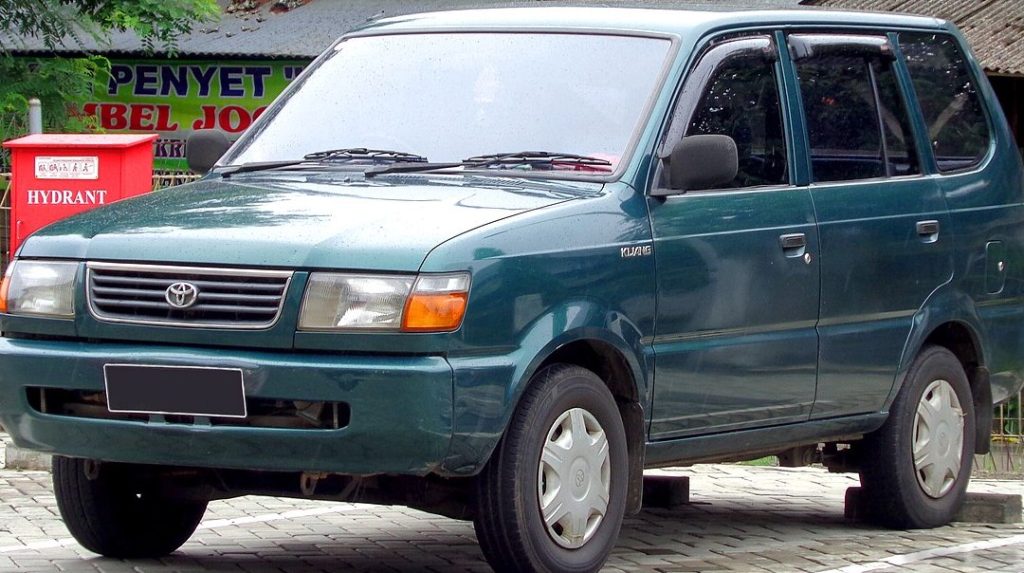
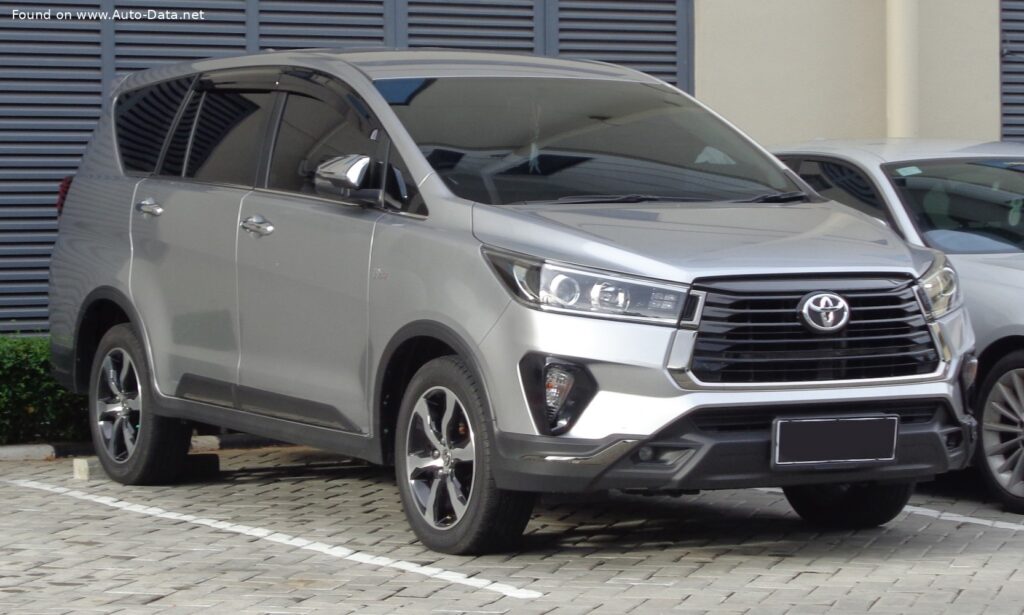
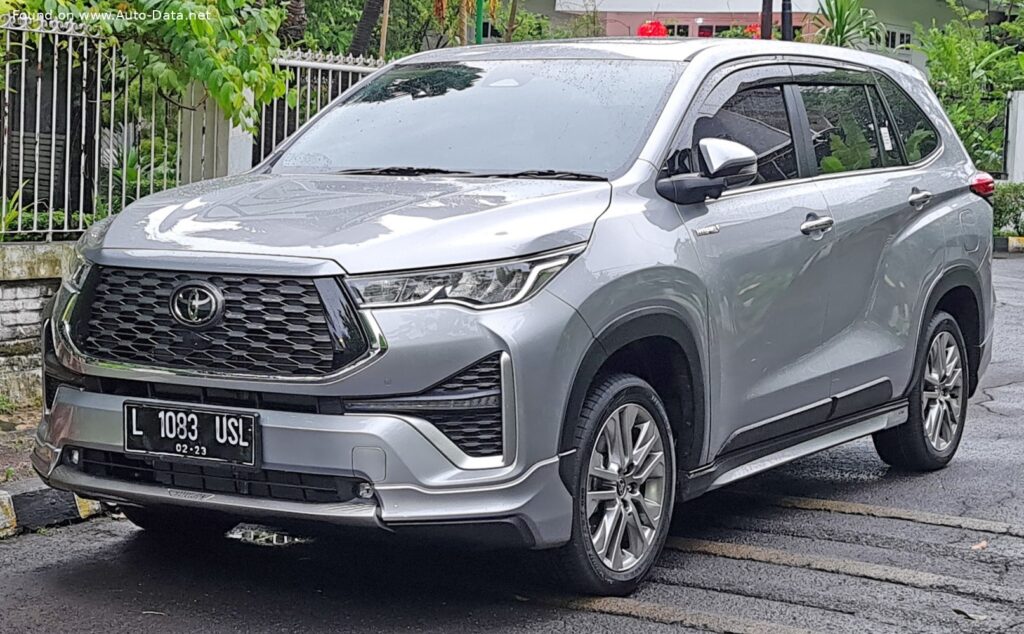
The Toyota Kijang Innova II 2.7i Automatic, produced between 2015 and 2020, represents a significant iteration in the long-running Kijang series, a vehicle deeply ingrained in the automotive landscape of Southeast Asia. While not officially sold in the United States, the Innova occupies a crucial role as a multi-purpose vehicle (MPV) in markets like Indonesia, the Philippines, Thailand, and other Asian countries. It serves as a versatile family vehicle, often utilized for both personal transport and commercial purposes, bridging the gap between a minivan and a more rugged SUV. The “II” designation signifies the second generation of the Innova, building upon the success of its predecessor with enhanced features, improved performance, and a more refined driving experience.
Toyota Kijang Innova II: A Regional Workhorse
The Kijang nameplate has a rich history, dating back to 1976. Originally conceived as a robust, utilitarian vehicle for transporting goods and people in challenging terrains, it evolved over the decades into the more passenger-focused Innova. The Innova II, specifically the 2.7i variant, aimed to provide a comfortable and reliable transportation solution for large families and businesses. Its rear-wheel-drive configuration, while less common in modern American vehicles, was favored in its target markets for its durability and suitability for varied road conditions. The 2.7i model, equipped with a 2.7-liter gasoline engine and a six-speed automatic transmission, offered a balance of power and efficiency, making it a popular choice among consumers.
Engine & Performance
At the heart of the Kijang Innova II 2.7i lies the 2TR-FE engine, a 2.7-liter (2694 cm3 or 164.4 cubic inches) inline four-cylinder gasoline engine. This naturally aspirated engine produces 166 horsepower at 5200 rpm and 245 Nm (180.7 lb.-ft.) of torque at 4000 rpm. The power-to-weight ratio stands at 95.7 hp per tonne, and the torque-to-weight ratio is 141.2 Nm per tonne, providing adequate performance for its intended use. The engine utilizes a Double Overhead Camshaft (DOHC) valvetrain with Toyota’s VVT-i (Variable Valve Timing-intelligent) technology, optimizing engine efficiency and responsiveness across a range of driving conditions. The rear-wheel-drive layout, coupled with the six-speed automatic transmission, delivers power to the rear wheels, contributing to a stable and predictable driving experience. The engine requires 5.6 liters (5.92 US quarts or 4.93 UK quarts) of engine oil and 7.3 liters (7.71 US quarts or 6.42 UK quarts) of coolant for optimal operation.
Design & Features
The Toyota Kijang Innova II is a five-door MPV designed to accommodate between seven and eight passengers, depending on the seating configuration. Its body-on-frame construction contributes to its robustness and durability, making it well-suited for handling rough roads and carrying heavy loads. The exterior design is characterized by a relatively conservative aesthetic, prioritizing practicality and functionality over flamboyant styling. Inside, the Innova II offers a spacious cabin with ample headroom and legroom for all occupants. Features typically included air conditioning, power windows, and a basic audio system. Safety features, while not as comprehensive as those found in modern American vehicles, generally included an Anti-lock Braking System (ABS). The Innova II’s design focused on providing a comfortable and reliable transportation solution for families and businesses in emerging markets, where practicality and affordability are paramount.
Technical Specifications
| General Information | |
| Brand | Toyota |
| Model | Innova |
| Generation | Kijang Innova II |
| Type (Engine) | 2.7i (166 Hp) Automatic |
| Start of production | November, 2015 |
| End of production | October, 2020 |
| Powertrain Architecture | Internal Combustion engine |
| Body type | MPV |
| Seats | 7-8 |
| Doors | 5 |
| Performance Specs | |
| Fuel Type | Petrol (Gasoline) |
| Weight-to-power ratio | 10.5 kg/Hp |
| Weight-to-torque ratio | 7.1 kg/Nm |
| Engine Specs | |
| Power | 166 Hp @ 5200 rpm |
| Power per litre | 61.6 Hp/l |
| Torque | 245 Nm @ 4000 rpm / 180.7 lb.-ft. @ 4000 rpm |
| Engine Model/Code | 2TR-FE |
| Engine displacement | 2694 cm3 / 164.4 cu. in. |
| Number of cylinders | 4 |
| Engine configuration | Inline |
| Number of valves per cylinder | 4 |
| Engine aspiration | Naturally aspirated engine |
| Valvetrain | DOHC, D-VVT-i |
| Engine oil capacity | 5.6 l / 5.92 US qt | 4.93 UK qt |
| Coolant | 7.3 l / 7.71 US qt | 6.42 UK qt |
| Space, Volume and Weights | |
| Kerb Weight | 1735-1790 kg / 3825.02 – 3946.27 lbs. |
| Max. weight | 2340-2390 kg / 5158.82 – 5269.05 lbs. |
| Max load | 600-605 kg / 1322.77 – 1333.8 lbs. |
| Fuel tank capacity | 65 l / 17.17 US gal | 14.3 UK gal |
| Dimensions | |
| Length | 4735 mm / 186.42 in. |
| Width | 1830 mm / 72.05 in. |
| Height | 1795 mm / 70.67 in. |
| Wheelbase | 2750 mm / 108.27 in. |
| Front track | 1530-1540 mm / 60.24 – 60.63 in. |
| Rear (Back) track | 1530-1540 mm / 60.24 – 60.63 in. |
| Drivetrain, Brakes and Suspension | |
| Drivetrain Architecture | Rear wheel drive. Internal Combustion engine (ICE) |
| Drive wheel | Rear wheel drive |
| Number of gears and type of gearbox | 6 gears, automatic transmission |
| Front suspension | Double wishbone |
| Rear suspension | Double wishbone |
| Front brakes | Disc |
| Rear brakes | Drum |
| Assisting systems | ABS (Anti-lock braking system) |
| Tires size | 205/65 R16; 215/55 R17 |
| Wheel rims size | 16; 17 |