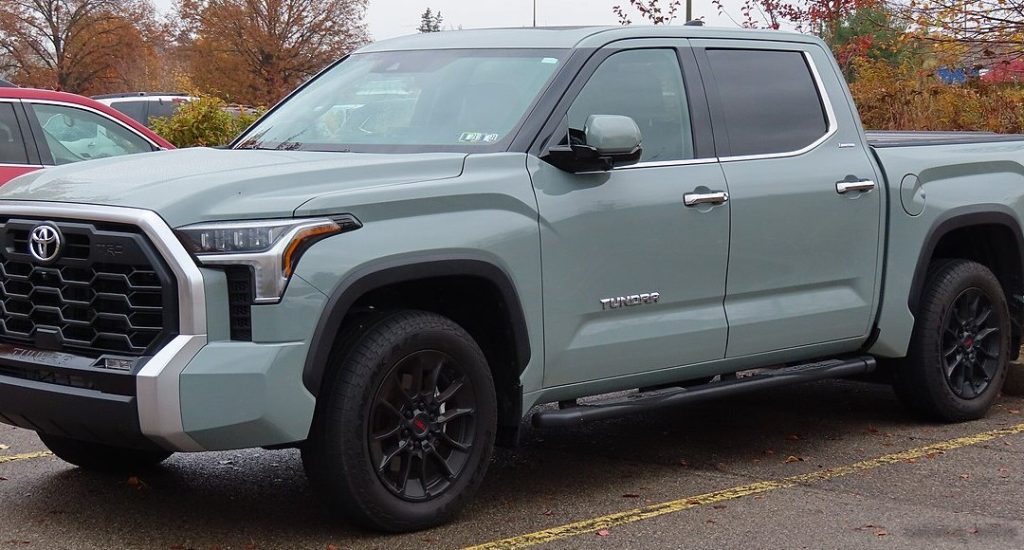
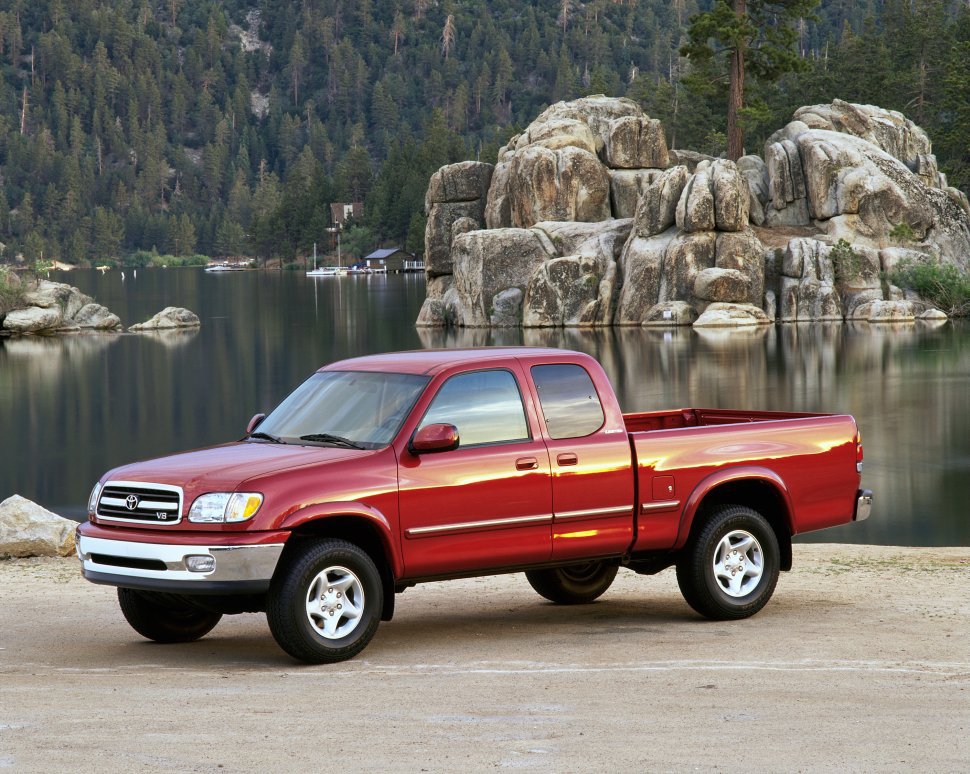
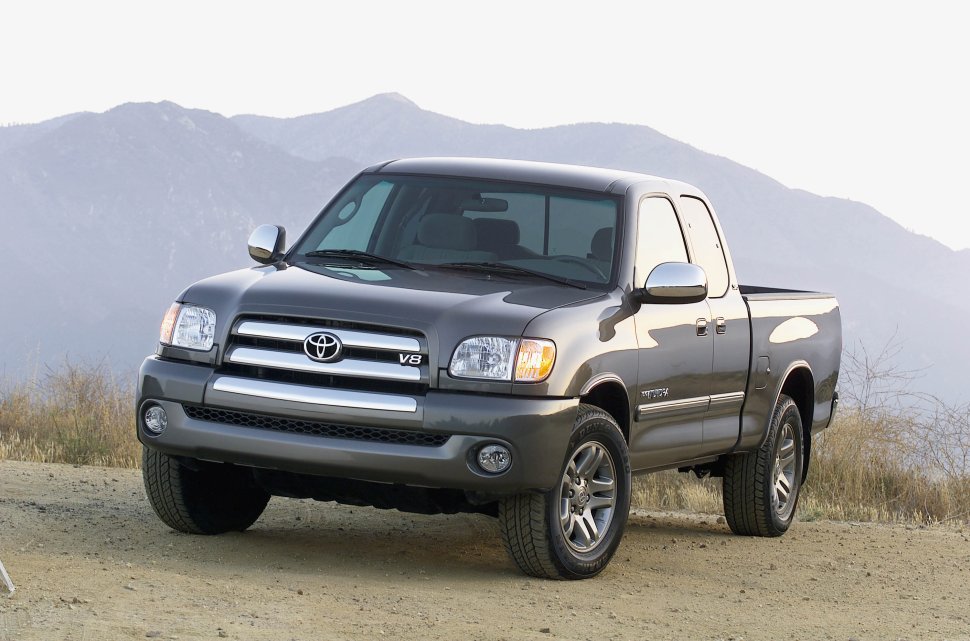
The Toyota Tundra II Double Cab (facelift 2010) represents Toyota’s second-generation full-size pickup truck, specifically a refreshed version released between 2010 and 2013. Designed primarily for the North American market, the Tundra aimed to challenge established domestic manufacturers like Ford, Chevrolet, and Dodge. This generation marked a significant increase in size and capability compared to its predecessor, offering a more robust platform and a wider range of configurations. The facelifted 2010 model brought styling updates and refinements to the existing platform, solidifying the Tundra’s position as a serious contender in the competitive full-size truck segment.
Toyota Tundra II Double Cab: An Overview
The Tundra II Double Cab, particularly the 2010 facelift, catered to buyers needing both substantial hauling capacity and passenger space. The “Double Cab” configuration offered a larger rear seat area compared to the standard cab models, making it suitable for families or crews. Positioned as a full-size pickup, the Tundra competed directly with the Ford F-150, Chevrolet Silverado, and Ram 1500, emphasizing reliability, durability, and a comfortable ride. The 4.6-liter V8 engine option, as featured in this model, provided a balance between power and fuel efficiency for everyday use and towing needs.
Engine & Performance
The 2010-2013 Toyota Tundra II Double Cab with the 4.6-liter V8 engine is powered by the 1UR-FE engine, a 4.6-liter (4608 cm3 or 281.2 cu. in.) naturally aspirated V8. This engine produces 310 horsepower at 5600 rpm and 460 Nm (339.28 lb.-ft.) of torque at 3400 rpm. The engine features a double overhead camshaft (DOHC) valvetrain with Variable Valve Timing-intelligent (VVT-i) technology, optimizing performance and efficiency across the engine’s operating range. Power is delivered through a six-speed automatic transmission to the rear wheels, providing smooth and responsive shifting. The weight-to-power ratio of 7.1 kg/Hp (141.6 Hp/tonne) and a weight-to-torque ratio of 4.8 kg/Nm (210 Nm/tonne) demonstrate a respectable power delivery for its class. Fuel economy is rated at 15.6 l/100 km (15.1 US mpg, 18.1 UK mpg) in urban driving and 11.7 l/100 km (20.1 US mpg, 24.1 UK mpg) in extra-urban conditions, typical for a vehicle of this size and capability.
Design & Features
The Toyota Tundra II Double Cab is a four-door pickup truck with a body-on-frame construction, providing a robust and durable platform. The 2010 facelift brought subtle styling changes to the front fascia, including a revised grille and headlights, enhancing its appearance. The Double Cab configuration offers seating for five to six passengers, depending on the configuration, with ample space in the rear seats for adults. The truck boasts a generous cargo bed, suitable for hauling various loads. Standard features typically included air conditioning, power windows and locks, and an audio system. Safety features, crucial for a vehicle of this size, included Anti-lock Braking System (ABS). The Tundra’s ride height provides 259 mm (10.2 in) of ground clearance, enhancing its off-road capability. The approach and departure angles of 27° and 26° respectively, further contribute to its ability to navigate challenging terrain. The truck’s dimensions – a length of 5809 mm (228.7 in), a width of 2029 mm (79.88 in), and a height of 1925 mm (75.79 in) – reflect its full-size stature.
Technical Specifications
| Brand | Toyota |
| Model | Tundra |
| Generation | Tundra II Double Cab (facelift 2010) |
| Type (Engine) | 4.6 V8 32V (310 Hp) Automatic |
| Start of production | 2010 |
| End of production | 2013 |
| Powertrain Architecture | Internal Combustion engine |
| Body type | Pick-up |
| Seats | 5-6 |
| Doors | 4 |
| Fuel consumption (urban) | 15.6 l/100 km (15.1 US mpg, 18.1 UK mpg) |
| Fuel consumption (extra urban) | 11.7 l/100 km (20.1 US mpg, 24.1 UK mpg) |
| Fuel Type | Petrol (Gasoline) |
| Weight-to-power ratio | 7.1 kg/Hp |
| Weight-to-torque ratio | 4.8 kg/Nm |
| Power | 310 Hp @ 5600 rpm |
| Power per litre | 67.3 Hp/l |
| Torque | 460 Nm @ 3400 rpm (339.28 lb.-ft. @ 3400 rpm) |
| Engine layout | Front, Longitudinal |
| Engine Model/Code | 1UR-FE |
| Engine displacement | 4608 cm3 (281.2 cu. in.) |
| Number of cylinders | 8 |
| Engine configuration | V-engine |
| Cylinder Bore | 94 mm (3.7 in.) |
| Piston Stroke | 83 mm (3.27 in.) |
| Compression ratio | 10.2:1 |
| Number of valves per cylinder | 4 |
| Fuel injection system | Multi-port manifold injection |
| Engine aspiration | Naturally aspirated engine |
| Valvetrain | DOHC, VVT-i |
| Engine oil capacity | 7.5 l (7.93 US qt | 6.6 UK qt) |
| Coolant capacity | 12.1 l (12.79 US qt | 10.65 UK qt) |
| Kerb Weight | 2190 kg (4828.12 lbs.) |
| Max. weight | 3039 kg (6699.85 lbs.) |
| Max load | 849 kg (1871.72 lbs.) |
| Fuel tank capacity | 100 l (26.42 US gal | 22 UK gal) |
| Permitted trailer load with brakes (12%) | 3265 kg (7198.09 lbs.) |
| Length | 5809 mm (228.7 in.) |
| Width | 2029 mm (79.88 in.) |
| Height | 1925 mm (75.79 in.) |
| Wheelbase | 3700 mm (145.67 in.) |
| Front track | 1725 mm (67.91 in.) |
| Rear track | 1725 mm (67.91 in.) |
| Ride height (ground clearance) | 259 mm (10.2 in.) |
| Minimum turning circle | 13.4 m (43.96 ft.) |
| Approach angle | 27° |
| Departure angle | 26° |
| Drivetrain Architecture | Rear wheel drive |
| Number of gears | 6 |
| Gearbox type | Automatic transmission |
| Front suspension | Double wishbone |
| Rear suspension | Leaf spring |
| Front brakes | Ventilated discs |
| Rear brakes | Ventilated discs |
| Assisting systems | ABS (Anti-lock braking system) |
| Steering type | Steering rack and pinion |
| Power steering | Hydraulic Steering |
| Tires size | 255/70 R18 |
| Wheel rims size | 8.0J x 18 |
The Toyota Tundra II Double Cab (facelift 2010) with the 4.6-liter V8 engine offered a compelling package for buyers seeking a reliable, capable, and comfortable full-size pickup truck. Its blend of power, space, and features made it a strong competitor in the North American market.