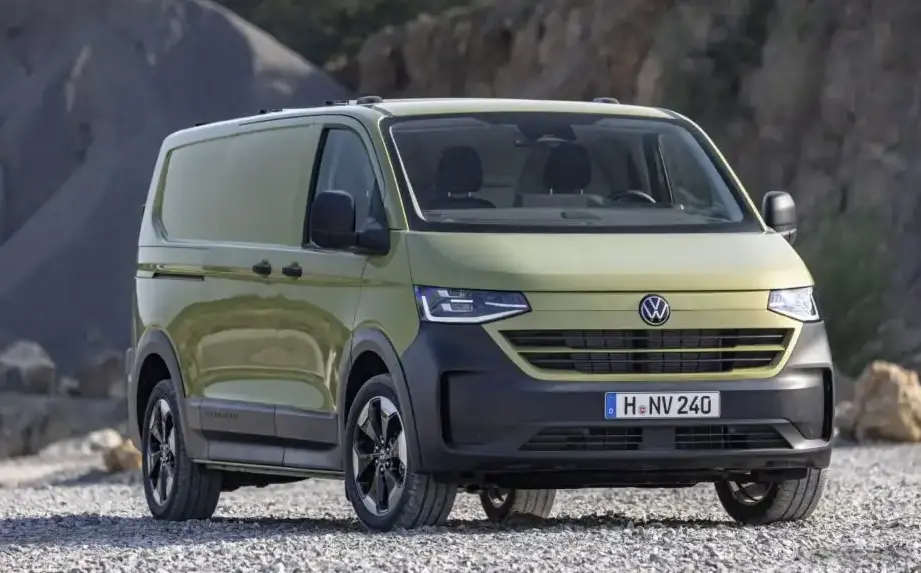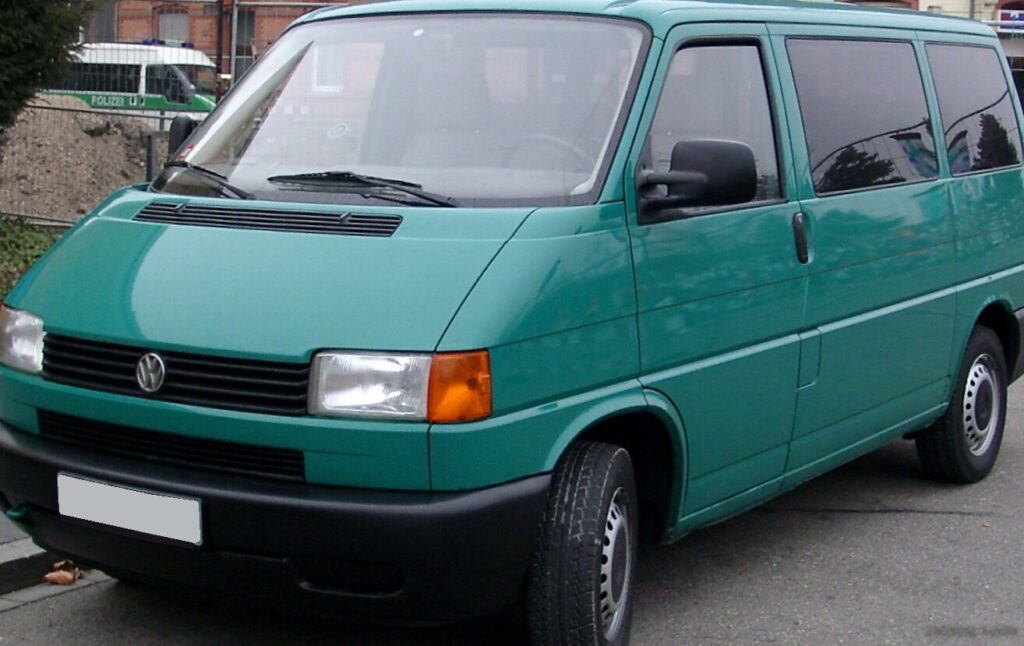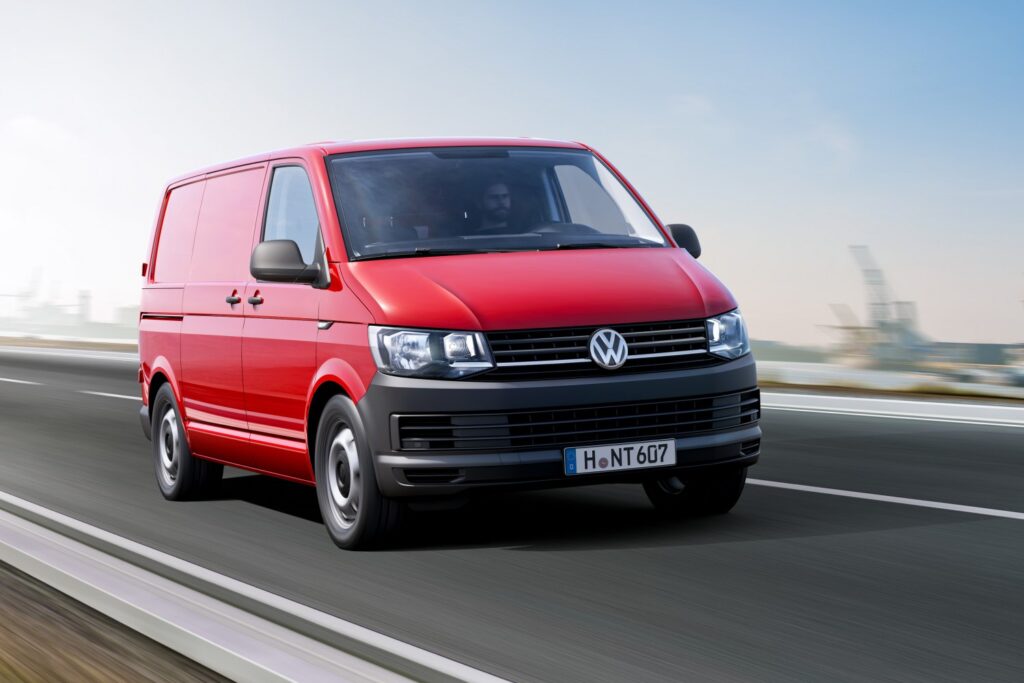
The Volkswagen Transporter (T6) Panel Van, specifically the 2.0 TDI variant producing 114 horsepower, represents a significant iteration in Volkswagen’s long-running commercial vehicle lineage. Introduced in 2016 and continuing through 2019, the T6 served as a crucial workhorse for businesses and tradespeople across Europe and other markets. While not officially sold in the United States due to import regulations and market preferences favoring larger American vans, the Transporter T6 holds a prominent position as a versatile and efficient light commercial vehicle globally. This model, designated L2H3, refers to a long wheelbase and high roof configuration, maximizing cargo capacity. It caters to a segment demanding practicality, reliability, and relatively economical operation.
Volkswagen Transporter (T6) Panel Van: Overview
The T6 generation of the Transporter built upon the success of its predecessors, offering improved fuel efficiency, enhanced safety features, and a more refined driving experience. It continued the tradition of offering a wide range of configurations to suit diverse commercial needs, from basic panel vans to more sophisticated crew cab and passenger-carrying variants. The 2.0 TDI engine, in its 114 horsepower guise, was a popular choice, balancing performance with fuel economy, making it suitable for both urban and long-distance driving. The L2H3 configuration provided a substantial cargo volume, making it ideal for delivery services, mobile workshops, and other applications requiring ample space.
Engine & Performance
The heart of the Transporter T6 2.0 TDI (114 Hp) L2H3 is a 1.968-liter, inline four-cylinder diesel engine. This engine, part of Volkswagen’s EA288 series, utilizes a turbocharger and intercooler to deliver a respectable 114 horsepower at 3200-4000 rpm and 250 Nm (184.39 lb.-ft.) of torque between 1400-3200 rpm. Power is delivered to the front wheels via a five-speed manual transmission. While not designed for outright speed, the engine provides sufficient power for everyday commercial tasks. Acceleration from 0 to 100 km/h (0-62 mph) takes approximately 15 seconds, and it achieves a maximum speed of 152 km/h (94.45 mph). Fuel economy is a key strength, with combined cycle consumption ranging from 6.1 to 6.8 liters per 100 kilometers (38.6 to 34.6 US mpg). The engine meets Euro 6 emission standards, incorporating a particulate filter and Start & Stop system to minimize environmental impact.
Design & Features
The Transporter T6 Panel Van L2H3 is characterized by its practical and functional design. The body style is a traditional van, featuring four or five doors for access to the cargo area and the cabin. The L2H3 designation indicates a long wheelbase (3400 mm / 133.86 in.) and a high roof (2477 mm / 97.52 in.), maximizing interior space. The van offers a cargo volume of 9300 liters (328.43 cu. ft.), making it suitable for a wide range of goods. The cabin typically accommodates two or three occupants, prioritizing functionality over luxury. Key features include a robust chassis, independent suspension on both axles (McPherson struts at the front and a wishbone setup at the rear), and a hydraulic power steering system. Safety features, common for the period, include ABS (Anti-lock Braking System). The overall design emphasizes durability and practicality, reflecting its intended use as a commercial vehicle.
Technical Specifications
| Brand | Volkswagen |
| Model | Transporter |
| Generation | Transporter (T6) Panel Van |
| Type (Engine) | 2.0 TDI (114 Hp) L2H3 |
| Start of production | 2016 |
| End of production | 2019 |
| Powertrain Architecture | Internal Combustion engine |
| Body type | Van |
| Seats | 2-3 |
| Doors | 4-5 |
| Fuel consumption (economy) – urban (NEDC) | 7.2-7.8 l/100 km (32.7 – 30.2 US mpg) |
| Fuel consumption (economy) – extra urban (NEDC) | 5.5-6.3 l/100 km (42.8 – 37.3 US mpg) |
| Fuel consumption (economy) – combined (NEDC) | 6.1-6.8 l/100 km (38.6 – 34.6 US mpg) |
| CO2 emissions (NEDC) | 159-178 g/km |
| Fuel Type | Diesel |
| Acceleration 0 – 100 km/h | 15 sec |
| Acceleration 0 – 62 mph | 15 sec |
| Acceleration 0 – 60 mph | 14.3 sec |
| Maximum speed | 152 km/h (94.45 mph) |
| Emission standard | Euro 6 |
| Weight-to-power ratio | 15.6 kg/Hp |
| Weight-to-torque ratio | 7.1 kg/Nm |
| Power | 114 Hp @ 3200-4000 rpm |
| Torque | 250 Nm @ 1400-3200 rpm (184.39 lb.-ft.) |
| Engine layout | Front, Transverse |
| Engine Model/Code | EA288 / CXHB, CXGC |
| Engine displacement | 1968 cm3 (120.09 cu. in.) |
| Number of cylinders | 4 |
| Engine configuration | Inline |
| Cylinder Bore | 81 mm (3.19 in.) |
| Piston Stroke | 95.5 mm (3.76 in.) |
| Compression ratio | 15.5:1 |
| Number of valves per cylinder | 4 |
| Fuel injection system | Diesel Commonrail |
| Engine aspiration | Turbocharger, Intercooler |
| Valvetrain | DOHC |
| Engine oil capacity | 7.4 l (7.82 US qt | 6.51 UK qt) |
| Kerb Weight | 1779-2096 kg (3922.02 – 4620.89 lbs.) |
| Max. weight | 2800-3200 kg (6172.94 – 7054.79 lbs.) |
| Max load | 1021-1104 kg (2250.92 – 2433.9 lbs.) |
| Trunk (boot) space – maximum | 9300 l (328.43 cu. ft.) |
| Fuel tank capacity | 70 l (18.49 US gal | 15.4 UK gal) |
| AdBlue tank | 13 l (3.43 US gal | 2.86 UK gal) |
| Permitted trailer load with brakes (12%) | 2200 kg (4850.17 lbs.) |
| Permitted trailer load without brakes | 750 kg (1653.47 lbs.) |
| Permitted towbar download | 100 kg (220.46 lbs.) |
| Length | 5304 mm (208.82 in.) |
| Width | 1904 mm (74.96 in.) |
| Width including mirrors | 2297 mm (90.43 in.) |
| Height | 2477 mm (97.52 in.) |
| Wheelbase | 3400 mm (133.86 in.) |
| Front overhang | 908 mm (35.75 in.) |
| Rear overhang | 993 mm (39.09 in.) |
| Ride height (ground clearance) | 202 mm (7.95 in.) |
| Minimum turning circle (turning diameter) | 13.2 m (43.31 ft.) |
| Drivetrain Architecture | Front wheel drive |
| Number of gears and type of gearbox | 5 gears, manual transmission |
| Front brakes | Ventilated discs, 308×29.5 mm |
| Rear brakes | Ventilated discs, 294×22 mm |
| Tires size | 205/65 R16; 215/65 R16 |
The Volkswagen Transporter T6 2.0 TDI (114 Hp) L2H3 remains a popular choice in the commercial vehicle market, offering a blend of practicality, efficiency, and reliability. Its robust design and versatile configuration make it a valuable asset for businesses requiring a dependable and spacious van.