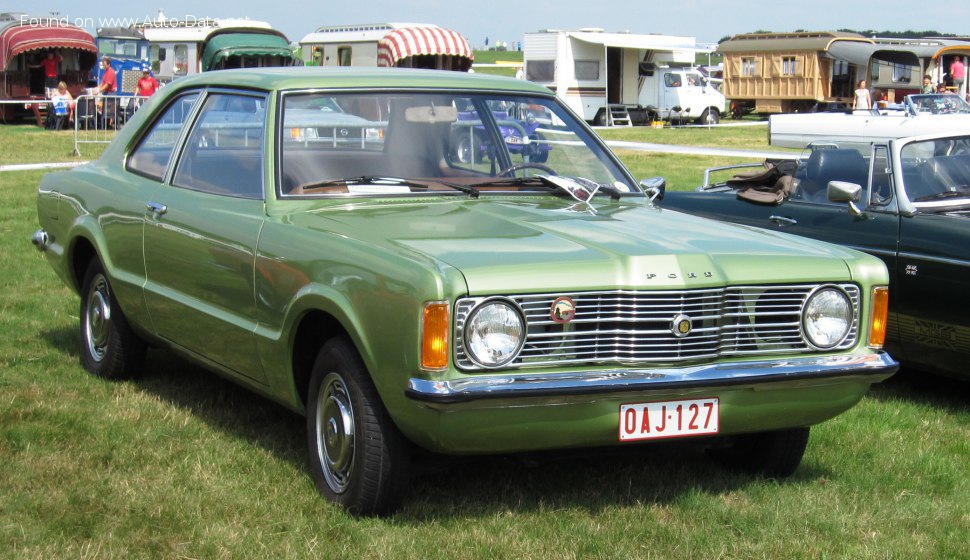
The Ford Taunus GBTK 1300, produced between 1970 and 1975, represents a significant entry in Ford of Germany’s mid-size family car lineup. This generation, internally designated GBTK, was a crucial model for Ford in the European market, aiming to provide affordable and reliable transportation during a period of economic growth and increasing automotive demand. While not officially sold in the United States, the Taunus provides a fascinating case study in Ford’s global engineering and adaptation to regional preferences. The 1300 variant, powered by a modest 55 horsepower engine, was positioned as the entry-level model, prioritizing fuel economy and practicality over outright performance. It competed with other European sedans like the Opel Ascona and Volkswagen Passat, offering a blend of comfort, space, and Ford’s established reputation for build quality.
The Ford Taunus GBTK: A European Family Sedan
The Taunus name had a long history within Ford’s European portfolio, dating back to the 1930s. The GBTK generation, launched in late 1970, marked a substantial departure from its predecessors, adopting a more modern and angular design. This shift reflected the broader automotive trends of the era, moving away from rounded shapes towards sharper lines and a more contemporary aesthetic. The GBTK series was available in various body styles, including a two-door coupe, a four-door sedan (the focus of this article), and a five-door station wagon, catering to a diverse range of customer needs. The 1300 model, with its smaller engine, was particularly popular with buyers seeking a cost-effective and economical vehicle for daily commuting and family use. It served as a stepping stone for many European drivers into Ford ownership.
Engine & Performance
The heart of the Taunus 1300 was a 1.3-liter, naturally aspirated inline-four cylinder engine. This engine, while not particularly powerful by modern standards, was designed for reliability and fuel efficiency. Producing 55 horsepower, the 1300 offered adequate performance for typical driving conditions in Europe, where roads were often narrower and speed limits lower than in the United States. The engine featured a single carburetor and a relatively low compression ratio, contributing to its smooth operation and ability to run on the available fuel grades of the time. Power was delivered to the rear wheels via a four-speed manual transmission, although a three-speed automatic transmission was offered as an optional extra. The suspension system consisted of independent front suspension with MacPherson struts and a live axle with leaf springs at the rear, providing a comfortable ride quality. Acceleration was modest, with a 0-60 mph time estimated to be around 16-18 seconds, and a top speed of approximately 85-90 mph. The focus was not on outright speed, but on providing a dependable and economical means of transportation.
Design & Features
The Ford Taunus GBTK 1300 sedan presented a distinctly 1970s aesthetic. Its boxy silhouette, characterized by straight lines and a relatively high roofline, maximized interior space. The front end featured a prominent grille flanked by rectangular headlights, while the rear end incorporated horizontally oriented taillights. Inside, the Taunus 1300 offered a functional and practical cabin. The interior was typically trimmed with durable cloth upholstery, and the dashboard featured a straightforward layout with clearly marked gauges. While not lavishly equipped, the Taunus 1300 offered essential features such as a heater, windscreen wipers, and basic instrumentation. Safety features were relatively limited by the standards of today, but included seat belts and a collapsible steering column. The car’s spacious interior and large trunk provided ample room for passengers and luggage, making it a practical choice for families. The build quality was generally considered to be good for its price point, contributing to the Taunus’s reputation for reliability. The car’s design prioritized functionality and practicality over stylistic flourishes, reflecting the needs of its target market.
The Taunus GBTK’s design also considered the prevailing European driving conditions. Its relatively compact size made it easy to maneuver on narrow city streets, while its robust construction ensured durability on less-than-perfect road surfaces. The car’s suspension system was tuned to provide a comfortable ride, even on bumpy roads. The Taunus 1300 was available in a range of colors, reflecting the fashion trends of the early 1970s, including shades of brown, blue, and green. The car’s overall design was intended to appeal to a broad range of buyers, offering a blend of practicality, affordability, and style.
Technical Specifications
| Brand | Ford |
| Model | Taunus |
| Generation | Taunus (GBTK) |
| Type (Engine) | 1300 (55 Hp) |
| Start of production | 1970 |
| End of production | 1975 |
| Powertrain Architecture | Internal Combustion engine |
| Body type | Sedan |
| Fuel Type | Petrol (Gasoline) |
| Engine specs Power | 55 Hp |
| Engine aspiration | Naturally aspirated engine |
The Ford Taunus GBTK 1300, while largely unknown in the American market, played a vital role in Ford’s European success. It represented a pragmatic and well-engineered solution to the demands of the mid-size family car segment. Its focus on reliability, fuel efficiency, and practicality made it a popular choice for European drivers during the 1970s. The Taunus GBTK series, and the 1300 variant in particular, stands as a testament to Ford’s ability to adapt its designs to meet the specific needs of different markets, and to provide affordable and dependable transportation to a wide range of customers. The car’s legacy continues to be appreciated by classic car enthusiasts who recognize its significance as a representative example of 1970s European automotive design and engineering.