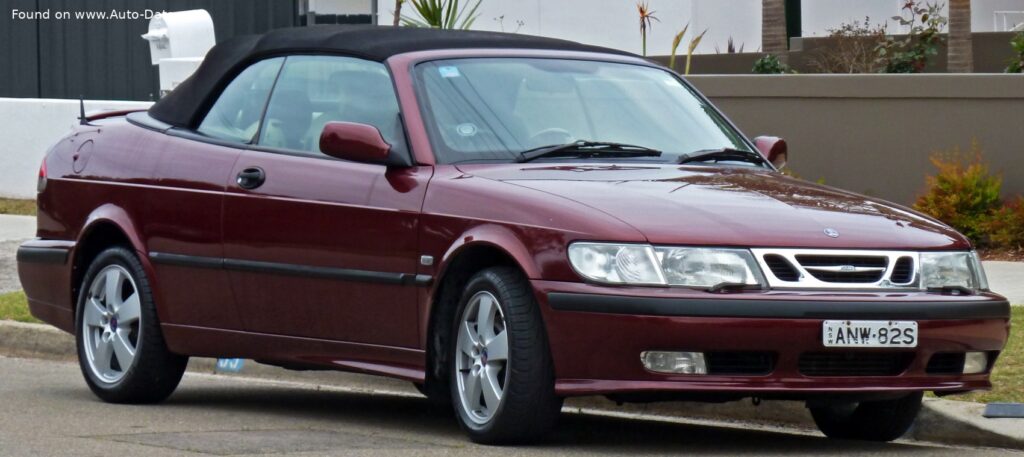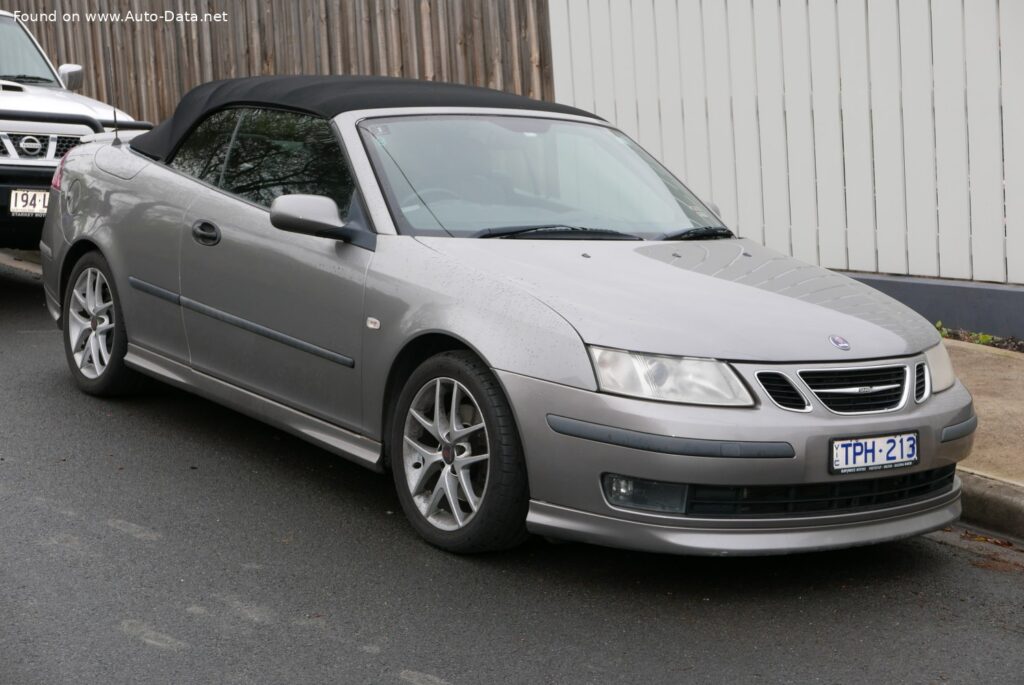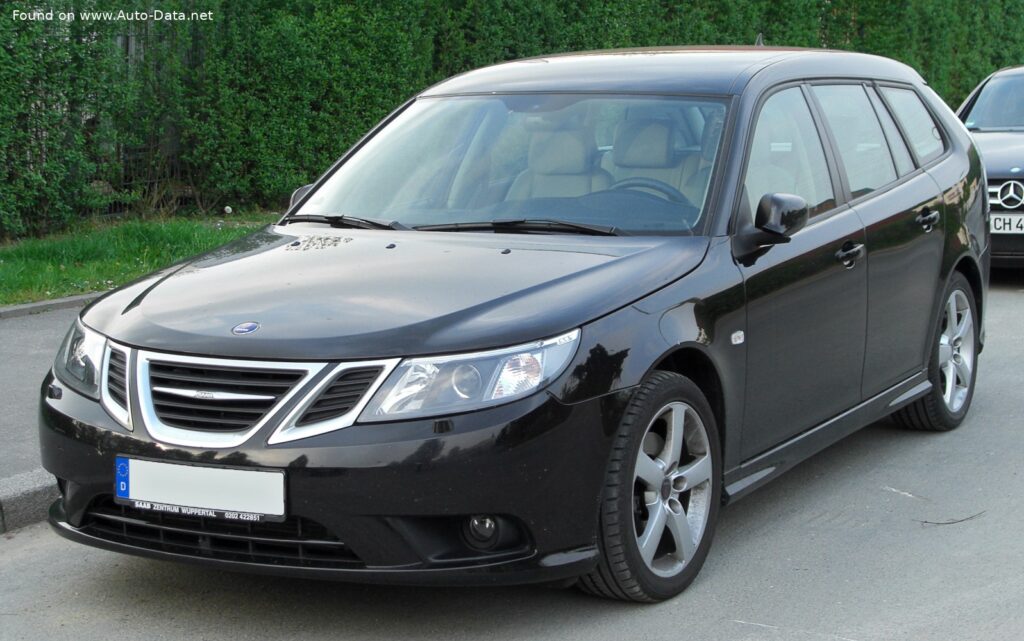
The Saab 9-3 Sport Combi II, specifically the facelifted version introduced in 2007, represents a significant iteration of Saab’s compact executive car. Positioned as a five-door, five-seat station wagon (estate), the 9-3 Sport Combi aimed to blend practicality with Saab’s characteristic Scandinavian design and engineering. The 1.8t BioPower variant, producing 175 horsepower, was a key offering, particularly in European markets where flexible-fuel vehicles were gaining traction. This model year marked a refinement of the second-generation 9-3, addressing earlier criticisms and enhancing the vehicle’s overall appeal. The Sport Combi body style offered increased cargo capacity compared to the sedan, making it a popular choice for families and those requiring versatile transportation.
Saab 9-3 Sport Combi II (2007-2010) 1.8t BioPower
The 2007 facelift brought subtle but important changes to the 9-3 Sport Combi, including revised front and rear styling, interior upgrades, and improvements to the chassis. The 1.8t BioPower engine was a notable feature, designed to run on both gasoline and E85 ethanol fuel, offering drivers a choice and potentially reducing emissions. This flexibility was particularly relevant in Sweden, Saab’s home market, where E85 availability was relatively high. The Sport Combi competed with other premium compact wagons such as the Audi A4 Avant, BMW 3 Series Touring, and Volvo V60, offering a unique alternative with its distinctive styling and focus on driver comfort.
Engine & Performance
The heart of the 9-3 Sport Combi II 1.8t BioPower is a 1.998-liter (121.93 cubic inches) inline-four cylinder engine. This engine utilizes a turbocharger and intercooler to boost power output to 175 horsepower at 5500 rpm and 265 Nm (195.45 lb.-ft.) of torque at 2500 rpm. The engine’s ability to run on E85 ethanol allows for increased power output when using higher ethanol blends, although the 175 hp figure is quoted for standard gasoline or a mix. Power is delivered to the front wheels via a six-speed manual transmission. Performance figures include a 0-100 km/h (0-62 mph) acceleration time of 8.7 seconds and a 0-60 mph time of approximately 8.3 seconds. The vehicle boasts a maximum speed of 210 km/h (130.49 mph). The engine’s specific output is 87.6 hp per liter, demonstrating a relatively efficient power delivery for its time.
Design & Features
The Saab 9-3 Sport Combi II is characterized by its distinctive Scandinavian design language. The station wagon body style provides a practical and spacious interior, with 419 liters (14.8 cubic feet) of trunk space with the rear seats up, expanding to 1273 liters (44.96 cubic feet) when folded down. The vehicle’s exterior features a sleek profile, with a sloping roofline and a relatively long wheelbase. Inside, the cabin is designed with a focus on ergonomics and driver comfort. Safety features, typical for a vehicle of this era, include ABS (Anti-lock Braking System). The 2007 facelift brought improvements to interior materials and trim, enhancing the overall perceived quality. Standard features included power windows, power mirrors, and a basic audio system. Optional extras could include leather upholstery, a sunroof, and upgraded audio systems. The vehicle’s dimensions are 4670 mm (183.86 in) in length, 1762 mm (69.37 in) in width, and 1496 mm (58.9 in) in height.
Technical Specifications
| Brand | Saab |
| Model | 9-3 |
| Generation | 9-3 Sport Combi II (facelift 2007) |
| Type (Engine) | 1.8t BioPower (175 Hp) |
| Start of production | 2007 |
| End of production | December, 2010 |
| Powertrain Architecture | Internal Combustion engine |
| Body type | Station wagon (estate) |
| Seats | 5 |
| Doors | 5 |
| Fuel consumption (urban) | 10.9 l/100 km (21.6 US mpg) |
| Fuel consumption (extra urban) | 5.7 l/100 km (41.3 US mpg) |
| Fuel consumption (combined) | 7.6 l/100 km (30.9 US mpg) |
| CO2 emissions | 181 g/km |
| Fuel Type | Petrol / Ethanol – E85 |
| Acceleration 0 – 100 km/h | 8.7 sec |
| Acceleration 0 – 62 mph | 8.7 sec |
| Acceleration 0 – 60 mph | 8.3 sec |
| Maximum speed | 210 km/h (130.49 mph) |
| Emission standard | Euro 4 |
| Weight-to-power ratio | 9.1 kg/Hp |
| Weight-to-torque ratio | 6 kg/Nm |
| Power | 175 Hp @ 5500 rpm |
| Torque | 265 Nm @ 2500 rpm (195.45 lb.-ft. @ 2500 rpm) |
| Engine layout | Front, Transverse |
| Engine Model/Code | B207E |
| Engine displacement | 1998 cm3 (121.93 cu. in.) |
| Number of cylinders | 4 |
| Engine configuration | Inline |
| Cylinder Bore | 86 mm (3.39 in.) |
| Piston Stroke | 86 mm (3.39 in.) |
| Compression ratio | 9.5:1 |
| Number of valves per cylinder | 4 |
| Fuel injection system | Multi-port manifold injection |
| Engine aspiration | Turbocharger, Intercooler |
| Valvetrain | DOHC |
| Engine oil capacity | 6 l (6.34 US qt | 5.28 UK qt) |
| Coolant | 7.5 l (7.93 US qt | 6.6 UK qt) |
| Kerb Weight | 1590 kg (3505.35 lbs.) |
| Max. weight | 2040 kg (4497.43 lbs.) |
| Max load | 450 kg (992.08 lbs.) |
| Trunk (boot) space – minimum | 419 l (14.8 cu. ft.) |
| Trunk (boot) space – maximum | 1273 l (44.96 cu. ft.) |
| Fuel tank capacity | 61 l (16.11 US gal | 13.42 UK gal) |
| Max. roof load | 100 kg (220.46 lbs.) |
| Permitted trailer load with brakes (12%) | 1600 kg (3527.4 lbs.) |
| Permitted trailer load without brakes | 750 kg (1653.47 lbs.) |
| Length | 4670 mm (183.86 in.) |
| Width | 1762 mm (69.37 in.) |
| Width including mirrors | 2038 mm (80.24 in.) |
| Height | 1496 mm (58.9 in.) |
| Wheelbase | 2675 mm (105.31 in.) |
| Front track | 1524 mm (60 in.) |
| Rear track | 1506 mm (59.29 in.) |
| Front overhang | 981 mm (38.62 in.) |
| Rear overhang | 1014 mm (39.92 in.) |
| Ride height (ground clearance) | 127 mm (5 in.) |
| Minimum turning circle | 10.8 m (35.43 ft.) |
| Drive wheel | Front wheel drive |
| Number of gears | 6 gears, manual transmission |
| Front suspension | Independent type McPherson, Transverse stabilizer |
| Rear suspension | Independent multi-link suspension, Transverse stabilizer |
| Front brakes | Ventilated discs, 285 mm |
| Rear brakes | Disc, 278 mm |
| Steering type | Steering rack and pinion |
| Power steering | Hydraulic Steering |
| Tires size | 195/65 R15; 215/55 R16; 235/45 R17 |
| Wheel rims size | 6.5J x 15; 6.5J x 16; 7.5J x 17 |