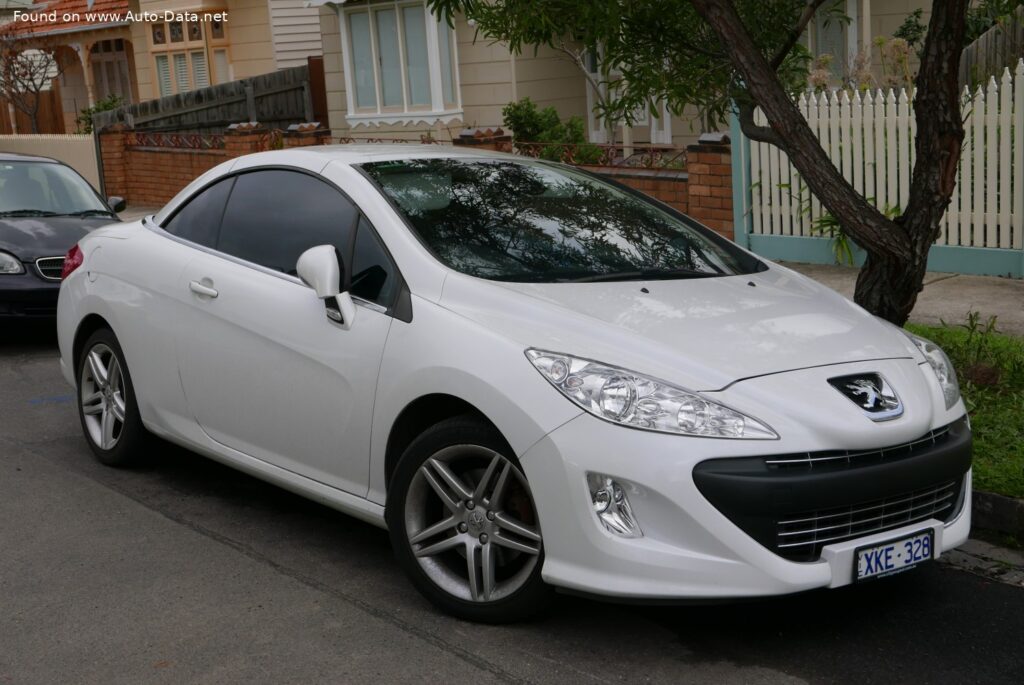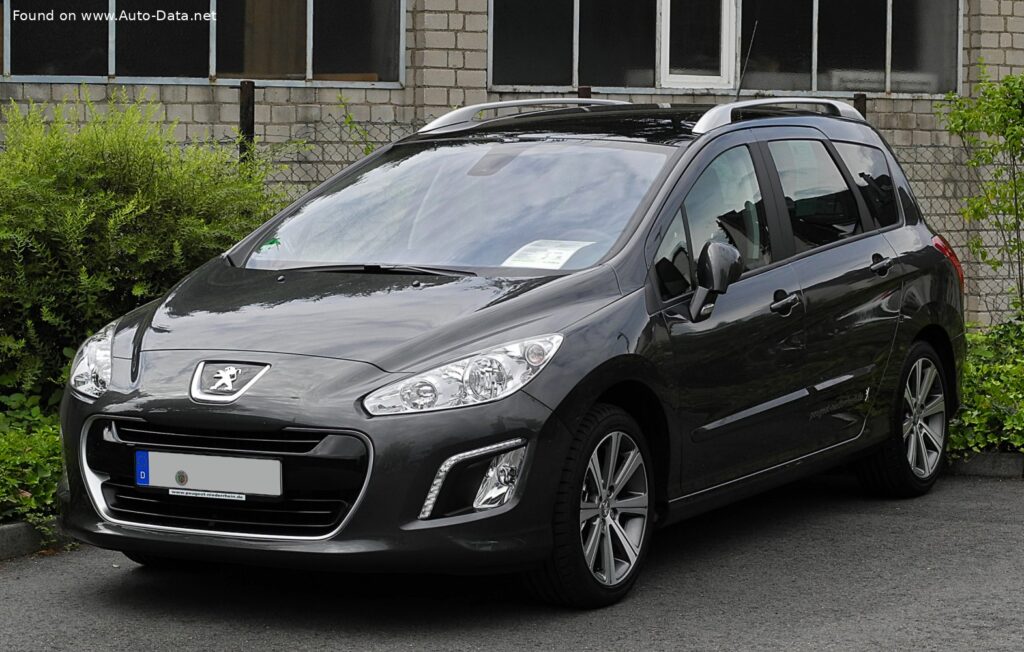
The Peugeot 308 SW I (Phase II, 2011) 1.6 e-HDI is a compact station wagon (estate) produced by the French automaker Peugeot between 2011 and 2013. This version represents a mid-life refresh of the first-generation 308 SW, focusing on improved fuel efficiency and reduced emissions through the implementation of the e-HDI diesel technology. Positioned as a practical and economical family vehicle, the 308 SW competed with other European estate cars like the Volkswagen Golf Variant, Ford Focus Estate, and Opel Astra Sports Tourer. While not officially sold in the United States, the 308 SW was a popular choice in Europe for buyers seeking a versatile and fuel-efficient vehicle.
Peugeot 308 SW I (Phase II): Overview
The 308 SW, introduced in 2007, was Peugeot’s entry into the competitive compact estate market. The Phase II update in 2011 brought styling revisions, enhanced interior features, and, crucially, the adoption of the 1.6 e-HDI engine. This powertrain combined a diesel engine with Stop & Start technology and a particulate filter (FAP) to minimize environmental impact and maximize fuel economy. The SW designation signifies “Station Wagon,” highlighting the vehicle’s practical focus on cargo capacity and passenger space. The 308 SW aimed to provide a balance between practicality, comfort, and affordability, appealing to families and individuals needing a versatile vehicle for everyday use.
Engine & Performance
The 2011 Peugeot 308 SW 1.6 e-HDI is powered by a 1.6-liter inline-four cylinder diesel engine, designated 9HR DV6C. This engine produces 112 horsepower (Hp) at 3600 rpm and 270 Newton-meters (199.14 lb.-ft.) of torque at 1750 rpm. The engine features a turbocharger and intercooler to enhance performance and efficiency. Power is delivered to the front wheels via a six-speed manual transmission (BMP6). The e-HDI technology incorporates a diesel particulate filter (FAP) to reduce soot emissions and a Stop & Start system that automatically shuts off the engine when the vehicle is stationary, further improving fuel economy. Acceleration from 0 to 100 km/h (0-62 mph) takes 12.3 seconds, while the top speed is 185 km/h (114.95 mph). The engine’s relatively high torque output provides good responsiveness for everyday driving, while the focus on fuel efficiency results in combined fuel consumption of 4.7 liters per 100 kilometers (50 US mpg or 60.1 UK mpg).
Design & Features
The Peugeot 308 SW I (Phase II) maintains the sleek and modern styling of the original 308, with subtle revisions to the front and rear fascias. The station wagon body style provides a generous cargo area, making it well-suited for families or individuals needing to transport larger items. The interior is designed with practicality and comfort in mind, offering seating for five passengers. Key features include a spacious cabin, ergonomic controls, and a range of standard and optional equipment. Safety features, typical for vehicles of this era, include ABS (Anti-lock Braking System) and driver/passenger airbags. The Phase II update also brought improvements to interior materials and trim, enhancing the overall perceived quality. The SW’s large tailgate and low loading lip further contribute to its practicality. The vehicle’s dimensions are 4500 mm (177.17 in) in length, 1815 mm (71.46 in) in width, and 1564 mm (61.57 in) in height.
Technical Specifications
| Brand | Peugeot |
| Model | 308 |
| Generation | 308 SW I (Phase II, 2011) |
| Type (Engine) | 1.6 e-HDI (112 Hp) FAP BMP6 |
| Start of production | 2011 |
| End of production | 2013 |
| Powertrain Architecture | Internal Combustion engine |
| Body type | Station wagon (estate) |
| Seats | 5 |
| Doors | 5 |
| Fuel consumption (urban) | 6.1 l/100 km (38.6 US mpg, 46.3 UK mpg, 16.4 km/l) |
| Fuel consumption (extra urban) | 3.9 l/100 km (60.3 US mpg, 72.4 UK mpg, 25.6 km/l) |
| Fuel consumption (combined) | 4.7 l/100 km (50 US mpg, 60.1 UK mpg, 21.3 km/l) |
| Fuel Type | Diesel |
| Acceleration 0 – 100 km/h | 12.3 sec |
| Acceleration 0 – 62 mph | 12.3 sec |
| Acceleration 0 – 60 mph | 11.7 sec |
| Maximum speed | 185 km/h (114.95 mph) |
| Emission standard | Euro 5 |
| Weight-to-power ratio | 13.3 kg/Hp, 75.3 Hp/tonne |
| Weight-to-torque ratio | 5.5 kg/Nm, 181.5 Nm/tonne |
| Power | 112 Hp @ 3600 rpm |
| Power per litre | 71.8 Hp/l |
| Torque | 270 Nm @ 1750 rpm (199.14 lb.-ft. @ 1750 rpm) |
| Engine layout | Front, Transverse |
| Engine Model/Code | 9HR DV6C |
| Engine displacement | 1560 cm3 (95.2 cu. in.) |
| Number of cylinders | 4 |
| Engine configuration | Inline |
| Number of valves per cylinder | 2 |
| Fuel injection system | Diesel Commonrail |
| Engine aspiration | Turbocharger, Intercooler |
| Engine oil capacity | 3.75 l (3.96 US qt | 3.3 UK qt) |
| Coolant | 6 l (6.34 US qt | 5.28 UK qt) |
| Kerb Weight | 1488 kg (3280.48 lbs.) |
| Max. weight | 2150 kg (4739.94 lbs.) |
| Max load | 662 kg (1459.46 lbs.) |
| Trunk (boot) space – minimum | 520 l (18.36 cu. ft.) |
| Trunk (boot) space – maximum | 2149 l (75.89 cu. ft.) |
| Fuel tank capacity | 60 l (15.85 US gal | 13.2 UK gal) |
| Length | 4500 mm (177.17 in.) |
| Width | 1815 mm (71.46 in.) |
| Height | 1564 mm (61.57 in.) |
| Wheelbase | 2708 mm (106.61 in.) |
| Minimum turning circle | 11.08 m (36.35 ft.) |
| Drivetrain Architecture | Front wheel drive |
| Number of gears | 6 gears, manual transmission |
| Front suspension | Independent, type McPherson with coil spring and anti-roll bar |
| Rear suspension | Semi-independent, coil spring |
| Front brakes | Ventilated discs |
| Rear brakes | Disc |
| Tires size | 205/55 R16 V; 225/45 R17 V; 225/40 R18 V |
The Peugeot 308 SW I (Phase II, 2011) 1.6 e-HDI represents a practical and efficient option in the compact estate segment. Its combination of fuel economy, spaciousness, and reasonable performance made it a popular choice for European buyers seeking a versatile family vehicle.