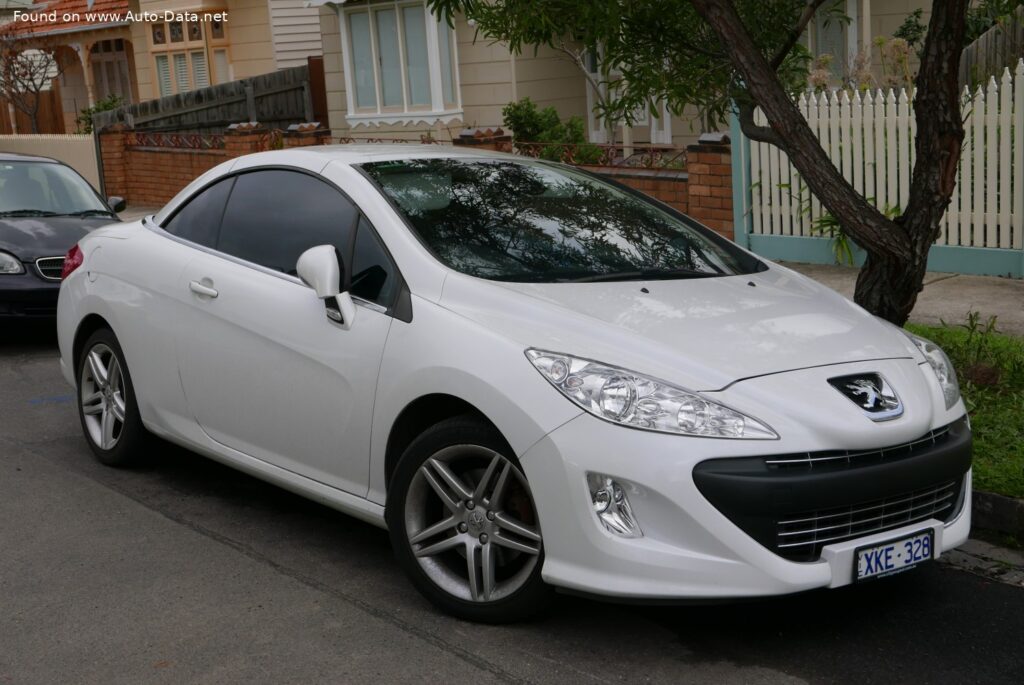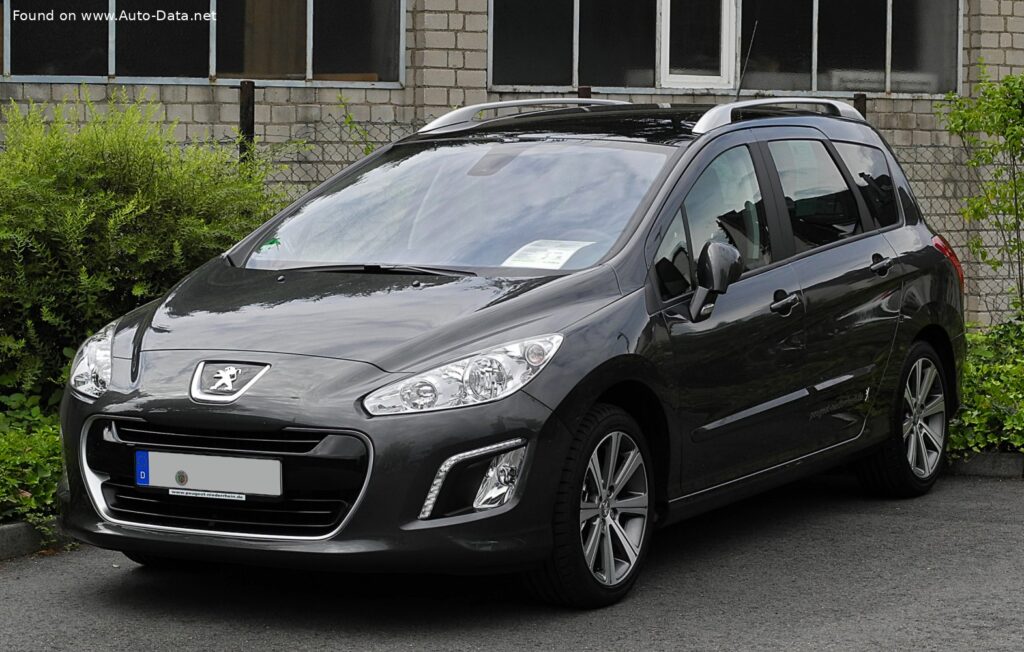
The Peugeot 308 SW I (Phase II, 2011) 1.6 HDI is a compact station wagon (estate) produced by the French automaker Peugeot between 2011 and 2013. This iteration represents a mid-life refresh of the first-generation 308 SW, focusing on improved efficiency and refinement. While the 308 was not officially sold in the United States, it was a popular model in Europe, competing with vehicles like the Volkswagen Golf Estate, Ford Focus Wagon, and Renault Mégane Estate. The SW designation denotes the station wagon body style, offering increased cargo capacity and practicality compared to the hatchback version.
Peugeot 308 SW I (Phase II): Overview
The 308 SW aimed to provide a versatile and economical option for families and individuals needing a practical vehicle. The Phase II update brought subtle styling changes, enhanced interior materials, and improvements to the engine range, including the 1.6 HDI diesel engine detailed here. This model prioritized fuel efficiency and low running costs, aligning with European market demands and increasingly stringent emissions regulations.
Engine & Performance
The 308 SW I (Phase II) 1.6 HDI (92 Hp) is powered by a 1.6-liter inline-four cylinder diesel engine, designated 9HJ DV6ATED4. This engine produces 92 horsepower at 4,000 rpm and 230 Newton-meters (169.64 lb.-ft.) of torque at 1750 rpm. The engine utilizes a turbocharger with an intercooler and a diesel common rail fuel injection system to optimize performance and fuel economy. The engine’s power-to-liter ratio is 59 horsepower per liter. Power is delivered to the front wheels via a five-speed manual transmission. Acceleration from 0 to 100 km/h (0-62 mph) takes 13.6 seconds, while 0 to 60 mph is achieved in 12.9 seconds. The vehicle has a maximum speed of 177 km/h (109.98 mph). The weight-to-power ratio is 15.5 kg/Hp, and the weight-to-torque ratio is 6.2 kg/Nm.
Design & Features
The 308 SW I (Phase II) is a five-door, five-seat station wagon. Its design emphasizes practicality and a modern aesthetic. The SW body style provides a significantly larger cargo area compared to the hatchback version. With the rear seats up, the trunk offers 520 liters (18.36 cu. ft.) of space, expanding to a substantial 2149 liters (75.89 cu. ft.) with the rear seats folded down. The vehicle’s dimensions are 4500 mm (177.17 in.) in length, 1815 mm (71.46 in.) in width, and 1564 mm (61.57 in.) in height. The wheelbase measures 2708 mm (106.61 in.).
Safety features included ABS (Anti-lock Braking System) as standard. The Phase II update also focused on improving interior quality and refinement. The steering is rack and pinion with electric power assistance. The vehicle rides on either 15 or 16-inch wheels, fitted with tires sized 195/65R15V or 205/55R16V. The front suspension is independent, utilizing a McPherson strut setup with coil springs and an anti-roll bar, while the rear suspension is semi-independent with coil springs. Brakes are ventilated discs at the front and discs at the rear.
Technical Specifications
| Brand | Peugeot |
| Model | 308 |
| Generation | 308 SW I (Phase II, 2011) |
| Type (Engine) | 1.6 HDI (92 Hp) FAP |
| Start of production | 2011 |
| End of production | 2013 |
| Powertrain Architecture | Internal Combustion engine |
| Body type | Station wagon (estate) |
| Seats | 5 |
| Doors | 5 |
| Fuel consumption (urban) | 5.3 l/100 km (44.4 US mpg, 53.3 UK mpg, 18.9 km/l) |
| Fuel consumption (extra urban) | 4 l/100 km (58.8 US mpg, 70.6 UK mpg, 25 km/l) |
| Fuel consumption (combined) | 4.5 l/100 km (52.3 US mpg, 62.8 UK mpg, 22.2 km/l) |
| Fuel Type | Diesel |
| Acceleration 0 – 100 km/h | 13.6 sec |
| Acceleration 0 – 62 mph | 13.6 sec |
| Acceleration 0 – 60 mph | 12.9 sec |
| Maximum speed | 177 km/h (109.98 mph) |
| Emission standard | Euro 5 |
| Weight-to-power ratio | 15.5 kg/Hp |
| Weight-to-torque ratio | 6.2 kg/Nm |
| Power | 92 Hp @ 4000 rpm |
| Torque | 230 Nm @ 1750 rpm (169.64 lb.-ft. @ 1750 rpm) |
| Engine layout | Front, Transverse |
| Engine Model/Code | 9HJ DV6ATED4 |
| Engine displacement | 1560 cm3 (95.2 cu. in.) |
| Number of cylinders | 4 |
| Engine configuration | Inline |
| Number of valves per cylinder | 2 |
| Fuel injection system | Diesel Commonrail |
| Engine aspiration | Turbocharger, Intercooler |
| Engine oil capacity | 3.75 l (3.96 US qt | 3.3 UK qt) |
| Coolant capacity | 6 l (6.34 US qt | 5.28 UK qt) |
| Kerb Weight | 1430 kg (3152.61 lbs.) |
| Max. weight | 2100 kg (4629.71 lbs.) |
| Max load | 670 kg (1477.1 lbs.) |
| Trunk (boot) space – minimum | 520 l (18.36 cu. ft.) |
| Trunk (boot) space – maximum | 2149 l (75.89 cu. ft.) |
| Fuel tank capacity | 60 l (15.85 US gal | 13.2 UK gal) |
| Length | 4500 mm (177.17 in.) |
| Width | 1815 mm (71.46 in.) |
| Height | 1564 mm (61.57 in.) |
| Wheelbase | 2708 mm (106.61 in.) |
| Minimum turning circle | 11.08 m (36.35 ft.) |
| Drivetrain | Front wheel drive |
| Number of gears | 5 gears, manual transmission |
The Peugeot 308 SW I (Phase II) 1.6 HDI represented a practical and efficient choice for European buyers seeking a versatile family vehicle. Its combination of a fuel-efficient diesel engine, spacious interior, and reasonable performance made it a competitive offering in the compact station wagon segment.