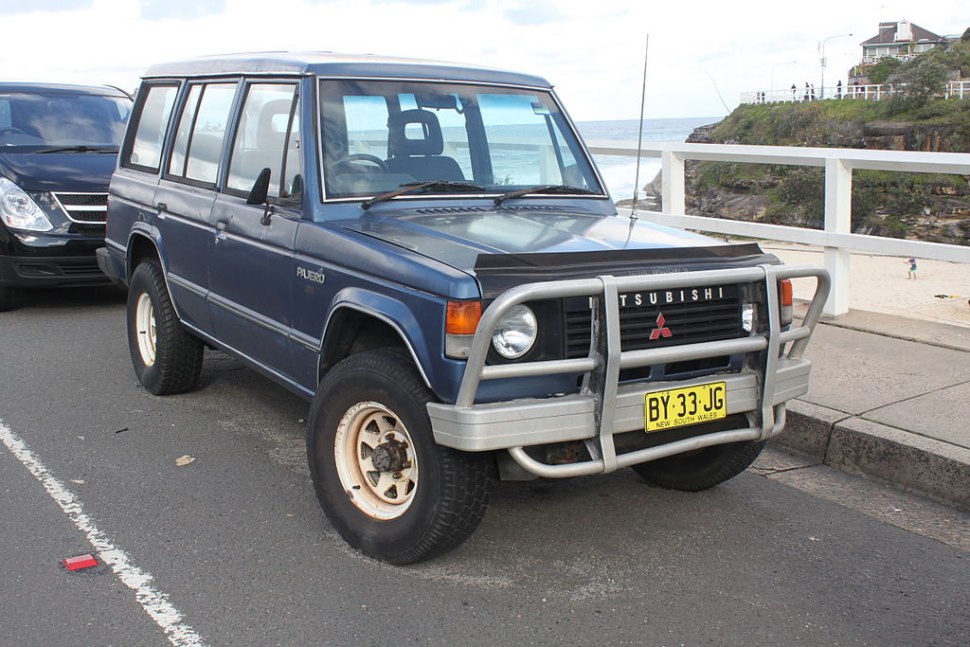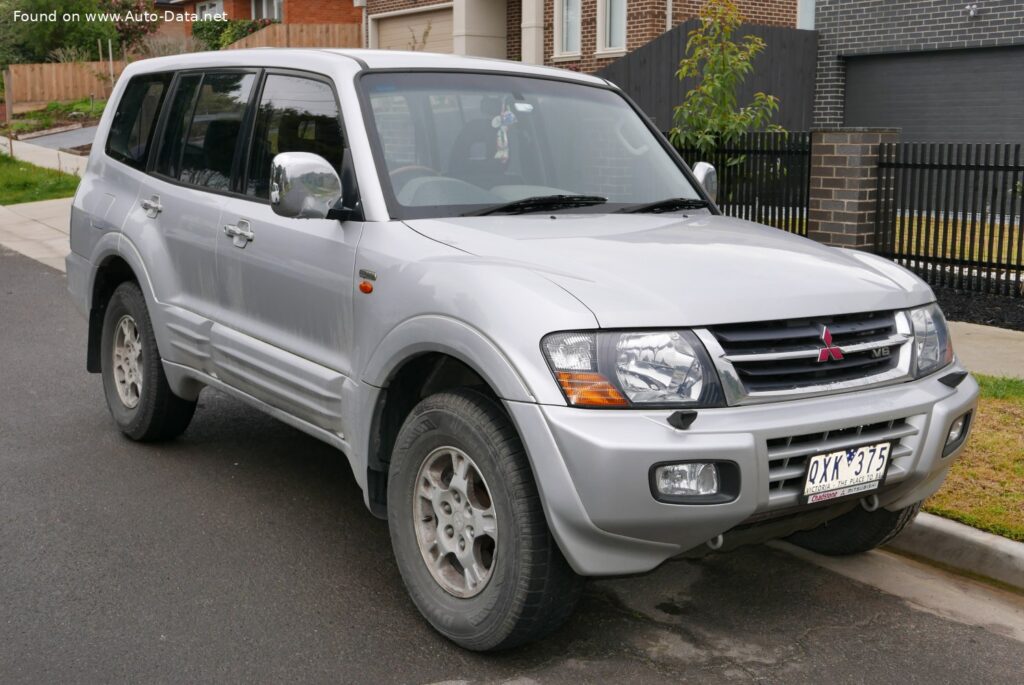
The Mitsubishi Pajero III 3.2 DI-D, produced from 2000 to 2006, represents the third generation of Mitsubishi’s well-regarded Pajero SUV. While not widely sold in the United States, the Pajero held a significant position in the European, Asian, and Australian markets as a robust and capable off-road vehicle, competing with models like the Toyota Land Cruiser and Nissan Patrol. This iteration focused on blending off-road prowess with improved on-road comfort and refinement, appealing to a broader customer base. The 3.2 DI-D variant, equipped with a diesel engine and automatic transmission, was a popular choice for those seeking a balance of power, efficiency, and convenience.
Mitsubishi Pajero III 3.2 DI-D: An Overview
The Pajero III marked a substantial evolution for the Pajero line. It moved towards a more sophisticated design, incorporating independent suspension on all four wheels – a key feature for both ride quality and off-road articulation. The 3.2 DI-D model specifically utilized a direct injection diesel engine, offering increased power and torque compared to earlier iterations. The five-seat configuration, coupled with the automatic transmission, made it a practical choice for families and those prioritizing ease of driving. The Pajero’s reputation for durability and off-road capability remained central to its appeal, even as it embraced more modern features.
Engine & Performance
The heart of the Pajero III 3.2 DI-D is its 4M41 3.2-liter inline-four diesel engine. This engine produces 165 horsepower at 3800 rpm and 373 Nm (275.11 lb.-ft.) of torque at 2000 rpm. The engine utilizes a turbocharger and a diesel commonrail fuel injection system to optimize performance and fuel efficiency. While 0-60 mph acceleration takes approximately 12.5 seconds, and 0-100 km/h in 13.2 seconds, the Pajero’s strength lies in its torque delivery, making it well-suited for tackling challenging terrain and towing. The engine’s power-to-weight ratio is 12.1 kg/Hp, and its torque-to-weight ratio is 5.4 kg/Nm. The engine’s longitudinal front-mounted layout contributes to the vehicle’s balanced handling. Fuel economy figures are rated at 13.3 l/100 km (17.7 US mpg) in urban conditions, 8.7 l/100 km (27 US mpg) on the extra-urban cycle, and 10.5 l/100 km (22.4 US mpg) combined.
Design & Features
The Pajero III 3.2 DI-D is a three-door SUV, offering seating for five passengers. Its body-on-frame construction provides a robust foundation for off-road adventures. The vehicle’s dimensions are 4260 mm (167.72 in) in length, 1845 mm (72.64 in) in width, and 1845 mm (72.64 in) in height, with a wheelbase of 2545 mm (100.2 in). Key features include a double wishbone front suspension and a coil spring rear suspension, designed to provide a comfortable ride both on and off-road. Braking is handled by ventilated discs on all four wheels, complemented by an Anti-lock Braking System (ABS) for enhanced safety. The Pajero III also features hydraulic power steering for ease of maneuverability. Trunk space ranges from a minimum of 415 liters (14.66 cu. ft.) to a maximum of 1253 liters (44.25 cu. ft.) with the rear seats folded down. The vehicle’s kerb weight is 2000 kg (4409.25 lbs), with a maximum weight of 2510 kg (5533.6 lbs) and a maximum load capacity of 510 kg (1124.36 lbs).
Technical Specifications
| Brand | Mitsubishi |
| Model | Pajero |
| Generation | Pajero III |
| Type (Engine) | 3.2 DI-D (165 Hp) 5 Seat Automatic |
| Start of production | 2000 year |
| End of production | 2006 year |
| Powertrain Architecture | Internal Combustion engine |
| Body type | SUV |
| Seats | 5 |
| Doors | 3 |
| Fuel consumption (urban) | 13.3 l/100 km (17.7 US mpg, 21.2 UK mpg, 7.5 km/l) |
| Fuel consumption (extra urban) | 8.7 l/100 km (27 US mpg, 32.5 UK mpg, 11.5 km/l) |
| Fuel consumption (combined) | 10.5 l/100 km (22.4 US mpg, 26.9 UK mpg, 9.5 km/l) |
| Fuel Type | Diesel |
| Acceleration 0 – 100 km/h | 13.2 sec |
| Acceleration 0 – 62 mph | 13.2 sec |
| Acceleration 0 – 60 mph | 12.5 sec |
| Maximum speed | 170 km/h (105.63 mph) |
| Weight-to-power ratio | 12.1 kg/Hp |
| Weight-to-torque ratio | 5.4 kg/Nm |
| Power | 165 Hp @ 3800 rpm |
| Torque | 373 Nm @ 2000 rpm (275.11 lb.-ft. @ 2000 rpm) |
| Engine layout | Front, Longitudinal |
| Engine Model/Code | 4M41 |
| Engine displacement | 3200 cm3 (195.28 cu. in.) |
| Number of cylinders | 4 |
| Engine configuration | Inline |
| Cylinder Bore | 98.5 mm (3.88 in.) |
| Piston Stroke | 105 mm (4.13 in.) |
| Compression ratio | 17:1 |
| Number of valves per cylinder | 4 |
| Fuel injection system | Diesel Commonrail |
| Engine aspiration | Turbocharger |
| Valvetrain | DOHC |
| Engine oil capacity | 9.8 l (10.36 US qt | 8.62 UK qt) |
| Coolant capacity | 9 l (9.51 US qt | 7.92 UK qt) |
| Kerb Weight | 2000 kg (4409.25 lbs.) |
| Max. weight | 2510 kg (5533.6 lbs.) |
| Max load | 510 kg (1124.36 lbs.) |
| Trunk (boot) space – minimum | 415 l (14.66 cu. ft.) |
| Trunk (boot) space – maximum | 1253 l (44.25 cu. ft.) |
| Fuel tank capacity | 71 l (18.76 US gal | 15.62 UK gal) |
| Length | 4260 mm (167.72 in.) |
| Width | 1845 mm (72.64 in.) |
| Height | 1845 mm (72.64 in.) |
| Wheelbase | 2545 mm (100.2 in.) |
| Front track | 1560 mm (61.42 in.) |
| Rear (Back) track | 1560 mm (61.42 in.) |
| Drive wheel | All wheel drive (4×4) |
| Number of gears and type of gearbox | 5 gears, automatic transmission |
| Front suspension | Double wishbone |
| Rear suspension | Coil spring |
| Front brakes | Ventilated discs |
| Rear brakes | Ventilated discs |
| Assisting systems | ABS (Anti-lock braking system) |
| Steering type | Steering rack and pinion |
| Power steering | Hydraulic Steering |
| Tires size | 235/80 R16 S |
| Wheel rims size | 16 |
The Mitsubishi Pajero III 3.2 DI-D remains a respected vehicle in the off-road community, known for its reliability, capability, and comfortable ride. While not officially available in the US market, its enduring popularity in other regions speaks to its well-engineered design and robust construction.