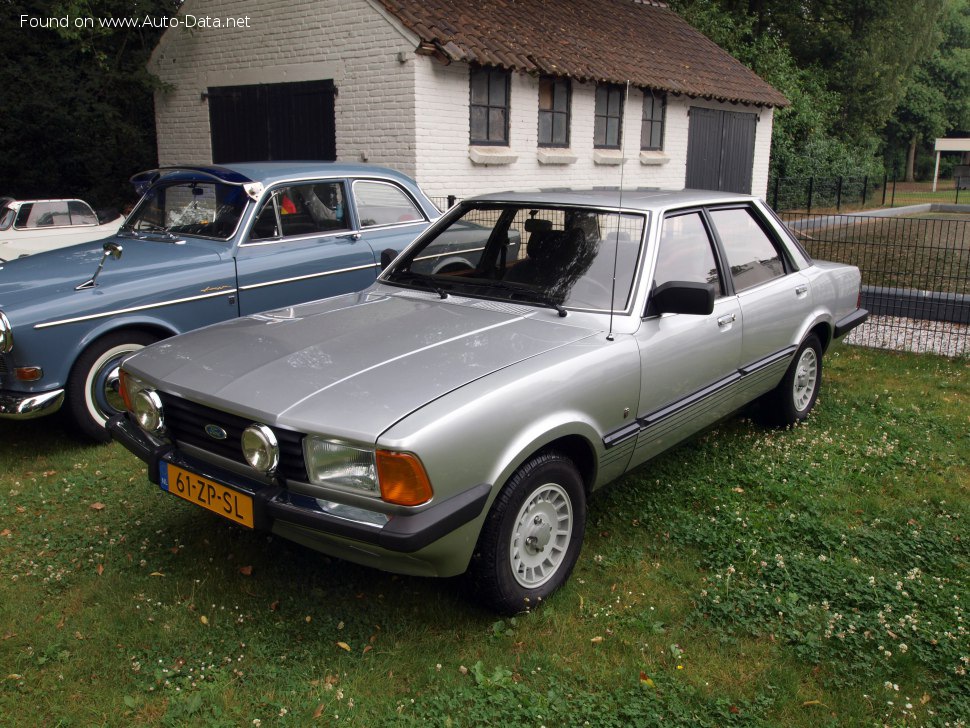
The Ford Taunus, specifically the GBTS, GBFS, and CBTS series produced between 1975 and 1979, represents a significant chapter in Ford of Europe’s history. This generation of the Taunus, a mid-size family car, was aimed at providing practical and affordable transportation to the European market. While not officially sold in the United States, understanding the Taunus provides insight into Ford’s global engineering and design philosophies during the 1970s. The 1.6-liter version, producing 72 horsepower, was a common variant, offering a balance between fuel economy and acceptable performance for the era. This model competed with vehicles like the Opel Ascona, Volkswagen Passat, and British Leyland’s offerings, establishing itself as a popular choice for families and commuters.
The Ford Taunus (GBTS, GBFS, CBTS): A European Family Sedan
The Taunus name has a long history within Ford Europe, dating back to the 1930s. However, the GBTS, GBFS, and CBTS series, introduced in 1975, marked a substantial redesign. This generation aimed to modernize the Taunus, offering improved comfort, safety, and styling compared to its predecessors. The Taunus was primarily manufactured in Ford’s plants in Germany, hence its strong association with the German automotive market. It was designed to appeal to a broad customer base seeking a reliable and reasonably priced vehicle. The “Taunus” designation itself refers to a mountain range in Germany, reflecting the car’s origin and intended market.
Engine & Performance
The 1.6-liter engine powering the Taunus GBTS, GBFS, and CBTS was a naturally aspirated, inline-four cylinder unit. Producing 72 horsepower, it wasn’t designed for outright speed, but rather for dependable performance in everyday driving conditions. The engine’s power output translates to approximately 45 horsepower per liter, a respectable figure for the mid-1970s. Fuel delivery was managed by a carburetor, a common technology at the time, prioritizing simplicity and cost-effectiveness over the more advanced fuel injection systems that would emerge later. The engine was mounted longitudinally in the front of the vehicle, driving the rear wheels. This configuration was typical for European sedans of this era.
The Taunus 1.6 was equipped with a four-speed manual transmission as standard. This gearbox provided a direct and engaging driving experience, allowing drivers to control the engine’s power effectively. While an automatic transmission was offered on some Taunus models, it wasn’t commonly paired with the 1.6-liter engine due to performance considerations. The rear-wheel-drive layout contributed to balanced handling, although it wasn’t particularly sporty. The focus was on providing a comfortable and predictable ride, suitable for long journeys and daily commutes. Top speed was around 90-95 mph, and acceleration from 0 to 60 mph took approximately 13-14 seconds, figures that were typical for a family sedan of its time.
Design & Features
The Ford Taunus GBTS, GBFS, and CBTS was available exclusively as a five-door sedan. The body style reflected the design trends of the 1970s, with a boxy silhouette, prominent chrome trim, and relatively large windows. The five-door configuration offered enhanced practicality and accessibility for passengers. The interior was designed with functionality in mind, featuring durable materials and a straightforward layout. While not luxurious, the Taunus provided a comfortable and spacious cabin for a family of five.
Safety features, while limited by the standards of today, were improved compared to earlier Taunus models. Disc brakes were fitted to the front wheels, providing superior stopping power compared to drum brakes. Rear brakes remained drum-based, a cost-saving measure. The Taunus also incorporated basic safety features such as seatbelts and a collapsible steering column, designed to mitigate the impact of a collision. The car’s relatively robust construction provided a degree of passive safety. Styling cues included a prominent front grille, rectangular headlights, and a generally conservative aesthetic. The 13-inch wheel rims were standard, providing a comfortable ride quality on the roads of the time. The Taunus was available in a range of colors, reflecting the popular tastes of the European market.
Technical Specifications
| Brand | Ford |
| Model | Taunus |
| Generation | Taunus (GBTS, GBFS, CBTS) |
| Type (Engine) | 1.6 (72 Hp) |
| Start of production | 1975 |
| End of production | 1979 |
| Powertrain Architecture | Internal Combustion engine |
| Body type | Sedan |
| Doors | 5 |
| Fuel Type | Petrol (Gasoline) |
| Power | 72 Hp |
| Power per litre | 45 Hp/l |
| Engine layout | Front, Longitudinal |
| Engine displacement | 1600 cm3 |
| Engine displacement (US Units) | 97.64 cu. in. |
| Fuel injection system | Carburettor |
| Engine aspiration | Naturally aspirated engine |
| Number of gears and type of gearbox | 4 gears, manual transmission |
| Front brakes | Disc |
| Rear brakes | Drum |
| Wheel rims size | 13 |
The Ford Taunus GBTS, GBFS, and CBTS series, while not a performance icon, played a vital role in the European automotive landscape of the 1970s. It offered a practical, affordable, and reliable transportation solution for families and commuters. Its design and engineering reflected the priorities of the era, focusing on functionality, durability, and fuel efficiency. Although largely unknown in the United States, the Taunus represents a significant piece of Ford’s global history and a testament to the company’s ability to adapt to diverse market demands.