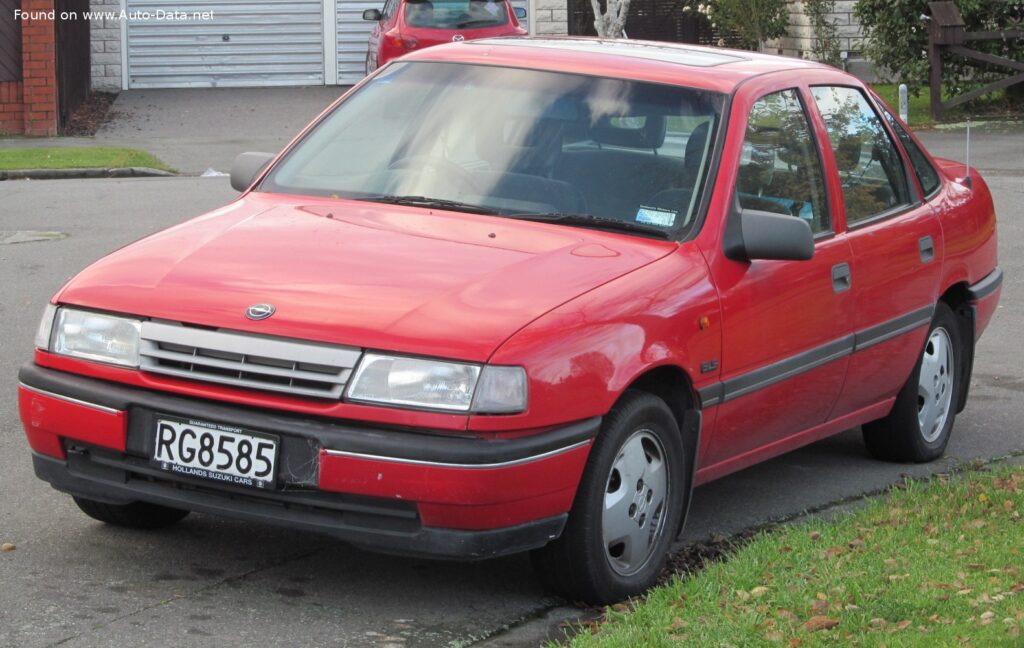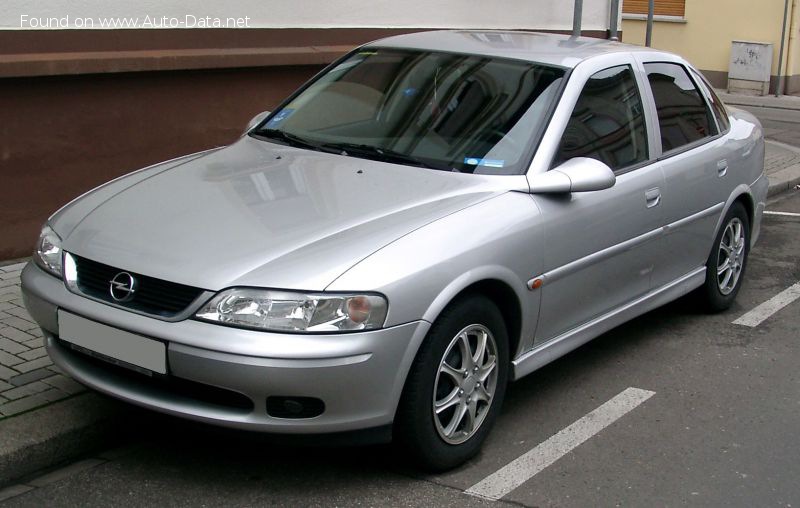
The Opel Vectra B (facelift 1999) 2.0i 16V Automatic represents a significant refinement of Opel’s mid-size offering, positioned as a competitor to vehicles like the Ford Mondeo and Volkswagen Passat in the European market. Introduced as a facelift to the original Vectra B, this iteration featured updated styling, improved interior appointments, and enhanced mechanical components. While not officially sold in the United States, the Vectra B was a popular choice for families and fleet buyers across Europe, known for its practicality, comfort, and relatively affordable price point. This particular variant, equipped with a 2.0-liter 16-valve engine and an automatic transmission, aimed to provide a balance between performance and convenience.
Opel Vectra B: A Refined Family Sedan
The Vectra B, launched in 1995, was Opel’s attempt to move upmarket and offer a more sophisticated alternative to its predecessors. The 1999 facelift brought with it revised front and rear styling, including new headlights, a redesigned grille, and updated interior trim. The goal was to modernize the car’s appearance and address some of the criticisms leveled at the original design. The 2.0i 16V Automatic model specifically targeted buyers who prioritized ease of driving and a comfortable ride over outright sporting performance. It served as a crucial model within the Vectra B range, appealing to a broad demographic seeking a reliable and well-equipped family car.
Engine & Performance
At the heart of the 1999 Opel Vectra B 2.0i 16V Automatic lies the X20XEV inline-four cylinder engine. This naturally aspirated 1.998-liter (121.93 cubic inches) powerplant produces 136 horsepower at 5600 rpm and 188 Nm (138.66 lb-ft) of torque at 3400 rpm. The engine utilizes multi-port fuel injection and a double overhead camshaft (DOHC) valvetrain with four valves per cylinder, contributing to its relatively smooth operation and respectable power output for its time. Paired with a four-speed automatic transmission, the Vectra B 2.0i 16V achieves a 0-100 km/h (0-62 mph) acceleration time of 11 seconds, and a 0-60 mph time of 10.5 seconds. Its maximum speed is rated at 212 km/h (131.73 mph). The engine’s power-to-weight ratio is 9.9 kg/Hp, and the torque-to-weight ratio is 7.2 kg/Nm, indicating a reasonable level of performance for a family sedan of this era. Fuel economy is rated at 13.9 l/100 km (16.9 US mpg) in urban driving and 6.8 l/100 km (34.6 US mpg) on the extra-urban cycle.
Design & Features
The 1999 Opel Vectra B facelift is a four-door sedan with a traditional three-box design. It offers seating for five passengers and a trunk capacity ranging from 480 to 500 liters (16.95 to 17.66 cubic feet), providing ample space for luggage and cargo. The car’s exterior styling is characterized by its rounded lines and relatively conservative aesthetic, reflecting the design trends of the late 1990s. Inside, the Vectra B offers a functional and comfortable cabin, with a focus on practicality rather than luxury. Standard features typically included power steering, ABS (Anti-lock Braking System), and a basic audio system. The automatic transmission contributes to the car’s ease of use, particularly in urban traffic. Safety features, while not as advanced as those found in modern vehicles, were considered adequate for the time, with ABS being a key component. The vehicle’s dimensions are 4495 mm (176.97 in) in length, 1707 mm (67.2 in) in width, and 1425 mm (56.1 in) in height, with a wheelbase of 2637 mm (103.82 in).
Technical Specifications
| Brand | Opel |
| Model | Vectra |
| Generation | Vectra B (facelift 1999) |
| Type (Engine) | 2.0i 16V (136 Hp) Automatic |
| Start of production | January, 1999 |
| End of production | 2000 |
| Powertrain Architecture | Internal Combustion engine |
| Body type | Sedan |
| Seats | 5 |
| Doors | 4 |
| Fuel consumption (urban) | 13.9 l/100 km (16.9 US mpg) |
| Fuel consumption (extra urban) | 6.8 l/100 km (34.6 US mpg) |
| Fuel Type | Petrol (Gasoline) |
| Acceleration 0 – 100 km/h | 11 sec |
| Acceleration 0 – 62 mph | 11 sec |
| Acceleration 0 – 60 mph | 10.5 sec |
| Maximum speed | 212 km/h (131.73 mph) |
| Weight-to-power ratio | 9.9 kg/Hp |
| Weight-to-torque ratio | 7.2 kg/Nm |
| Power | 136 Hp @ 5600 rpm |
| Torque | 188 Nm @ 3400 rpm (138.66 lb.-ft. @ 3400 rpm) |
| Engine layout | Front, Transverse |
| Engine Model/Code | X20XEV |
| Engine displacement | 1998 cm3 (121.93 cu. in.) |
| Number of cylinders | 4 |
| Engine configuration | Inline |
| Cylinder Bore | 86 mm (3.39 in.) |
| Piston Stroke | 86 mm (3.39 in.) |
| Compression ratio | 10.8:1 |
| Number of valves per cylinder | 4 |
| Fuel injection system | Multi-port manifold injection |
| Engine aspiration | Naturally aspirated |
| Valvetrain | DOHC |
| Engine oil capacity | 4 l (4.23 US qt | 3.52 UK qt) |
| Coolant capacity | 7.1 l (7.5 US qt | 6.25 UK qt) |
| Kerb Weight | 1345 kg (2965.22 lbs.) |
| Max. weight | 1860 kg (4100.6 lbs.) |
| Max load | 515 kg (1135.38 lbs.) |
| Trunk (boot) space – minimum | 480 l (16.95 cu. ft.) |
| Trunk (boot) space – maximum | 500 l (17.66 cu. ft.) |
| Fuel tank capacity | 60 l (15.85 US gal | 13.2 UK gal) |
| Length | 4495 mm (176.97 in.) |
| Width | 1707 mm (67.2 in.) |
| Width including mirrors | 1841 mm (72.48 in.) |
| Height | 1425 mm (56.1 in.) |
| Wheelbase | 2637 mm (103.82 in.) |
| Front track | 1484 mm (58.43 in.) |
| Rear track | 1487 mm (58.54 in.) |
| Drag coefficient (Cd) | 0.30 |
| Drivetrain Architecture | Front wheel drive |
| Number of gears | 4 |
| Gearbox type | Automatic transmission |
| Front suspension | Coil spring |
| Rear suspension | Coil spring |
| Front brakes | Disc |
| Rear brakes | Disc |
| Assisting systems | ABS (Anti-lock braking system) |
| Steering type | Steering rack and pinion |
| Power steering | Hydraulic |
| Tires size | 195/65 R15 |
| Wheel rims size | 5.5J x 15 |