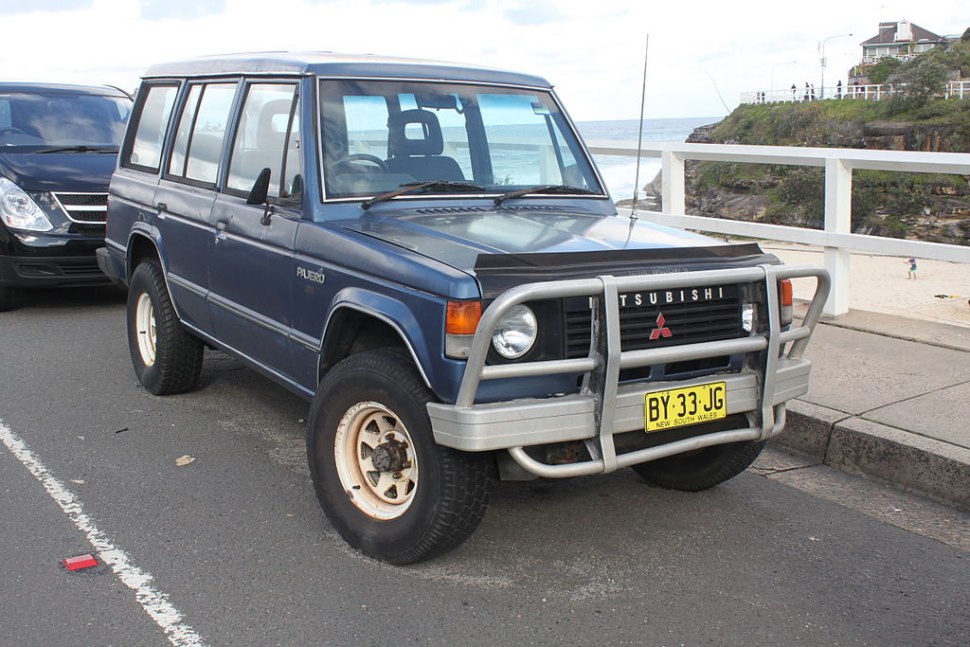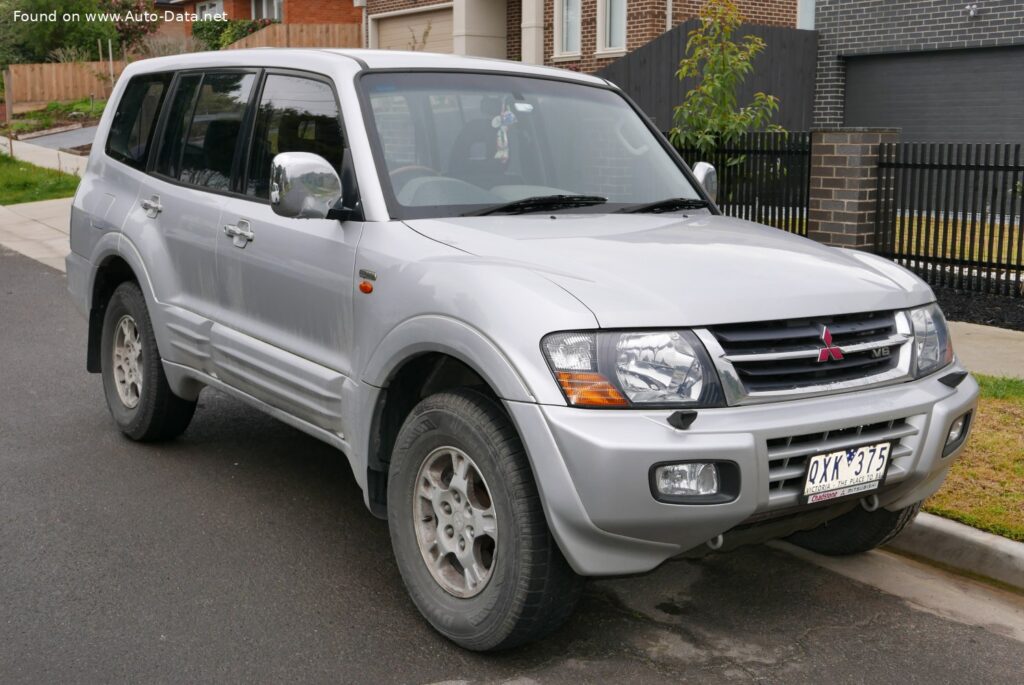
The Mitsubishi Pajero III 3.5 V6 GDI, produced from 2000 to 2006, represents a significant evolution in Mitsubishi’s long-running Pajero (Montero in some markets) lineage. This third-generation model, while not officially sold in the United States, was a popular and capable SUV in Europe, Australia, Asia, and Latin America. It bridged the gap between rugged off-road capability and on-road comfort, appealing to buyers seeking a versatile vehicle for both daily driving and adventurous excursions. The 3.5 V6 GDI variant, equipped with a 202 horsepower engine and a five-speed automatic transmission, was a prominent offering within the Pajero III range, known for its balance of power and refinement.
Mitsubishi Pajero III: A Global SUV
The Pajero nameplate has a rich history dating back to 1982, and the third generation, introduced in 1999, continued the tradition of a robust, body-on-frame SUV. Unlike many SUVs of the era that were trending towards car-based unibody construction, the Pajero III retained its traditional architecture, prioritizing off-road prowess. The “GDI” designation in the 3.5 V6 GDI model refers to Mitsubishi’s Gasoline Direct Injection technology, which improved fuel efficiency and power output compared to traditional port fuel injection systems. The Pajero III was offered in various configurations, including 3-door and 5-door versions, with different engine options, catering to a wide range of customer preferences. Its appeal lay in its ability to handle challenging terrain while providing a comfortable and well-equipped interior.
Engine & Performance
The heart of the Pajero III 3.5 V6 GDI is its 6G74 3.5-liter V6 engine. This naturally aspirated engine produces 202 horsepower at 5000 rpm and 318 Nm (234.54 lb.-ft.) of torque at 4000 rpm. The GDI system directly injects fuel into the combustion chamber, allowing for more precise fuel control and improved combustion efficiency. This results in a power-to-weight ratio of 9.9 kg/Hp and a torque-to-weight ratio of 6.3 kg/Nm. The engine is longitudinally mounted, contributing to a balanced weight distribution. Paired with a five-speed automatic transmission and a full-time all-wheel-drive system, the Pajero III delivers respectable performance. Acceleration from 0 to 100 km/h (0-62 mph) takes 11.7 seconds, while 0 to 60 mph is achieved in approximately 11.1 seconds. The vehicle has a maximum speed of 185 km/h (114.95 mph). Fuel consumption is rated at 13.2 l/100 km (17.8 US mpg) combined, with figures of 17.5 l/100 km (13.4 US mpg) in urban settings and 10.8 l/100 km (21.8 US mpg) on the open road.
Design & Features
The Mitsubishi Pajero III is a classic SUV design, characterized by its boxy silhouette and robust build. The 3-door version, as described here, offers a more compact footprint while still providing ample interior space for five passengers. The body-on-frame construction contributes to its durability and off-road capability. Key features include a double wishbone front suspension and a coil spring rear suspension, designed to absorb bumps and provide a comfortable ride both on and off-road. Ventilated disc brakes on all four wheels, coupled with an Anti-lock Braking System (ABS), ensure confident stopping power. The Pajero III also features hydraulic power steering for ease of maneuverability. Inside, the vehicle offers a functional and comfortable cabin, with a focus on practicality. Trunk space ranges from 415 liters (14.66 cu. ft.) with the rear seats up to 1253 liters (44.25 cu. ft.) with the seats folded down. The Pajero III’s design prioritizes functionality and durability over flashy aesthetics, reflecting its intended use as a capable and reliable all-terrain vehicle.
Technical Specifications
| Brand | Mitsubishi |
| Model | Pajero |
| Generation | Pajero III |
| Type | 3.5 V6 GDI (202 Hp) 5 Seat Automatic |
| Start of production | 2000 |
| End of production | 2006 |
| Powertrain Architecture | Internal Combustion engine |
| Body type | SUV |
| Seats | 5 |
| Doors | 3 |
| Fuel consumption (urban) | 17.5 l/100 km (13.4 US mpg) |
| Fuel consumption (extra urban) | 10.8 l/100 km (21.8 US mpg) |
| Fuel consumption (combined) | 13.2 l/100 km (17.8 US mpg) |
| Fuel Type | Petrol (Gasoline) |
| Acceleration 0 – 100 km/h | 11.7 sec |
| Acceleration 0 – 62 mph | 11.7 sec |
| Acceleration 0 – 60 mph | 11.1 sec |
| Maximum speed | 185 km/h (114.95 mph) |
| Weight-to-power ratio | 9.9 kg/Hp |
| Weight-to-torque ratio | 6.3 kg/Nm |
| Power | 202 Hp @ 5000 rpm |
| Torque | 318 Nm @ 4000 rpm (234.54 lb.-ft. @ 4000 rpm) |
| Engine layout | Front, Longitudinal |
| Engine Model/Code | 6G74 |
| Engine displacement | 3497 cm3 (213.4 cu. in.) |
| Number of cylinders | 6 |
| Engine configuration | V-engine |
| Cylinder Bore | 93 mm (3.66 in.) |
| Piston Stroke | 85.8 mm (3.38 in.) |
| Compression ratio | 10.4:1 |
| Number of valves per cylinder | 4 |
| Fuel injection system | Direct injection |
| Engine aspiration | Naturally aspirated |
| Valvetrain | DOHC |
| Engine oil capacity | 4.6 l (4.86 US qt | 4.05 UK qt) |
| Coolant capacity | 9 l (9.51 US qt | 7.92 UK qt) |
| Kerb Weight | 1990 kg (4387.2 lbs.) |
| Max. weight | 2510 kg (5533.6 lbs.) |
| Max load | 520 kg (1146.4 lbs.) |
| Trunk (boot) space – minimum | 415 l (14.66 cu. ft.) |
| Trunk (boot) space – maximum | 1253 l (44.25 cu. ft.) |
| Fuel tank capacity | 71 l (18.76 US gal | 15.62 UK gal) |
| Length | 4280 mm (168.5 in.) |
| Width | 1875 mm (73.82 in.) |
| Height | 1845 mm (72.64 in.) |
| Wheelbase | 2545 mm (100.2 in.) |
| Front track | 1560 mm (61.42 in.) |
| Rear track | 1560 mm (61.42 in.) |
| Drive wheel | All wheel drive (4×4) |
| Number of gears | 5 |
| Gearbox type | Automatic transmission |
| Front suspension | Double wishbone |
| Rear suspension | Coil spring |
| Front brakes | Ventilated discs |
| Rear brakes | Ventilated discs |
| Assisting systems | ABS (Anti-lock braking system) |
| Steering type | Steering rack and pinion |
| Power steering | Hydraulic |
| Tires size | 265/70 R16 H |
| Wheel rims size | 16 |
The Mitsubishi Pajero III 3.5 V6 GDI remains a respected SUV, particularly among enthusiasts who appreciate its blend of off-road capability, on-road comfort, and robust construction. While not available in the US market during its production run, it represents a compelling alternative to other SUVs of its era, offering a unique combination of features and performance.