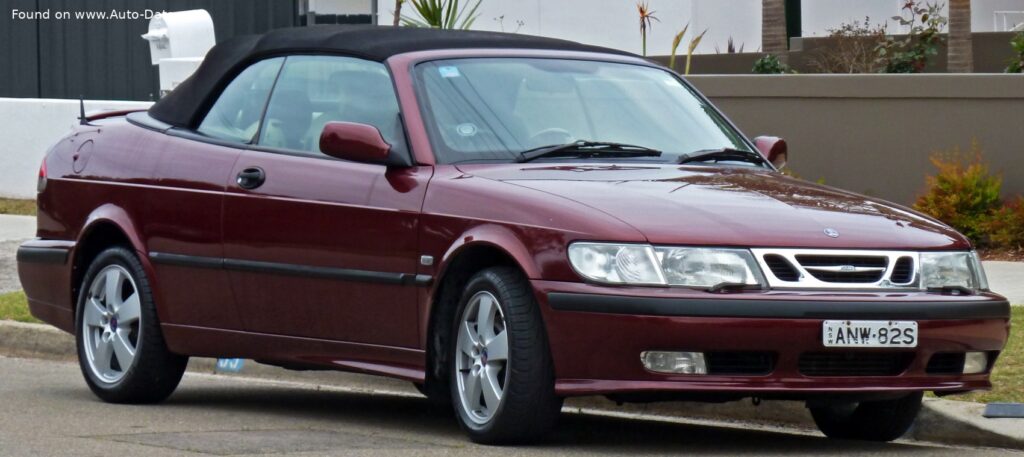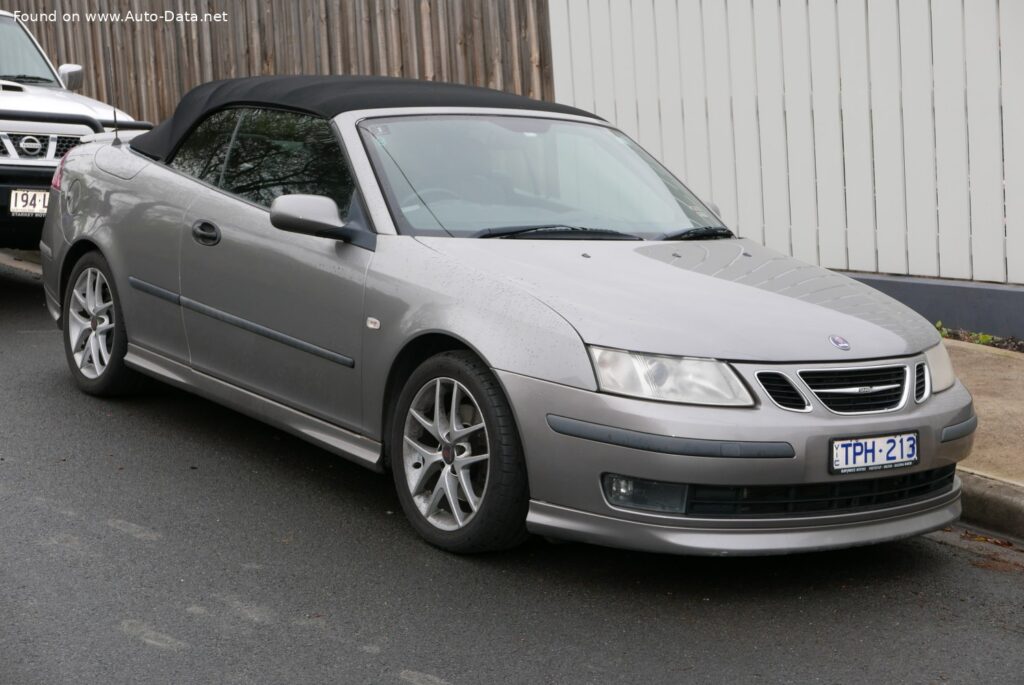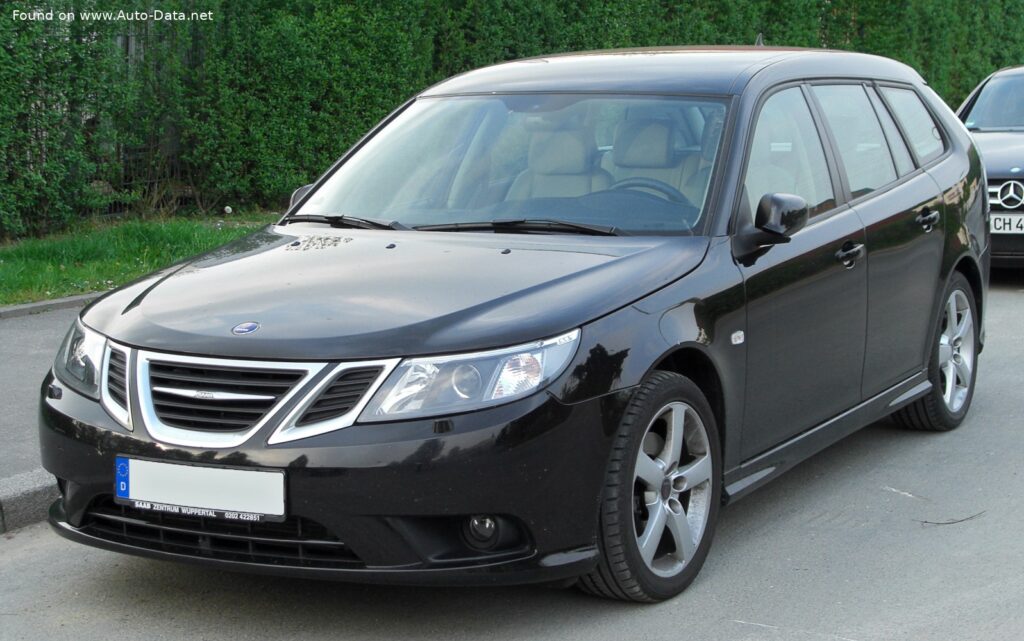
The Saab 9-3 Sport Combi II, specifically the facelifted version introduced in 2007, represents a significant iteration of Saab’s compact executive car. Positioned as a five-door station wagon (estate), it aimed to blend practicality with the brand’s characteristic Scandinavian design and engineering. This model, equipped with the 2.0T engine producing 210 horsepower and Saab’s XWD all-wheel-drive system, was primarily sold in Europe and other international markets. While Saab never achieved substantial sales volume in the United States, the 9-3 series, including the Sport Combi, represented the brand’s attempt to compete in the premium segment with a focus on safety, innovation, and a unique driving experience.
Saab 9-3 Sport Combi II (2007-2010): A Detailed Overview
The 2007 facelift brought cosmetic and mechanical updates to the second-generation 9-3, enhancing its appeal and addressing some criticisms of the original model. The Sport Combi body style, a station wagon, was particularly popular in Europe where practicality is highly valued. The introduction of the XWD system further distinguished the 9-3, offering enhanced traction and stability, especially in challenging weather conditions. The 2.0T engine, a turbocharged four-cylinder, provided a balance of performance and fuel efficiency, making it a competitive offering in its class.
Engine & Performance
The heart of the 2007 Saab 9-3 Sport Combi II 2.0T XWD is a 1.998-liter (121.93 cubic inches) inline-four cylinder engine. This engine, designated as the B207R, utilizes a turbocharger and intercooler to boost power output to 210 horsepower at 5300 rpm. Torque figures stand at 300 Nm (221.27 lb.-ft.) available from 2500 rpm, providing strong mid-range acceleration. The engine features multi-port fuel injection and a double overhead camshaft (DOHC) valvetrain with four valves per cylinder. The power-to-liter ratio is a respectable 105.1 hp/l. Coupled with a six-speed manual transmission, the 9-3 2.0T XWD achieves a 0-100 km/h (0-62 mph) time of 8.5 seconds, and a 0-60 mph time of approximately 8.1 seconds. Its maximum speed is electronically limited to 230 km/h (142.92 mph). The XWD all-wheel-drive system contributes to a weight-to-power ratio of 8.1 kg/hp and a weight-to-torque ratio of 5.7 kg/Nm.
Design & Features
The Saab 9-3 Sport Combi II is a five-door, five-seat station wagon. Its design, while evolving from previous Saab models, retains the brand’s distinctive styling cues. The 2007 facelift included revised front and rear fascias, updated headlights, and a redesigned grille. The interior focuses on functionality and ergonomics, with a driver-centric layout. Key features include comfortable seating, a spacious cargo area, and a range of available options such as leather upholstery, premium audio systems, and advanced climate control. Safety was a core tenet of Saab’s engineering philosophy, and the 9-3 Sport Combi II incorporates features like ABS (Anti-lock Braking System) and a robust chassis structure. The trunk offers a minimum of 419 liters (14.8 cubic feet) of space, expanding to 1273 liters (44.96 cubic feet) with the rear seats folded down. The vehicle’s dimensions are 4670 mm (183.86 in) in length, 1762 mm (69.37 in) in width, and 1496 mm (58.9 in) in height.
Technical Specifications
| Brand | Saab |
| Model | 9-3 |
| Generation | 9-3 Sport Combi II (facelift 2007) |
| Type (Engine) | 2.0T (210 Hp) XWD |
| Start of production | 2007 |
| End of production | December, 2010 |
| Powertrain Architecture | Internal Combustion engine |
| Body type | Station wagon (estate) |
| Seats | 5 |
| Doors | 5 |
| Fuel consumption (urban) | 11.9 l/100 km (19.8 US mpg, 23.7 UK mpg) |
| Fuel consumption (extra urban) | 6.7 l/100 km (35.1 US mpg, 42.2 UK mpg) |
| Fuel consumption (combined) | 8.6 l/100 km (27.4 US mpg, 32.8 UK mpg) |
| CO2 emissions | 207 g/km |
| Fuel Type | Petrol (Gasoline) |
| Acceleration 0 – 100 km/h | 8.5 sec |
| Acceleration 0 – 62 mph | 8.5 sec |
| Acceleration 0 – 60 mph | 8.1 sec |
| Maximum speed | 230 km/h (142.92 mph) |
| Emission standard | Euro 4 |
| Weight-to-power ratio | 8.1 kg/Hp |
| Weight-to-torque ratio | 5.7 kg/Nm |
| Power | 210 Hp @ 5300 rpm |
| Torque | 300 Nm @ 2500 rpm (221.27 lb.-ft. @ 2500 rpm) |
| Engine layout | Front, Transverse |
| Engine Model/Code | B207R |
| Engine displacement | 1998 cm3 (121.93 cu. in.) |
| Number of cylinders | 4 |
| Engine configuration | Inline |
| Cylinder Bore | 86 mm (3.39 in.) |
| Piston Stroke | 86 mm (3.39 in.) |
| Compression ratio | 9.5:1 |
| Number of valves per cylinder | 4 |
| Fuel injection system | Multi-port manifold injection |
| Engine aspiration | Turbocharger, Intercooler |
| Valvetrain | DOHC |
| Engine oil capacity | 6 l (6.34 US qt | 5.28 UK qt) |
| Coolant capacity | 7.1 l (7.5 US qt | 6.25 UK qt) |
| Kerb Weight | 1710 kg (3769.9 lbs.) |
| Max. weight | 2170 kg (4784.03 lbs.) |
| Max load | 460 kg (1014.13 lbs.) |
| Trunk (boot) space – minimum | 419 l (14.8 cu. ft.) |
| Trunk (boot) space – maximum | 1273 l (44.96 cu. ft.) |
| Fuel tank capacity | 58 l (15.32 US gal | 12.76 UK gal) |
| Max. roof load | 100 kg (220.46 lbs.) |
| Permitted trailer load with brakes (12%) | 1600 kg (3527.4 lbs.) |
| Permitted trailer load without brakes | 750 kg (1653.47 lbs.) |
| Length | 4670 mm (183.86 in.) |
| Width | 1762 mm (69.37 in.) |
| Width including mirrors | 2038 mm (80.24 in.) |
| Height | 1496 mm (58.9 in.) |
| Wheelbase | 2675 mm (105.31 in.) |
| Front track | 1524 mm (60 in.) |
| Rear track | 1506 mm (59.29 in.) |
| Front overhang | 981 mm (38.62 in.) |
| Rear overhang | 1014 mm (39.92 in.) |
| Ride height (ground clearance) | 150 mm (5.91 in.) |
| Minimum turning circle | 11.7 m (38.39 ft.) |
| Drivetrain | All wheel drive (4×4) |
| Number of gears | 6 |
| Gearbox type | Manual transmission |
| Front suspension | Independent type McPherson, Transverse stabilizer |
| Rear suspension | Independent multi-link suspension, Transverse stabilizer |
| Front brakes | Ventilated discs, 302 mm |
| Rear brakes | Ventilated discs, 292 mm |
| Steering type | Steering rack and pinion |
| Power steering | Hydraulic Steering |
| Tires size | 195/65 R15; 215/55 R16; 235/45 R17 |
| Wheel rims size | 6.5J x 15; 6.5J x 16; 7.5J x 17 |
The Saab 9-3 Sport Combi II 2.0T XWD, despite the eventual demise of the Saab brand, remains a compelling example of Scandinavian automotive engineering. Its blend of practicality, performance, and safety features continues to appeal to enthusiasts and those seeking a unique alternative in the premium compact segment.