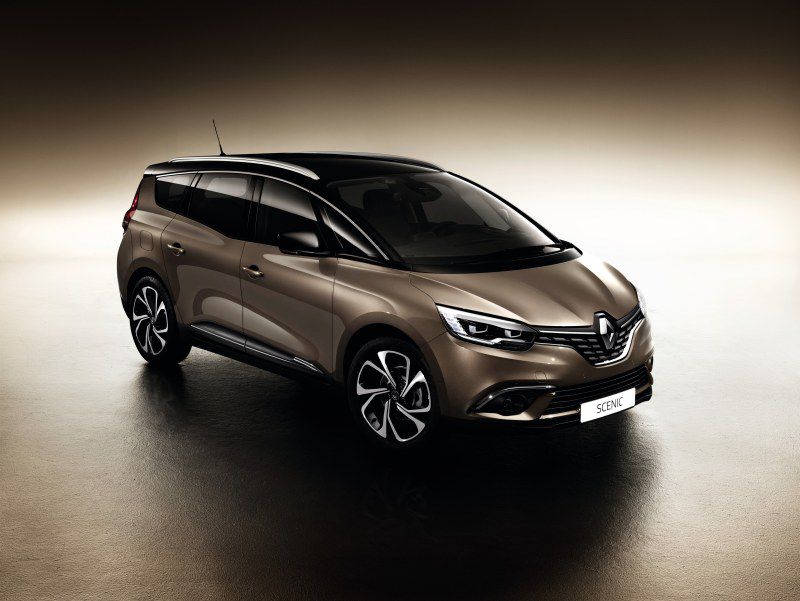
The Renault Grand Scenic IV, specifically the Phase I model produced between 2016 and 2018, represents the fourth generation of Renault’s popular compact minivan. Positioned as a family vehicle, the Grand Scenic IV offered seven-seat capability within a relatively compact footprint, making it a practical choice for European families. While not officially sold in the United States, the Scenic line has been a significant player in the European multi-purpose vehicle (MPV) segment for decades, known for its innovative features and spacious interiors. This particular variant, the 1.5 Energy dCi (110 Hp) EDC, was a common offering, prioritizing fuel efficiency and usability.
Renault Grand Scenic IV: Overview and Market Position
The Grand Scenic IV marked a departure from previous generations with a more crossover-inspired design and a greater emphasis on technology. It competed with vehicles like the Citroën Grand C4 Picasso, Peugeot 5008, and Volkswagen Touran. The “Energy dCi” designation refers to Renault’s fuel-efficient diesel engine, and the “EDC” indicates the use of a dual-clutch transmission, offering smoother and quicker gear changes compared to a traditional automatic. The seven-seat configuration, a key selling point, allowed for flexible passenger and cargo arrangements, catering to the needs of larger families.
Engine & Performance
The heart of the Grand Scenic IV 1.5 Energy dCi is a 1.5-liter inline-four cylinder diesel engine, designated K9K by Renault. This engine produces 110 horsepower at 4000 rpm and 260 Nm (191.77 lb.-ft.) of torque at 1750 rpm. The turbocharger and intercooler contribute to improved power delivery and efficiency. Power is transmitted to the front wheels via a seven-speed Efficient Dual Clutch (EDC) automatic transmission. This combination results in a 0-100 km/h (0-62 mph) acceleration time of 12.6 seconds and a maximum speed of 184 km/h (114.33 mph). The engine’s focus is on fuel economy, achieving combined fuel consumption of 4.0 liters per 100 kilometers (58.8 US mpg or 70.6 UK mpg), and CO2 emissions of 104 g/km, meeting Euro 6b emission standards.
Design & Features
The Grand Scenic IV Phase I boasts a modern and dynamic exterior design, moving away from the boxier shapes of earlier Scenic models. Its minivan body style is characterized by a sloping roofline and sculpted sides. The interior prioritizes practicality and comfort, with a focus on maximizing space for passengers and luggage. The seven-seat configuration offers versatility, with the third-row seats typically folding flat into the floor when not in use. Key features included a touchscreen infotainment system, digital instrument cluster, and a range of driver-assistance systems such as ABS (Anti-lock Braking System). Safety was a significant consideration, with features designed to protect occupants in the event of a collision. The vehicle’s dimensions – 4635 mm (182.48 in) in length, 1866 mm (73.46 in) in width, and 1655 mm (65.16 in) in height – provide a spacious cabin without being overly cumbersome to maneuver.
Technical Specifications
| Brand | Renault |
| Model | Scenic |
| Generation | Grand Scenic IV (Phase I) |
| Type (Engine) | 1.5 Energy dCi (110 Hp) EDC 7 Seat |
| Start of production | 2016 |
| End of production | 2018 |
| Powertrain Architecture | Internal Combustion engine |
| Body type | Minivan |
| Seats | 7 |
| Doors | 5 |
| Fuel consumption (urban) | 4.2 l/100 km (56 US mpg, 67.3 UK mpg, 23.8 km/l) |
| Fuel consumption (extra urban) | 3.9 l/100 km (60.3 US mpg, 72.4 UK mpg, 25.6 km/l) |
| Fuel consumption (combined) | 4 l/100 km (58.8 US mpg, 70.6 UK mpg, 25 km/l) |
| CO2 emissions | 104 g/km |
| Fuel Type | Diesel |
| Acceleration 0 – 100 km/h | 12.6 sec |
| Acceleration 0 – 62 mph | 12.6 sec |
| Acceleration 0 – 60 mph | 12 sec |
| Maximum speed | 184 km/h (114.33 mph) |
| Emission standard | Euro 6 b |
| Weight-to-power ratio | 14 kg/Hp, 71.4 Hp/tonne |
| Weight-to-torque ratio | 5.9 kg/Nm, 168.8 Nm/tonne |
| Power | 110 Hp @ 4000 rpm |
| Power per litre | 75.3 Hp/l |
| Torque | 260 Nm @ 1750 rpm (191.77 lb.-ft. @ 1750 rpm) |
| Engine layout | Front, Transverse |
| Engine Model/Code | K9K |
| Engine displacement | 1461 cm3 (89.16 cu. in.) |
| Number of cylinders | 4 |
| Engine configuration | Inline |
| Cylinder Bore | 76 mm (2.99 in.) |
| Piston Stroke | 80.5 mm (3.17 in.) |
| Number of valves per cylinder | 2 |
| Fuel injection system | Diesel Commonrail |
| Engine aspiration | Turbocharger, Intercooler |
| Engine oil capacity | 4.8 l (5.07 US qt | 4.22 UK qt) |
| Coolant | 6 l (6.34 US qt | 5.28 UK qt) |
| Kerb Weight | 1540 kg (3395.12 lbs.) |
| Max. weight | 2303 kg (5077.25 lbs.) |
| Max load | 763 kg (1682.13 lbs.) |
| Trunk (boot) space – minimum | 189 l (6.67 cu. ft.) |
| Trunk (boot) space – maximum | 1737 l (61.34 cu. ft.) |
| Fuel tank capacity | 53 l (14 US gal | 11.66 UK gal) |
| Max. roof load | 80 kg (176.37 lbs.) |
| Permitted trailer load with brakes (12%) | 1850 kg (4078.55 lbs.) |
| Permitted trailer load without brakes | 750 kg (1653.47 lbs.) |
| Permitted towbar download | 75 kg (165.35 lbs.) |
| Length | 4635 mm (182.48 in.) |
| Width | 1866 mm (73.46 in.) |
| Width including mirrors | 2128 mm (83.78 in.) |
| Height | 1655 mm (65.16 in.) |
| Wheelbase | 2804 mm (110.39 in.) |
| Front track | 1602 mm (63.07 in.) |
| Rear (Back) track | 1596 mm (62.83 in.) |
| Front overhang | 931 mm (36.65 in.) |
| Rear overhang | 899 mm (35.39 in.) |
| Ride height (ground clearance) | 159 mm (6.26 in.) |
| Minimum turning circle (turning diameter) | 11.39 m (37.37 ft.) |
| Drivetrain Architecture | Front wheel drive |
| Number of gears and type of gearbox | 7 gears, automatic transmission EDC |
| Front suspension | Independent type McPherson |
| Rear suspension | Semi-independent, coil spring |
| Front brakes | Ventilated discs, 320 mm |
| Rear brakes | Disc, 290 mm |
| Tires size | 195/55 R20 95H |
| Wheel rims size | 20 |
The Renault Grand Scenic IV Phase I 1.5 Energy dCi EDC 7 Seat offered a compelling package for families seeking a practical, fuel-efficient, and well-equipped minivan. While not available in the US market, it remains a popular and respected vehicle in Europe.