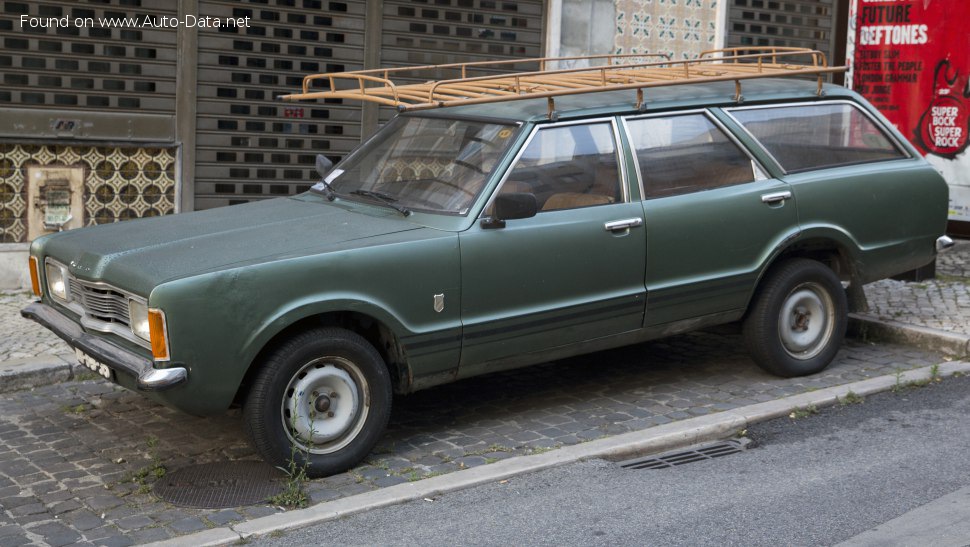
The Ford Taunus Turnier, specifically the GBNK variant with the 1600cc engine producing 72 horsepower, represents a significant entry for Ford into the European station wagon market. Produced from 1970 to 1976, the Turnier was a practical and increasingly popular choice for families seeking a versatile vehicle. While not officially sold in the United States, the Taunus range, and the Turnier in particular, played a crucial role in Ford of Europe’s sales success during the 1970s, competing with vehicles like the Opel Caravan and the Volvo 145. The Turnier offered a blend of affordability, reasonable performance, and the increased cargo capacity that defined the station wagon segment.
The Ford Taunus Turnier: A European Family Vehicle
The Taunus name had a long history with Ford in Germany, dating back to the 1930s. By the late 1960s, the Taunus had evolved into a modern, though somewhat conservative, family car. The Turnier, introduced as the station wagon derivative of the Taunus TC series, aimed to capitalize on the growing demand for practical vehicles capable of handling both passenger and cargo needs. The GBNK designation specifically refers to the model produced between 1970 and 1976, characterized by its 1.6-liter engine and a relatively simple, yet robust, mechanical layout. It was a vehicle designed for everyday use, prioritizing functionality over outright performance or luxury.
Engine & Performance
The heart of the Taunus Turnier GBNK was a 1.6-liter, naturally aspirated four-cylinder gasoline engine. This engine, while not particularly powerful by modern standards, delivered a respectable 72 horsepower. The engine featured a single overhead camshaft and a two-barrel carburetor, a common configuration for European engines of the era. Power was delivered to the rear wheels through either a four-speed manual transmission or a three-speed automatic transmission, offering drivers a choice based on their preference for control or convenience.
Performance figures were modest. Acceleration from 0 to 60 mph was estimated to be around 14-16 seconds, and the top speed was approximately 90-95 mph. However, the Turnier wasn’t designed for speed; it was engineered for fuel efficiency and reliability. Fuel economy, while not exceptional even for the 1970s, was adequate for its intended purpose, typically ranging from 25 to 30 miles per gallon depending on driving conditions and transmission choice. The engine’s durability and relatively simple design contributed to its reputation for being a dependable powerplant, capable of withstanding the rigors of daily use.
Design & Features
The Taunus Turnier GBNK was a classic example of 1970s European automotive design. Its station wagon body style, or “estate” as it was often called in Europe, provided a generous cargo area behind the rear seats. The long roofline extended to the rear of the vehicle, maximizing space for luggage, groceries, or other items. The exterior styling was characterized by clean lines, a relatively boxy shape, and a prominent chrome grille. Headlights were typically rectangular, and the overall aesthetic was functional rather than flamboyant.
Inside, the Turnier offered a practical and comfortable cabin. The interior was typically trimmed with durable cloth upholstery, and the dashboard featured a straightforward layout with essential gauges and controls. While not lavishly equipped, the Turnier offered features considered standard for the time, such as a heater, windscreen wipers, and basic instrumentation. Later models might have included options like a radio, upgraded upholstery, and even power steering, though these were not standard features. Safety features were relatively basic by today’s standards, consisting primarily of seat belts and a robust body structure. The focus was on providing a safe and reliable means of transportation for families.
The Turnier’s suspension system consisted of independent front suspension with MacPherson struts and a live axle with leaf springs at the rear. This setup provided a comfortable ride, although handling was not particularly sporty. The steering was typically unassisted, requiring some effort at low speeds, but providing good feedback to the driver. The brakes were disc brakes at the front and drum brakes at the rear, offering adequate stopping power for the vehicle’s weight and performance.
Technical Specifications
| Brand | Ford |
| Model | Taunus |
| Generation | Taunus Turnier (GBNK) |
| Type (Engine) | 1600 (72 Hp) |
| Start of production | 1970 |
| End of production | 1976 |
| Powertrain Architecture | Internal Combustion engine |
| Body type | Station wagon (estate) |
| Fuel Type | Petrol (Gasoline) |
| Power | 72 Hp |
| Engine aspiration | Naturally aspirated engine |
| Engine Displacement | 1.6 Liters |
| Cylinders | 4 |
| Valves per Cylinder | 2 |
| Fuel System | Carbureted |
| Transmission | 4-speed Manual or 3-speed Automatic |
| Drivetrain | Rear-Wheel Drive |
| Front Suspension | MacPherson Strut |
| Rear Suspension | Leaf Springs |
| Brakes (Front) | Disc |
| Brakes (Rear) | Drum |
The Ford Taunus Turnier GBNK, while largely unknown in the American market, was a significant vehicle in Europe. It represented a practical and affordable solution for families needing a versatile vehicle. Its robust engine, spacious interior, and reliable construction made it a popular choice for those seeking a no-nonsense station wagon. The Turnier’s legacy lies in its contribution to Ford of Europe’s success during the 1970s and its role in shaping the European station wagon segment. It stands as a testament to the enduring appeal of functional automotive design and the importance of meeting the everyday needs of drivers and their families.