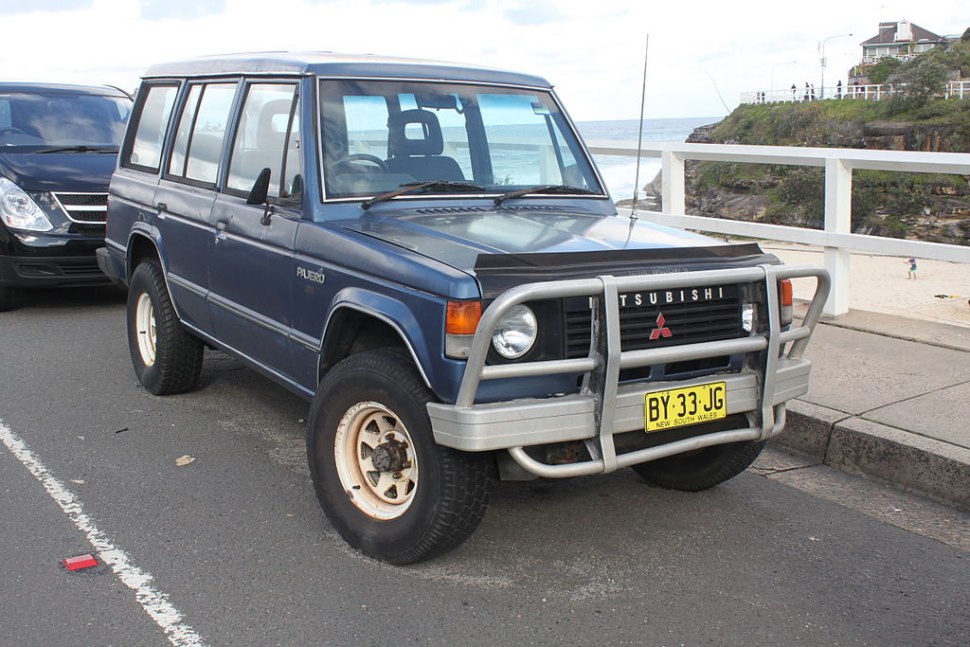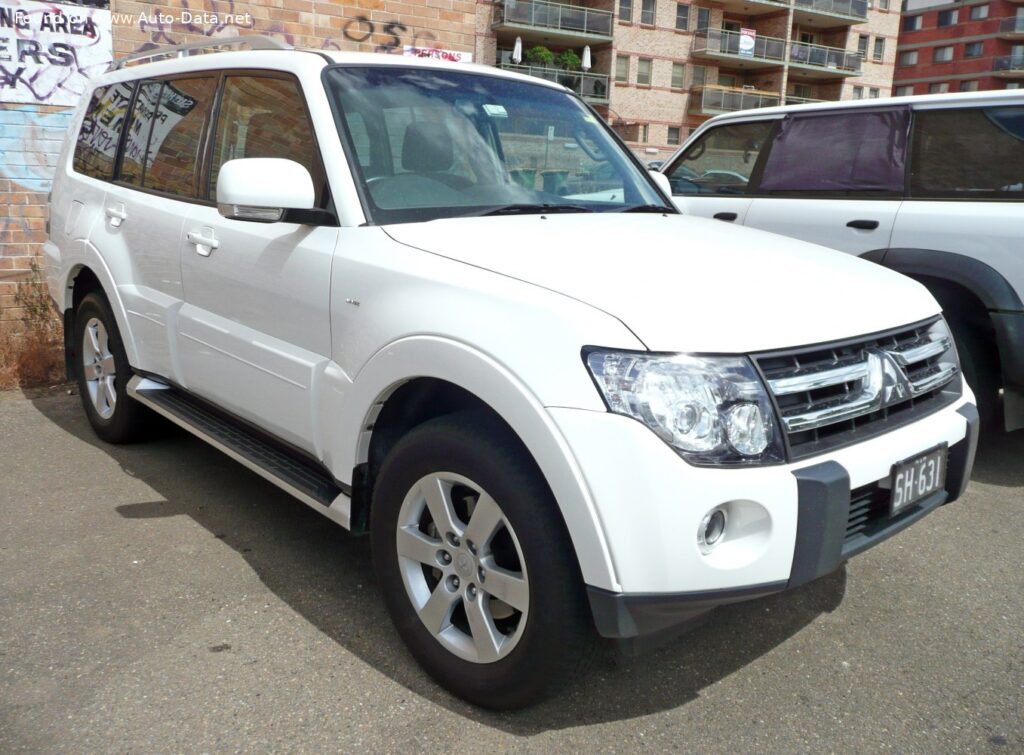
The Mitsubishi Pajero IV 3.0i V6, produced from 2006 to 2011, represents the fourth generation of Mitsubishi’s long-running Pajero (Montero in some markets) SUV. This iteration of the Pajero was primarily aimed at the European and Asian markets, where full-size, body-on-frame SUVs remained popular. While not officially sold in the United States, the Pajero IV offered a blend of off-road capability, passenger comfort, and a relatively modern feature set for its time. It competed with vehicles like the Toyota Land Cruiser Prado, Nissan Patrol, and Land Rover Discovery, offering a compelling alternative in the segment.
Mitsubishi Pajero IV: An Overview
The Pajero IV marked a significant evolution for the model, incorporating a more refined chassis, updated engines, and improved interior appointments. It continued the Pajero tradition of robust four-wheel-drive systems and a spacious interior, making it suitable for both family transportation and serious off-road adventures. The 3.0i V6 variant, equipped with the 6G72 engine, was a popular choice, balancing performance with reasonable fuel consumption. The Pajero IV’s design reflected a move towards a more contemporary aesthetic, while retaining the rugged character associated with the Pajero nameplate.
Engine & Performance
The heart of the Pajero IV 3.0i V6 is the 6G72 3.0-liter V6 gasoline engine. This naturally aspirated engine produces 178 horsepower at 5,250 rpm and 192.5 lb.-ft. of torque at 4,000 rpm. The engine features a longitudinal front-engine layout, multi-port fuel injection, and an overhead camshaft (OHC) valvetrain with two valves per cylinder. The power-to-weight ratio of 13 kg/Hp and a torque-to-weight ratio of 8.9 kg/Nm contribute to respectable performance, allowing for a maximum speed of 109.98 mph (177 km/h). The engine’s 10:1 compression ratio and displacement of 181.36 cubic inches (2972 cm3) are typical for a V6 of this era. The engine requires 4.9 liters (5.18 US quarts) of oil and 9 liters (9.51 US quarts) of coolant for optimal operation.
Design & Features
The Pajero IV is a five-door SUV with a body-on-frame construction, providing excellent durability and off-road capability. It offers seating for up to seven passengers, making it a practical choice for families. The vehicle’s dimensions are substantial, measuring 192.91 inches (4900 mm) in length, 73.82 inches (1875 mm) in width, and 73.62 inches (1870 mm) in height. The wheelbase is 109.45 inches (2780 mm), contributing to a stable ride. A key feature of the Pajero IV is its versatile cargo space, ranging from a minimum of 7.59 cubic feet (215 liters) with all seats in use to a maximum of 63.21 cubic feet (1790 liters) with the rear seats folded down.
Safety features included an Anti-lock Braking System (ABS), which was becoming increasingly standard on SUVs during this period. The suspension system utilizes a double wishbone configuration at the front and a transverse stabilizer at the rear, providing a balance between on-road comfort and off-road articulation. The vehicle rides on 7.5J x 17 inch wheel rims, fitted with 265/65 R17 tires. The Pajero IV’s design prioritized functionality and durability, with a focus on providing a comfortable and capable vehicle for a variety of driving conditions.
Technical Specifications
| Brand | Mitsubishi |
| Model | Pajero |
| Generation | Pajero IV |
| Type (Engine) | 3.0i V6 (178 Hp) 5-doors |
| Start of production | 2006 |
| End of production | 2011 |
| Powertrain Architecture | Internal Combustion engine |
| Body type | SUV |
| Seats | 7 |
| Doors | 5 |
| Fuel Type | Petrol (Gasoline) |
| Maximum speed | 177 km/h (109.98 mph) |
| Weight-to-power ratio | 13 kg/Hp |
| Weight-to-torque ratio | 8.9 kg/Nm |
| Power | 178 Hp @ 5250 rpm |
| Power per litre | 59.9 Hp/l |
| Torque | 261 Nm @ 4000 rpm (192.5 lb.-ft. @ 4000 rpm) |
| Engine layout | Front, Longitudinal |
| Engine Model/Code | 6G72 |
| Engine displacement | 2972 cm3 (181.36 cu. in.) |
| Number of cylinders | 6 |
| Engine configuration | V-engine |
| Cylinder Bore | 91.1 mm (3.59 in.) |
| Piston Stroke | 76 mm (2.99 in.) |
| Compression ratio | 10:1 |
| Number of valves per cylinder | 2 |
| Fuel injection system | Multi-port manifold injection |
| Engine aspiration | Naturally aspirated engine |
| Valvetrain | OHC |
| Engine oil capacity | 4.9 l (5.18 US qt | 4.31 UK qt) |
| Coolant | 9 l (9.51 US qt | 7.92 UK qt) |
| Kerb Weight | 2310 kg (5092.68 lbs.) |
| Max. weight | 3030 kg (6680.01 lbs.) |
| Max load | 720 kg (1587.33 lbs.) |
| Trunk (boot) space – minimum | 215 l (7.59 cu. ft.) |
| Trunk (boot) space – maximum | 1790 l (63.21 cu. ft.) |
| Fuel tank capacity | 88 l (23.25 US gal | 19.36 UK gal) |
| Length | 4900 mm (192.91 in.) |
| Width | 1875 mm (73.82 in.) |
| Height | 1870 mm (73.62 in.) |
| Wheelbase | 2780 mm (109.45 in.) |
| Front overhang | 765 mm (30.12 in.) |
| Rear overhang | 1355 mm (53.35 in.) |
| Drive wheel | All wheel drive (4×4) |
| Number of gears and type of gearbox | 5 gears, automatic transmission |
| Front suspension | Double wishbone |
| Rear suspension | Transverse stabilizer |
| Front brakes | Ventilated discs |
| Rear brakes | Ventilated discs |
| Assisting systems | ABS (Anti-lock braking system) |
| Steering type | Steering rack and pinion |
| Tires size | 265/65 R17 |
| Wheel rims size | 7.5J X 17 |