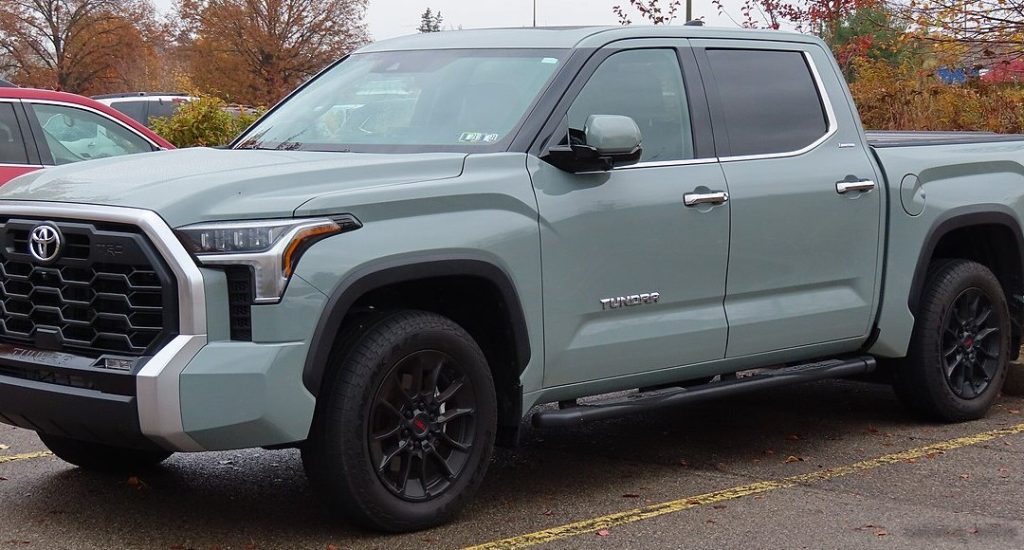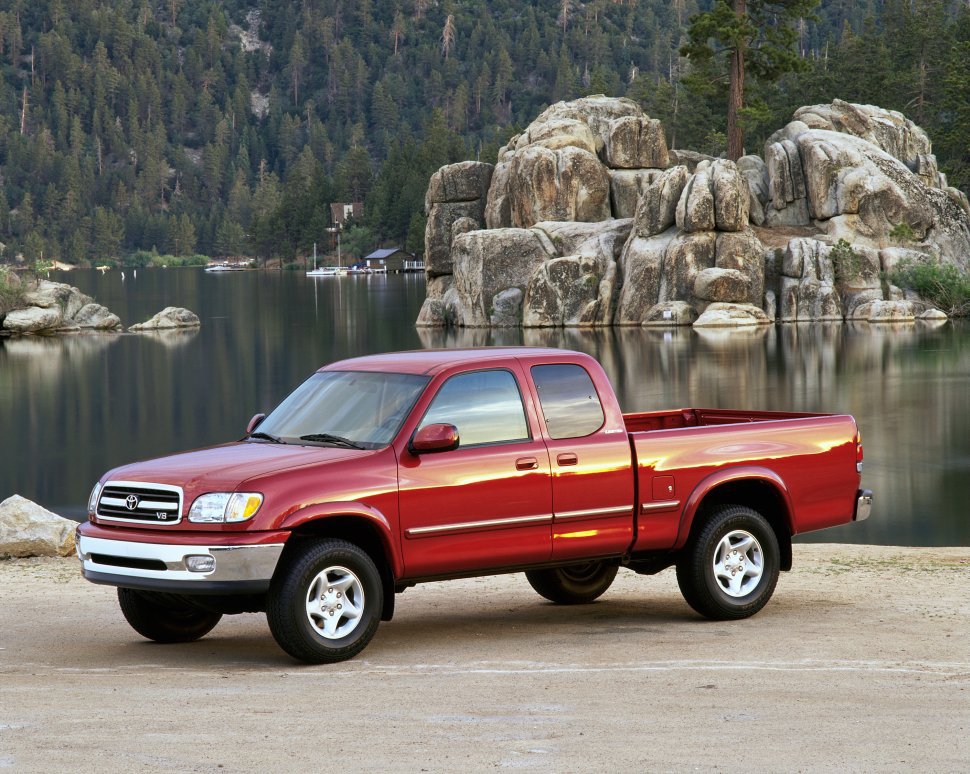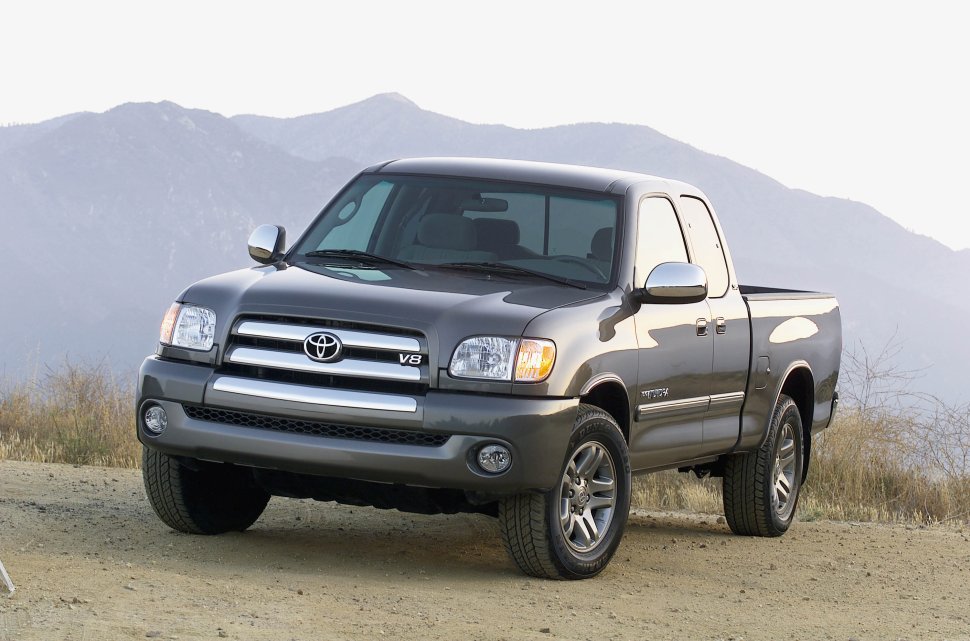
The Toyota Tundra II Double Cab Long Bed, specifically the facelifted version introduced in 2017, represents Toyota’s full-size pickup truck offering for the North American market. Positioned to compete with domestic rivals like the Ford F-150, Chevrolet Silverado, and Ram 1500, the Tundra aimed to provide a blend of reliability, capability, and comfort. The 2017 facelift brought updated styling, enhanced features, and continued the Tundra’s reputation for durability. This generation, produced from 2007 to 2021, saw the Tundra establish a loyal following, particularly among buyers prioritizing long-term ownership and resale value. The 5.7-liter V8 4×4 ECT-i model detailed here is a high-performance variant within the Tundra lineup.
Toyota Tundra II Double Cab Long Bed (2017-2021)
The Tundra II, and particularly the 2017-2021 facelift, focused on refining an already robust platform. While not undergoing a complete redesign, the updates included a bolder front grille, revised headlights, and interior enhancements. The Double Cab configuration offers a spacious rear seat, making it suitable for families or crews, while the Long Bed provides ample cargo space. The “ECT-i” designation refers to Toyota’s Electronically Controlled Transmission with intelligence, optimizing shift patterns for both fuel efficiency and performance. The 4×4 system provides enhanced traction for various terrains and weather conditions.
Engine & Performance
The heart of this Tundra variant is the 3UR-FE 5.7-liter V8 engine. This naturally aspirated powerplant produces 381 horsepower at 5600 rpm and 401.23 lb-ft of torque at 3600 rpm. The engine’s robust design and relatively simple architecture contribute to its renowned reliability. Power is delivered through a six-speed automatic transmission (ECT-i) to all four wheels. The drivetrain utilizes a permanent rear-wheel-drive setup with an electronically or mechanically operated clutch engaging the front wheels when needed. This system provides both on-road stability and off-road capability. The weight-to-power ratio of 6.7 kg/Hp (150 Hp/tonne) and weight-to-torque ratio of 4.7 kg/Nm (214.2 Nm/tonne) indicate a strong power delivery for its class. Fuel economy, however, is a compromise, with combined figures around 14 US mpg (16.8 l/100 km).
Design & Features
The 2017 Tundra Double Cab Long Bed maintains the traditional pickup truck silhouette. Its body-on-frame construction provides a solid foundation for hauling and towing. The Double Cab configuration offers five seats and four doors, prioritizing passenger comfort alongside cargo capacity. The Long Bed, measuring a substantial length, maximizes the truck’s utility. Key features of this model include ventilated disc brakes on all four wheels, an Anti-lock Braking System (ABS) for enhanced safety, and hydraulic power steering for responsive handling. The interior, while not overly luxurious, focuses on durability and functionality. The Tundra’s ride height of 269 mm (10.59 in) provides good ground clearance for off-road excursions. The approach and departure angles of 26° and 16° respectively, further aid in navigating challenging terrain. The drag coefficient of 0.38 is typical for a full-size pickup truck.
Technical Specifications
| Brand | Toyota |
| Model | Tundra |
| Generation | Tundra II Double Cab Long Bed (facelift 2017) |
| Type (Engine) | 5.7 V8 (381 Hp) 4×4 ECT-i |
| Start of production | 2017 |
| End of production | 2021 |
| Powertrain Architecture | Internal Combustion engine |
| Body type | Pick-up |
| Seats | 5 |
| Doors | 4 |
| Fuel consumption (urban) | 18.1 l/100 km (13 US mpg, 15.6 UK mpg) |
| Fuel consumption (extra urban) | 13.8 l/100 km (17 US mpg, 20.5 UK mpg) |
| Fuel consumption (combined) | 16.8 l/100 km (14 US mpg, 16.8 UK mpg) |
| Fuel Type | Petrol (Gasoline) |
| Emission standard | LEV 3 ULEV 70 |
| Weight-to-power ratio | 6.7 kg/Hp, 150 Hp/tonne |
| Weight-to-torque ratio | 4.7 kg/Nm, 214.2 Nm/tonne |
| Power | 381 Hp @ 5600 rpm |
| Power per litre | 67.3 Hp/l |
| Torque | 544 Nm @ 3600 rpm (401.23 lb.-ft. @ 3600 rpm) |
| Engine layout | Front, Longitudinal |
| Engine Model/Code | 3UR-FE |
| Engine displacement | 5663 cm3 (345.58 cu. in.) |
| Number of cylinders | 8 |
| Engine configuration | V-engine |
| Cylinder Bore | 93.98 mm (3.7 in.) |
| Piston Stroke | 102.11 mm (4.02 in.) |
| Compression ratio | 10.2:1 |
| Number of valves per cylinder | 4 |
| Fuel injection system | Multi-port manifold injection |
| Engine aspiration | Naturally aspirated engine |
| Valvetrain | DOHC, VVT-i |
| Engine oil capacity | 7.5 l (7.93 US qt | 6.6 UK qt) |
| Coolant | 12.1 l (12.79 US qt | 10.65 UK qt) |
| Kerb Weight | 2540 kg (5599.74 lbs.) |
| Max. weight | 3130-3266 kg (6900.47 – 7200.3 lbs.) |
| Max load | 590-726 kg (1300.73 – 1600.56 lbs.) |
| Fuel tank capacity | 100 l (26.42 US gal | 22 UK gal) |
| Permitted trailer load with brakes (12%) | 4491 kg (9900.96 lbs.) |
| Permitted towbar download | 449 kg (989.88 lbs.) |
| Length | 6294 mm (247.8 in.) |
| Width | 2029 mm (79.88 in.) |
| Height | 1941 mm (76.42 in.) |
| Wheelbase | 4181 mm (164.61 in.) |
| Front track | 1725 mm (67.91 in.) |
| Rear (Back) track | 1725 mm (67.91 in.) |
| Ride height (ground clearance) | 269 mm (10.59 in.) |
| Drag coefficient (Cd) | 0.38 |
| Minimum turning circle (turning diameter) | 14.9 m (48.88 ft.) |
| Approach angle | 26° |
| Departure angle | 16° |
| Drivetrain Architecture | ICE drives rear wheels, front wheels engaged via clutch |
| Drive wheel | All wheel drive (4×4) |
| Number of gears and type of gearbox | 6 gears, automatic transmission ECT-i |
| Front suspension | Double wishbone, Transverse stabilizer |
| Rear suspension | Rigid axle suspension, Leaf spring |
| Front brakes | Ventilated discs |
| Rear brakes | Ventilated discs |
| Assisting systems | ABS (Anti-lock braking system) |
| Steering type | Steering rack and pinion |
| Power steering | Hydraulic Steering |
| Tires size | 255/70 R18 |
| Wheel rims size | 8J x 18 |