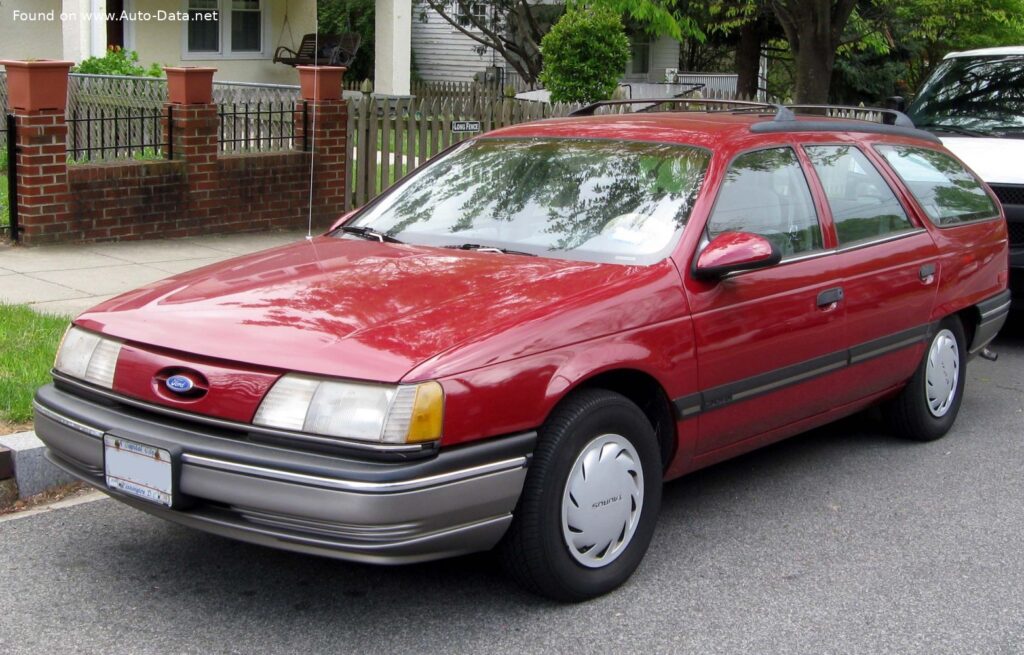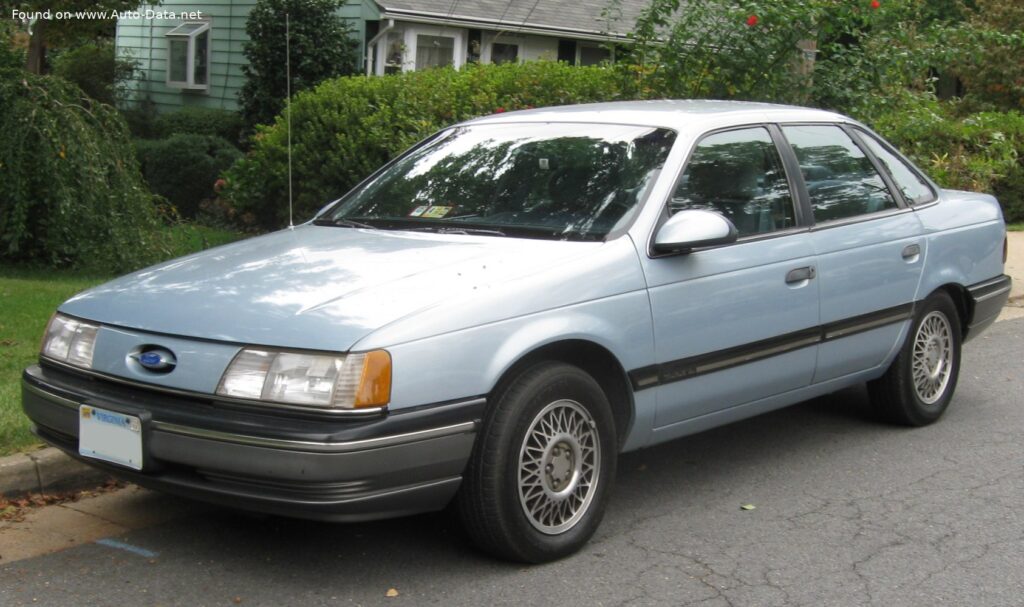
The Ford Taurus I 2.5i, produced between 1986 and 1991, represents a pivotal moment in Ford’s history. This first-generation Taurus was a groundbreaking vehicle, marking a significant departure from the traditional boxy designs of its predecessors. Introduced as a replacement for both the Ford Granada and the Ford LTD, the Taurus aimed to offer a more modern, aerodynamic, and fuel-efficient option in the mid-size sedan segment. It was a key player in Ford’s attempt to regain market share in a fiercely competitive automotive landscape, and its innovative design and features set a new standard for American family cars. The 2.5i variant, equipped with a 2.5-liter inline-four engine, was a popular choice for buyers seeking a balance of performance and economy.
Ford Taurus I 2.5i: A New Era for Ford
The Ford Taurus I wasn’t merely a redesign; it was a complete rethinking of how a family sedan should be. Prior to the Taurus, Ford had largely relied on rear-wheel-drive platforms. The Taurus, however, embraced a front-wheel-drive layout, a move that improved interior space, fuel efficiency, and handling. This shift was part of a broader industry trend, but Ford’s execution was particularly noteworthy. The car’s aerodynamic styling, a departure from the more angular designs of the 1970s and early 1980s, also contributed to its improved fuel economy and modern appearance. The Taurus I quickly became a sales success, demonstrating that American consumers were receptive to these changes.
Engine & Performance
The 2.5i version of the Ford Taurus I was powered by a 2.5-liter inline-four cylinder engine. This naturally aspirated engine produced 106 horsepower at 4,400 rpm and 176 Nm (129.81 lb.-ft.) of torque at 2,800 rpm. While not a performance powerhouse, the engine provided adequate power for everyday driving. The power-to-weight ratio stood at 76.3 horsepower per tonne, and the torque-to-weight ratio was 126.7 Nm per tonne. The engine featured multi-port fuel injection, a relatively advanced technology for its time, which helped to improve fuel efficiency and reduce emissions. Power was delivered to the front wheels through a four-speed automatic transmission. The front-engine, transverse layout further optimized space utilization within the vehicle. The engine’s 9:1 compression ratio and two valves per cylinder were typical for engines of this era, prioritizing reliability and affordability.
Design & Features
The Ford Taurus I was a four-door sedan with a seating capacity of five passengers. Its body style was characterized by smooth, flowing lines and a relatively low profile. The car’s design emphasized aerodynamics, with a sloping hood and a rounded roofline. Inside, the Taurus offered a spacious and comfortable cabin. While not lavishly equipped by modern standards, the Taurus I included features such as air conditioning, power steering, and an AM/FM radio. Safety features, while limited compared to contemporary vehicles, included seatbelts and, in some models, an anti-lock braking system (ABS). The Taurus’s trunk offered a generous 524 liters (18.5 cubic feet) of storage space. The car’s overall design represented a significant step forward in American automotive aesthetics, moving away from the boxy, utilitarian designs of the past.
Technical Specifications
| Brand | Ford |
| Model | Taurus |
| Generation | Taurus I |
| Type (Engine) | 2.5i (106 Hp) Automatic |
| Start of production | 1986 |
| End of production | 1991 |
| Powertrain Architecture | Internal Combustion engine |
| Body type | Sedan |
| Seats | 5 |
| Doors | 4 |
| Fuel Type | Petrol (Gasoline) |
| Weight-to-power ratio | 13.1 kg/Hp |
| Weight-to-torque ratio | 7.9 kg/Nm |
| Power | 106 Hp @ 4400 rpm |
| Power per litre | 42.4 Hp/l |
| Torque | 176 Nm @ 2800 rpm / 129.81 lb.-ft. @ 2800 rpm |
| Engine layout | Front, Transverse |
| Engine displacement | 2498 cm3 / 152.44 cu. in. |
| Number of cylinders | 4 |
| Engine configuration | Inline |
| Cylinder Bore | 93.5 mm / 3.68 in. |
| Piston Stroke | 91 mm / 3.58 in. |
| Compression ratio | 9:1 |
| Number of valves per cylinder | 2 |
| Fuel injection system | Multi-port manifold injection |
| Engine aspiration | Naturally aspirated engine |
| Kerb Weight | 1389 kg / 3062.22 lbs |
| Trunk (boot) space – minimum | 524 l / 18.5 cu. ft |
| Fuel tank capacity | 61 l / 16.11 US gal | 13.42 UK gal |
| Length | 4785 mm / 188.39 in |
| Width | 1796 mm / 70.71 in |
| Height | 1387 mm / 54.61 in |
| Wheelbase | 2692 mm / 105.98 in |
| Front track | 1562 mm / 61.5 in |
| Rear (Back) track | 1537 mm / 60.51 in |
| Minimum turning circle (turning diameter) | 12.1 m / 39.7 ft |
| Drivetrain Architecture | The Internal combustion engine (ICE) drives the front wheels of the vehicle. |
| Drive wheel | Front wheel drive |
| Number of gears and type of gearbox | 4 gears, automatic transmission |
| Front suspension | Wishbone |
| Rear suspension | Wishbone |
| Front brakes | Ventilated discs |
| Rear brakes | Drum |
| Assisting systems | ABS (Anti-lock braking system) |
| Steering type | Steering rack and pinion |
| Tires size | 205/70 R14 |
| Wheel rims size | 14 |
The Ford Taurus I 2.5i, despite its relatively modest power output, was a significant vehicle in the evolution of the American automobile. Its innovative design, front-wheel-drive layout, and improved fuel efficiency helped to redefine the mid-size sedan segment and paved the way for future generations of Ford vehicles. It remains a fondly remembered car for many, representing a turning point in Ford’s history and a symbol of the changing automotive landscape of the late 1980s and early 1990s.