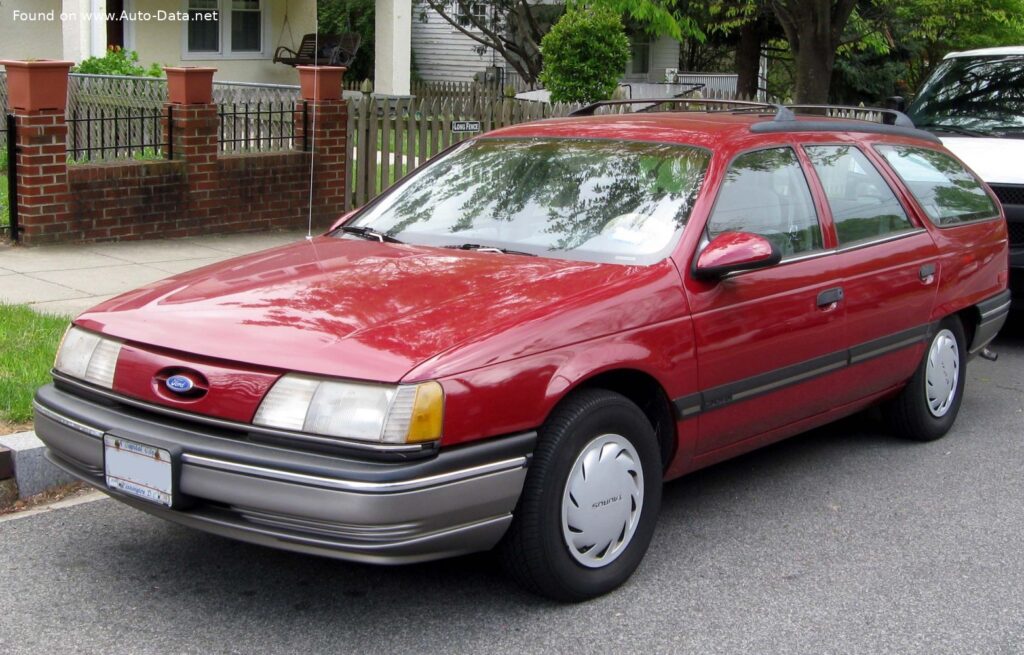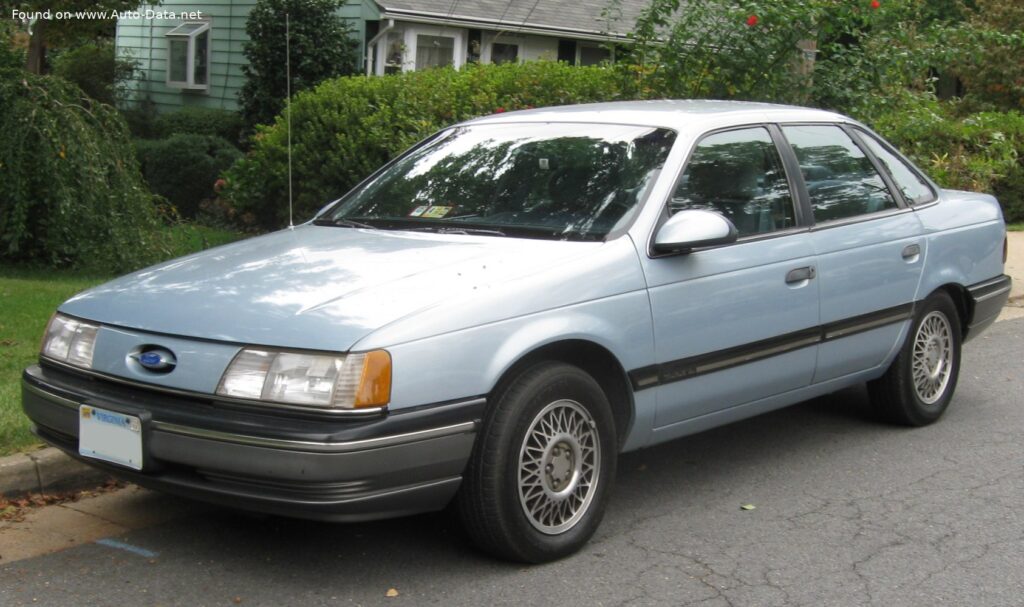
The Ford Taurus I 2.5i, produced between 1986 and 1991, represents a pivotal moment in Ford’s history. This model marked a significant departure from the traditional, body-on-frame designs of previous Ford sedans, embracing a more modern, aerodynamic, and efficient unibody construction. The Taurus was designed to appeal to a broader market, particularly those seeking a comfortable and technologically advanced family vehicle. It was a direct competitor to established models like the Chevrolet Celebrity and Dodge 600, and played a crucial role in revitalizing Ford’s sales in the mid-size segment. The 2.5i variant, powered by a 2.5-liter inline-four engine, was a popular choice for its balance of fuel economy and adequate performance.
Ford Taurus I 2.5i: A New Era for Ford
The first-generation Ford Taurus was a groundbreaking vehicle for its time. Introduced as a replacement for the Ford Granada and LTD Crown Victoria, it ushered in a new design language for Ford, characterized by its rounded edges and emphasis on interior space. The Taurus was also notable for its adoption of front-wheel drive, a configuration that was becoming increasingly common in the automotive industry due to its advantages in packaging and fuel efficiency. The 2.5i model, with its 89 horsepower engine, offered a practical and affordable option for buyers seeking a reliable and comfortable sedan.
Engine & Performance
The heart of the Ford Taurus I 2.5i is a 2.5-liter inline-four cylinder engine. This naturally aspirated engine produces 89 horsepower at 4600 rpm and 176 Nm (129.81 lb.-ft.) of torque at 2800 rpm. While not a performance powerhouse, the engine provides sufficient power for everyday driving. The power-to-weight ratio stands at 68.3 horsepower per tonne, and the torque-to-weight ratio is 135.1 Nm per tonne. The engine features multi-port fuel injection, contributing to improved fuel efficiency and smoother operation. The engine’s displacement of 2498 cm3 (152.44 cu. in.) and a compression ratio of 9:1 were typical for engines of this era. The engine is mounted transversely in the front of the vehicle, driving the front wheels through a 5-speed manual transmission. The Taurus I 2.5i achieves a maximum speed of 174 km/h (108.12 mph).
Design & Features
The Ford Taurus I is a four-door sedan with a seating capacity of five passengers. Its body style is characterized by its smooth, aerodynamic lines, a departure from the boxier designs of previous Ford models. The Taurus’s unibody construction contributes to its lighter weight and improved structural rigidity. Inside, the Taurus offers a spacious and comfortable cabin, with ample legroom and headroom for both front and rear passengers. The trunk provides a generous 524 liters (18.5 cu. ft.) of cargo space. Safety features for the time included an Anti-lock Braking System (ABS), which was becoming increasingly common on new vehicles. The suspension system utilizes wishbone setups for both the front and rear axles, providing a comfortable ride and predictable handling. The steering system is a rack and pinion type, offering precise and responsive steering feel. Standard tire size was 205/70 R14 or 205/65 R15, mounted on 14 or 15-inch wheel rims.
Technical Specifications
| Brand | Ford |
| Model | Taurus |
| Generation | Taurus I |
| Type (Engine) | 2.5i (89 Hp) |
| Start of production | 1986 |
| End of production | 1991 |
| Powertrain Architecture | Internal Combustion engine |
| Body type | Sedan |
| Seats | 5 |
| Doors | 4 |
| Fuel Type | Petrol (Gasoline) |
| Maximum speed | 174 km/h (108.12 mph) |
| Weight-to-power ratio | 14.6 kg/Hp |
| Weight-to-torque ratio | 7.4 kg/Nm |
| Power | 89 Hp @ 4600 rpm |
| Power per litre | 35.6 Hp/l |
| Torque | 176 Nm @ 2800 rpm (129.81 lb.-ft. @ 2800 rpm) |
| Engine layout | Front, Transverse |
| Engine displacement | 2498 cm3 (152.44 cu. in.) |
| Number of cylinders | 4 |
| Engine configuration | Inline |
| Cylinder Bore | 93.5 mm (3.68 in.) |
| Piston Stroke | 91 mm (3.58 in.) |
| Compression ratio | 9:1 |
| Number of valves per cylinder | 2 |
| Fuel injection system | Multi-port manifold injection |
| Engine aspiration | Naturally aspirated engine |
| Kerb Weight | 1303 kg (2872.62 lbs.) |
| Trunk (boot) space – minimum | 524 l (18.5 cu. ft.) |
| Fuel tank capacity | 61 l (16.11 US gal | 13.42 UK gal) |
| Length | 4785 mm (188.39 in.) |
| Width | 1796 mm (70.71 in.) |
| Height | 1382 mm (54.41 in.) |
| Wheelbase | 2692 mm (105.98 in.) |
| Front track | 1562 mm (61.5 in.) |
| Rear (Back) track | 1537 mm (60.51 in.) |
| Minimum turning circle (turning diameter) | 12.1 m (39.7 ft.) |
| Drivetrain Architecture | The Internal combustion engine (ICE) drives the front wheels of the vehicle. |
| Drive wheel | Front wheel drive |
| Number of gears and type of gearbox | 5 gears, manual transmission |
| Front suspension | Wishbone |
| Rear suspension | Wishbone |
| Front brakes | Ventilated discs |
| Rear brakes | Drum |
| Assisting systems | ABS (Anti-lock braking system) |
| Steering type | Steering rack and pinion |
| Tires size | 205/70 R14; 205/65 R15 |
| Wheel rims size | 14; 15 |
The Ford Taurus I 2.5i, while not a high-performance vehicle, represented a significant step forward for Ford in terms of design, technology, and overall refinement. Its impact on the American automotive landscape was substantial, paving the way for future generations of Taurus models and influencing the design direction of other Ford vehicles. The Taurus I remains a popular choice among collectors and enthusiasts, appreciated for its classic styling and historical significance.