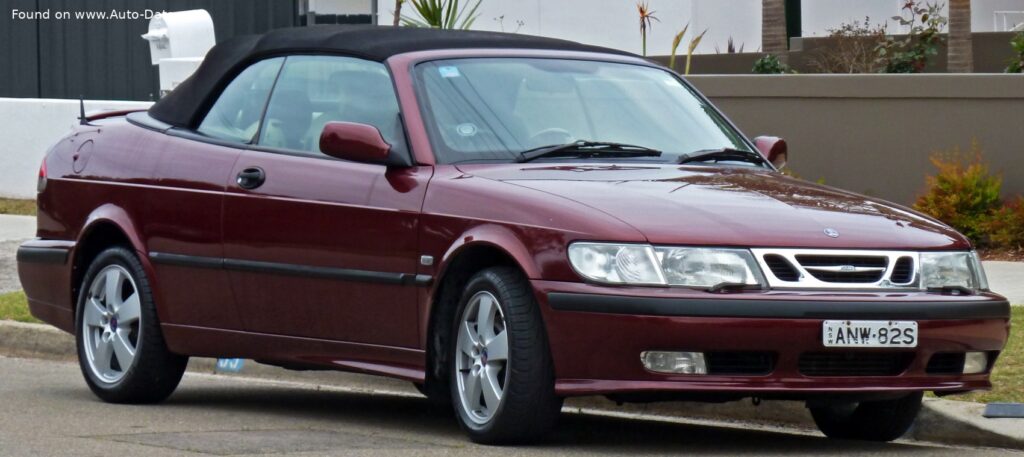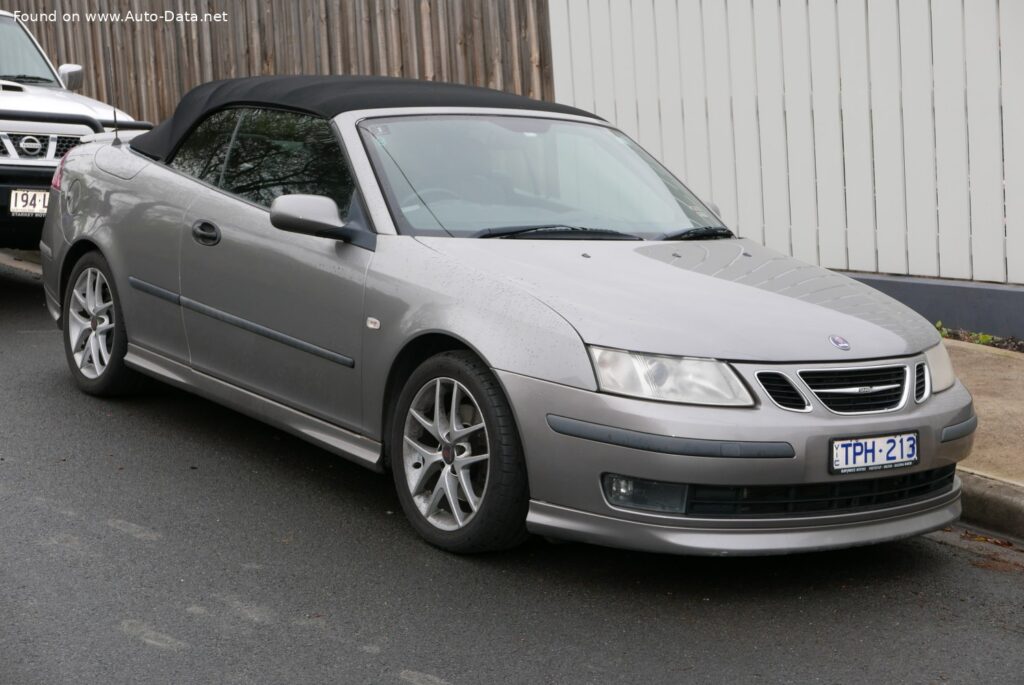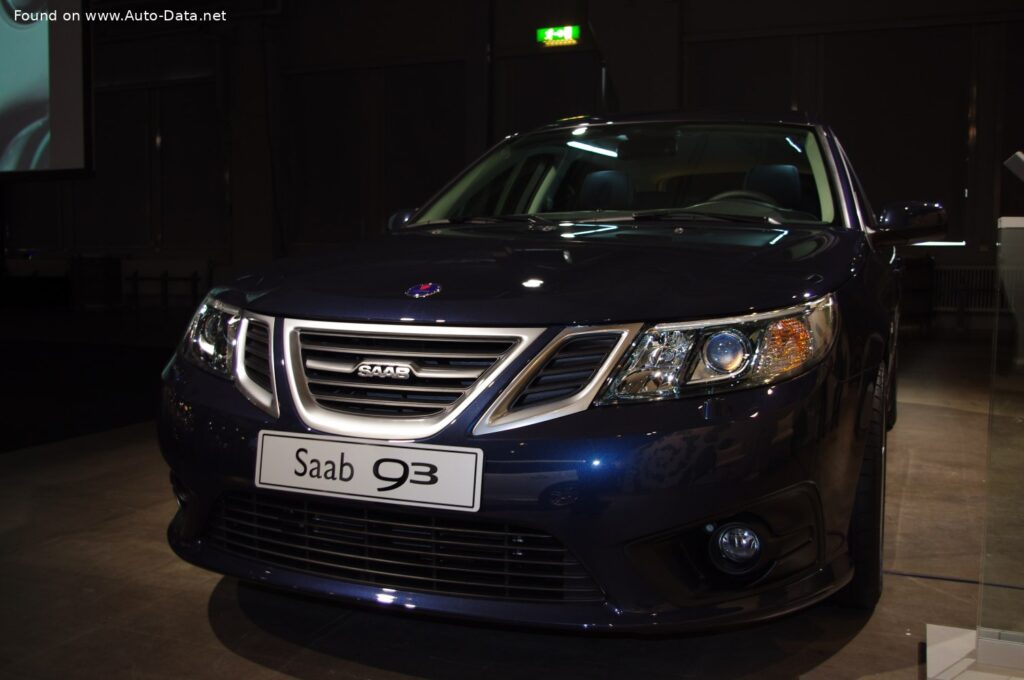
The Saab 9-3 Sport Combi II Griffin, specifically the 1.9 TTiD (180 Hp) Sentronic variant, represents a final iteration of Saab’s popular compact executive car before the brand’s unfortunate demise in December 2011. This model, a facelift of the second-generation 9-3 Sport Combi, was primarily aimed at the European market, offering a blend of practicality, performance, and Scandinavian design. While Saab never achieved significant sales volume in the United States, the 9-3 series, and particularly the Sport Combi wagon, garnered a loyal following among enthusiasts who appreciated its unique character and engineering. The 1.9 TTiD model focused on fuel efficiency and torque, making it a popular choice for drivers covering long distances.
Saab 9-3 Sport Combi II Griffin: Overview
The 9-3 Sport Combi II Griffin, produced briefly in 2011, was a key offering in Saab’s lineup. It was positioned as a premium compact wagon, competing with models like the Audi A4 Avant, BMW 3 Series Touring, and Volvo V60. The “Griffin” designation denoted a higher trim level, typically including enhanced features and styling details. The 1.9 TTiD engine, a diesel powerplant, was chosen for its balance of power and economy, catering to European preferences for diesel fuel and lower running costs. The Sentronic automatic transmission provided convenient gear changes, further enhancing the car’s appeal as a comfortable and practical daily driver.
Engine & Performance
The heart of the 9-3 Sport Combi II Griffin 1.9 TTiD is a 1.9-liter inline-four cylinder diesel engine, designated A19DTR. This engine utilizes twin-turbocharging and an intercooler to produce 180 horsepower at 4000 rpm and a substantial 400 Nm (295.02 lb.-ft.) of torque between 1800 and 3000 rpm. The high torque output provides strong acceleration and effortless cruising, particularly beneficial for a wagon intended for carrying passengers and cargo. The engine’s power-to-liter ratio is a respectable 94.2 hp/l. Paired with the six-speed Sentronic automatic transmission, the 9-3 TTiD achieves a 0-100 km/h (0-62 mph) time of 8.9 seconds, and a 0-60 mph time of approximately 8.5 seconds. Its top speed is electronically limited to 220 km/h (136.7 mph). Fuel economy is a strong point, with combined cycle consumption rated at 6.0 l/100 km (39.2 US mpg, 47.1 UK mpg), and CO2 emissions of 159 g/km, meeting Euro 5 emission standards.
Design & Features
The 9-3 Sport Combi II Griffin is a five-door, five-seat station wagon (estate). The facelifted design introduced in 2011 brought subtle but noticeable changes to the front fascia, including a revised grille and headlights, giving the car a more contemporary appearance. The Sport Combi body style offers a generous 477 liters (16.85 cu. ft.) of trunk space with the rear seats up, expanding to a substantial 1331 liters (47 cu. ft.) when the seats are folded down. Interior features, typical of the Griffin trim level, included comfortable seating, a user-friendly infotainment system, and a focus on safety. Safety features included ABS (Anti-lock braking system) as standard. The car’s suspension utilizes an independent McPherson strut setup at the front and an independent multi-link setup at the rear, providing a comfortable ride and responsive handling. The 9-3’s design philosophy emphasized practicality and functionality, with a focus on creating a comfortable and versatile vehicle for everyday use.
Technical Specifications
| Brand | Saab |
| Model | 9-3 |
| Generation | 9-3 Sport Combi II Griffin (facelift 2011) |
| Type (Engine) | 1.9 TTiD (180 Hp) Sentronic |
| Start of production | 2011 |
| End of production | December, 2011 |
| Powertrain Architecture | Internal Combustion engine |
| Body type | Station wagon (estate) |
| Seats | 5 |
| Doors | 5 |
| Fuel consumption (economy) – urban (NEDC) | 7.9 l/100 km (29.8 US mpg, 35.8 UK mpg, 12.7 km/l) |
| Fuel consumption (economy) – extra urban (NEDC) | 5 l/100 km (47 US mpg, 56.5 UK mpg, 20 km/l) |
| Fuel consumption (economy) – combined (NEDC) | 6 l/100 km (39.2 US mpg, 47.1 UK mpg, 16.7 km/l) |
| CO2 emissions (NEDC) | 159 g/km |
| Fuel Type | Diesel |
| Acceleration 0 – 100 km/h | 8.9 sec |
| Acceleration 0 – 62 mph | 8.9 sec |
| Acceleration 0 – 60 mph | 8.5 sec |
| Maximum speed | 220 km/h (136.7 mph) |
| Emission standard | Euro 5 |
| Weight-to-power ratio | 8.5 kg/Hp, 117.6 Hp/tonne |
| Weight-to-torque ratio | 3.8 kg/Nm, 261.4 Nm/tonne |
| Power | 180 Hp @ 4000 rpm |
| Power per litre | 94.2 Hp/l |
| Torque | 400 Nm @ 1800-3000 rpm (295.02 lb.-ft. @ 1800-3000 rpm) |
| Engine layout | Front, Transverse |
| Engine Model/Code | A19DTR |
| Engine displacement | 1910 cm3 (116.56 cu. in.) |
| Number of cylinders | 4 |
| Engine configuration | Inline |
| Cylinder Bore | 82 mm (3.23 in.) |
| Piston Stroke | 90.4 mm (3.56 in.) |
| Compression ratio | 16.5:1 |
| Number of valves per cylinder | 4 |
| Fuel injection system | Diesel Commonrail |
| Engine aspiration | Twin-Turbo, Intercooler |
| Valvetrain | DOHC |
| Engine oil capacity | 4.5 l (4.76 US qt | 3.96 UK qt) |
| Coolant | 7.4 l (7.82 US qt | 6.51 UK qt) |
| Kerb Weight | 1530-1695 kg (3373.07 – 3736.84 lbs.) |
| Max. weight | 2150 kg (4739.94 lbs.) |
| Max load | 455-620 kg (1003.1 – 1366.87 lbs.) |
| Trunk (boot) space – minimum | 477 l (16.85 cu. ft.) |
| Trunk (boot) space – maximum | 1331 l (47 cu. ft.) |
| Fuel tank capacity | 58 l (15.32 US gal | 12.76 UK gal) |
| Max. roof load | 100 kg (220.46 lbs.) |
| Permitted trailer load with brakes (12%) | 1600 kg (3527.4 lbs.) |
| Permitted trailer load without brakes | 750 kg (1653.47 lbs.) |
| Length | 4691 mm (184.69 in.) |
| Width | 1762 mm (69.37 in.) |
| Width including mirrors | 2038 mm (80.24 in.) |
| Height | 1492 mm (58.74 in.) |
| Wheelbase | 2675 mm (105.31 in.) |
| Front track | 1524 mm (60 in.) |
| Rear (Back) track | 1506 mm (59.29 in.) |
| Number of gears and type of gearbox | 6 gears, automatic transmission Sentronic |
The Saab 9-3 Sport Combi II Griffin 1.9 TTiD Sentronic, though short-lived, represents a compelling example of Saab’s commitment to building practical, efficient, and uniquely styled vehicles. Its blend of diesel power, wagon versatility, and Scandinavian design continues to appeal to enthusiasts who remember the brand fondly.