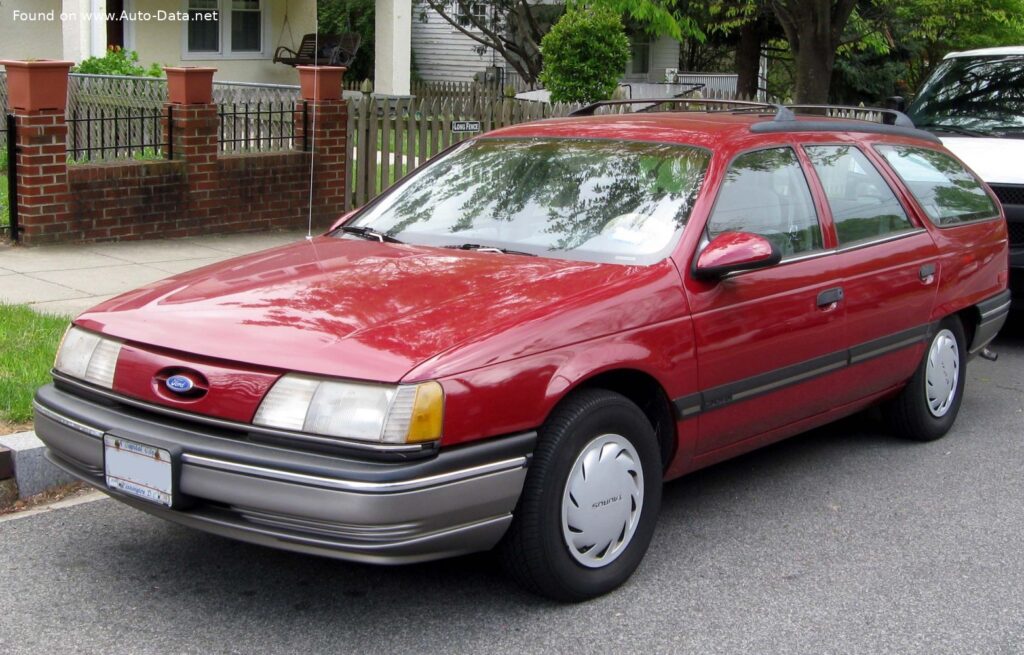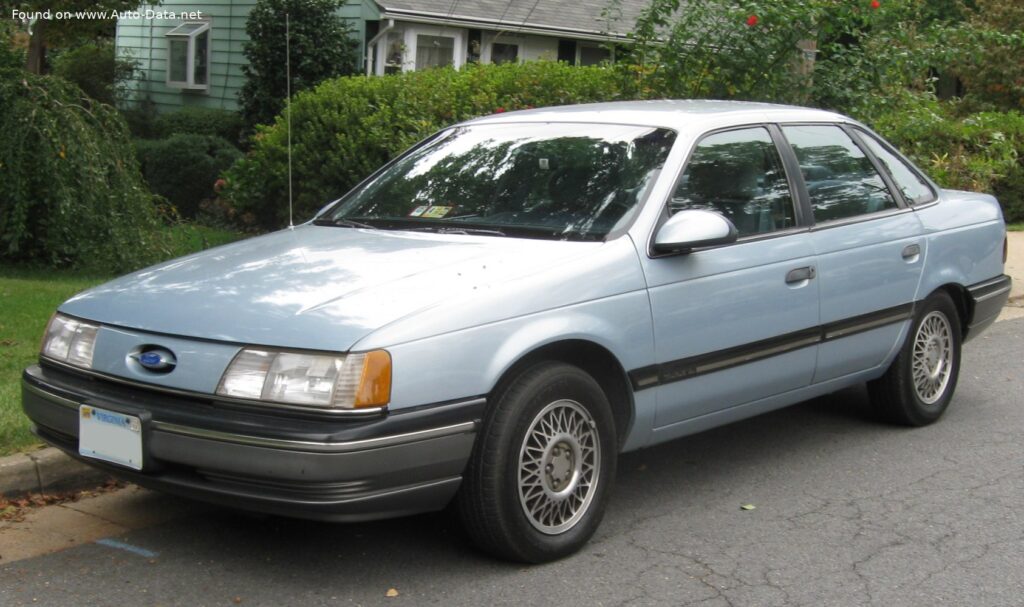
The Ford Taurus I 2.5i, produced between 1986 and 1991, represents a pivotal moment in Ford’s history. This first-generation Taurus was a mid-size sedan designed to replace the aging Ford Granada and Fairmont, aiming to offer a more modern and competitive vehicle in the increasingly crowded family car segment. The Taurus was a significant departure from Ford’s traditionally boxy designs, embracing a more aerodynamic and contemporary aesthetic. It was initially met with considerable success, becoming one of the best-selling cars in North America during its early years, and establishing a new design language for Ford. The 2.5i variant, equipped with a 2.5-liter inline-four engine, was a popular choice for buyers seeking a balance of fuel efficiency and affordability.
Ford Taurus I 2.5i: A Detailed Overview
The Taurus I was a landmark vehicle for Ford, representing a substantial investment in new technology and manufacturing processes. It was the first vehicle to be fully developed using computer-aided design (CAD) and was manufactured in a new, highly automated assembly plant. This allowed for improved quality control and efficiency. The car’s design prioritized interior space and comfort, offering a roomy cabin and a generous trunk. The 2.5i model, while not the performance leader of the Taurus lineup, provided reliable transportation for families and commuters. It served as a cornerstone of Ford’s product range during a period of significant change in the automotive industry.
Engine & Performance
The Ford Taurus I 2.5i was powered by a 2.5-liter inline-four cylinder engine, producing 89 horsepower at 4600 rpm and 176 Nm (129.81 lb.-ft.) of torque at 2800 rpm. This engine featured multi-port fuel injection and a naturally aspirated configuration. While not a high-performance engine, it provided adequate power for everyday driving. The engine’s power-to-liter ratio was 35.6 hp/l. Power was delivered to the front wheels via a 3-speed automatic transmission. The front-engine, transverse layout contributed to the car’s relatively compact size and efficient packaging. The Taurus I 2.5i had a weight-to-power ratio of 14.6 kg/Hp and a weight-to-torque ratio of 7.4 kg/Nm. The vehicle could achieve a maximum speed of 165 km/h (102.53 mph). Fuel economy was rated at 14 l/100 km (16.8 US mpg) in urban conditions and 10 l/100 km (23.5 US mpg) on the open road.
Design & Features
The Ford Taurus I was a four-door sedan with a seating capacity of five passengers. Its body style represented a significant departure from the more angular designs of previous Ford models, adopting a smoother, more aerodynamic profile. The car’s exterior featured a relatively simple, clean design with integrated headlights and a sloping hood. Inside, the Taurus offered a spacious and comfortable cabin with a focus on practicality. Standard features included cloth upholstery, a basic sound system, and manual windows and locks. Safety features for the time included ventilated disc brakes on the front wheels and drum brakes on the rear, along with an available Anti-lock Braking System (ABS). The Taurus’s suspension utilized a wishbone configuration on both the front and rear axles, providing a comfortable ride. Trunk space was a generous 524 liters (18.5 cu. ft.).
Technical Specifications
| Brand | Ford |
| Model | Taurus |
| Generation | Taurus I |
| Type (Engine) | 2.5i (89 Hp) Automatic |
| Start of production | 1986 |
| End of production | 1991 |
| Powertrain Architecture | Internal Combustion engine |
| Body type | Sedan |
| Seats | 5 |
| Doors | 4 |
| Fuel consumption (urban) | 14 l/100 km (16.8 US mpg) |
| Fuel consumption (extra urban) | 10 l/100 km (23.5 US mpg) |
| Fuel Type | Petrol (Gasoline) |
| Maximum speed | 165 km/h (102.53 mph) |
| Weight-to-power ratio | 14.6 kg/Hp |
| Weight-to-torque ratio | 7.4 kg/Nm |
| Power | 89 Hp @ 4600 rpm |
| Power per litre | 35.6 Hp/l |
| Torque | 176 Nm @ 2800 rpm (129.81 lb.-ft. @ 2800 rpm) |
| Engine layout | Front, Transverse |
| Engine displacement | 2498 cm3 (152.44 cu. in.) |
| Number of cylinders | 4 |
| Engine configuration | Inline |
| Cylinder Bore | 93.5 mm (3.68 in.) |
| Piston Stroke | 91 mm (3.58 in.) |
| Compression ratio | 9:1 |
| Number of valves per cylinder | 2 |
| Fuel injection system | Multi-port manifold injection |
| Engine aspiration | Naturally aspirated engine |
| Kerb Weight | 1299 kg (2863.8 lbs.) |
| Trunk (boot) space | 524 l (18.5 cu. ft.) |
| Fuel tank capacity | 61 l (16.11 US gal | 13.42 UK gal) |
| Length | 4785 mm (188.39 in.) |
| Width | 1796 mm (70.71 in.) |
| Height | 1382 mm (54.41 in.) |
| Wheelbase | 2692 mm (105.98 in.) |
| Front track | 1562 mm (61.5 in.) |
| Rear track | 1537 mm (60.51 in.) |
| Minimum turning circle | 12.1 m (39.7 ft.) |
| Drivetrain Architecture | ICE, Front wheel drive |
| Drive wheel | Front wheel drive |
| Number of gears | 3 |
| Gearbox type | Automatic transmission |
| Front suspension | Wishbone |
| Rear suspension | Wishbone |
| Front brakes | Ventilated discs |
| Rear brakes | Drum |
| Assisting systems | ABS (Anti-lock braking system) |
| Steering type | Steering rack and pinion |
| Tires size | 205/70 R14; 205/65 R15 |
| Wheel rims size | 14; 15 |
The Ford Taurus I 2.5i, despite its relatively modest performance figures, played a crucial role in reshaping Ford’s image and establishing a new benchmark for mid-size sedans. Its blend of practicality, comfort, and modern design helped it achieve significant commercial success and solidify Ford’s position in the automotive market.