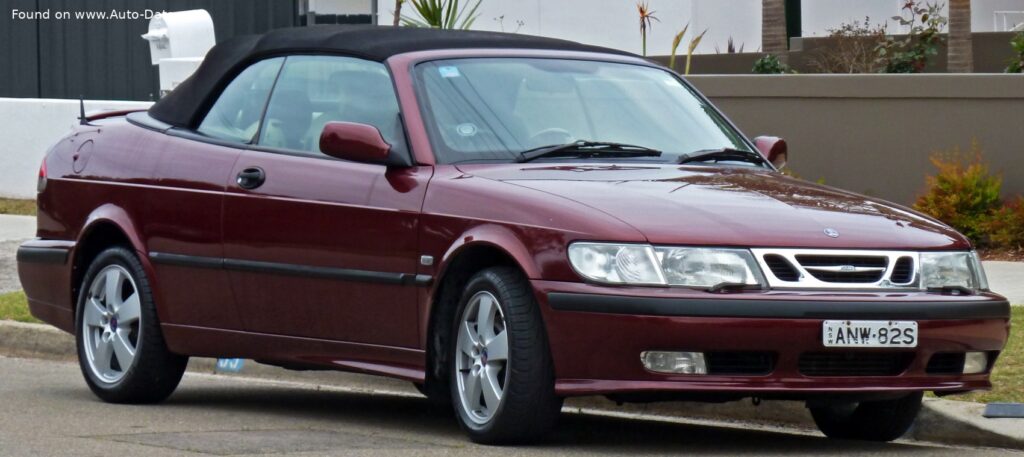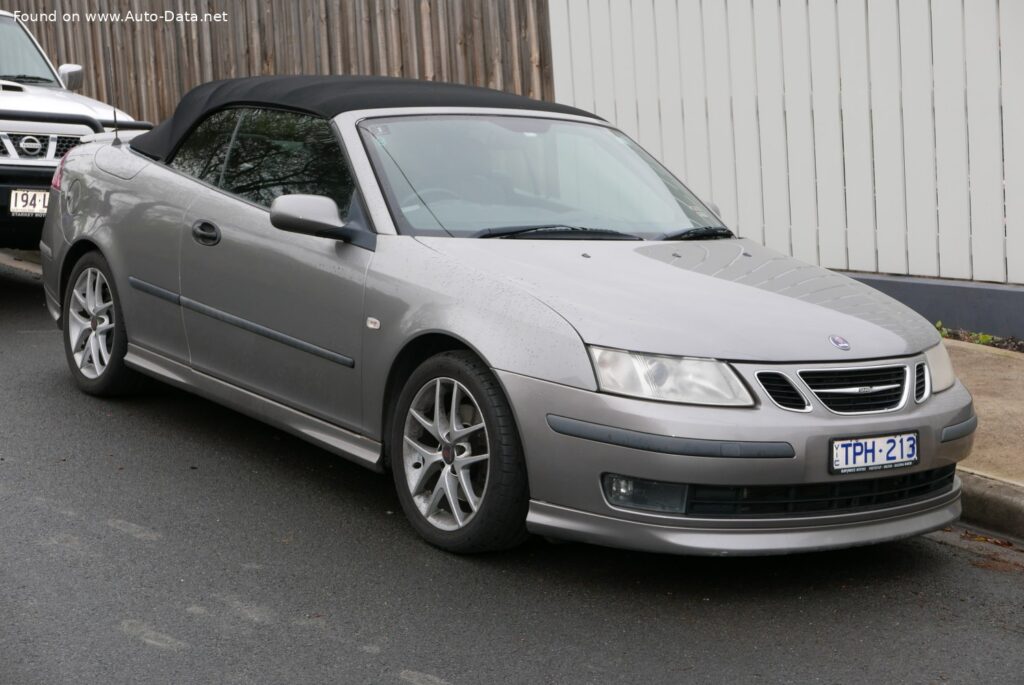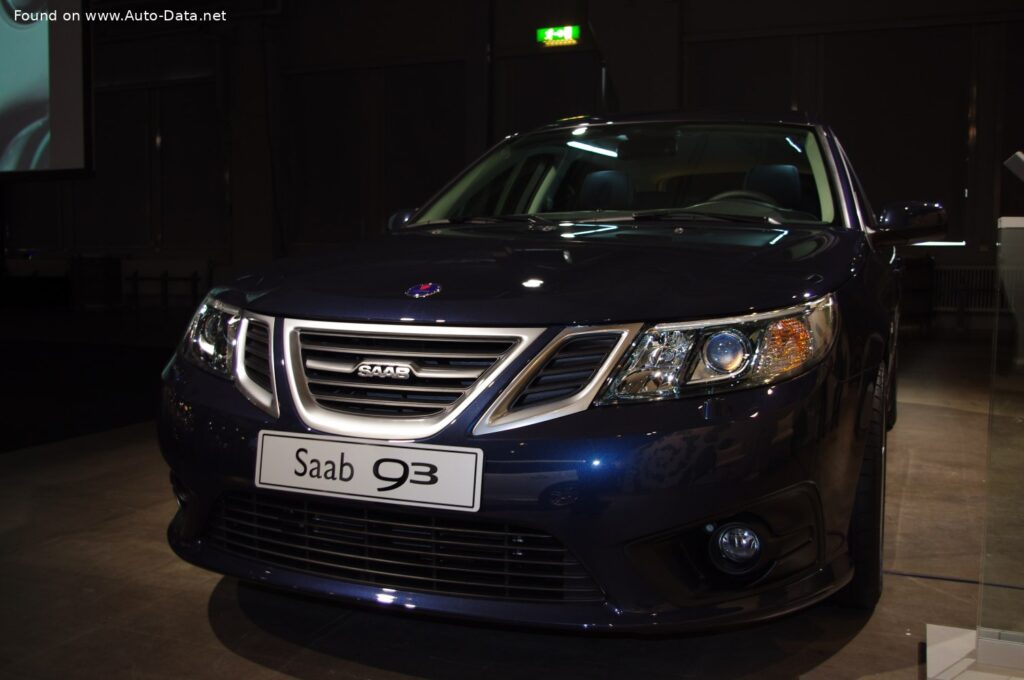
The Saab 9-3 Sport Combi II Griffin (facelift 2011) 2.0t BioPower represents a final iteration of Saab’s popular compact executive car before the brand’s unfortunate demise in December 2011. This model, a station wagon (estate) body style, was primarily aimed at the European market, offering a blend of practicality, Scandinavian design, and a unique flexible-fuel powertrain. While Saab never achieved mainstream success in the United States, the 9-3 series, and particularly the SportCombi, garnered a loyal following among enthusiasts who appreciated its distinctive character and engineering.
Saab 9-3 Sport Combi II Griffin: A Detailed Overview
The 9-3 Sport Combi II Griffin facelift, introduced in 2011, featured subtle cosmetic updates to the exterior and interior, along with refinements to the engine and chassis. The “Griffin” designation typically indicated a higher trim level with enhanced features. The 2.0t BioPower variant was notable for its ability to run on both gasoline and E85 ethanol fuel, offering drivers a choice based on availability and cost. This flexibility was a key selling point in markets like Sweden, where E85 was widely available.
Engine & Performance
At the heart of the 9-3 Sport Combi II Griffin 2.0t BioPower lies a 1.998-liter (121.93 cubic inches) inline-four cylinder engine. This engine, designated the B207H, produces 163 horsepower at 4,000-6,000 rpm and 320 Nm (236.02 lb.-ft.) of torque between 1,750 and 3,500 rpm. The engine utilizes direct fuel injection and a twin-scroll turbocharger with an intercooler to enhance performance and efficiency. The BioPower capability allows the engine to run on gasoline, E85, or any blend of the two, with the engine management system automatically adjusting to optimize combustion.
Power is delivered to the front wheels via a six-speed manual transmission. Acceleration from 0 to 100 km/h (0-62 mph) takes 8.1 seconds, while 0 to 60 mph is achieved in approximately 7.7 seconds. The vehicle has a top speed of 210 km/h (130.49 mph). The weight-to-power ratio of 9.1 kg/Hp and a weight-to-torque ratio of 4.6 kg/Nm contribute to a responsive driving experience.
Design & Features
The Saab 9-3 Sport Combi II Griffin is a five-door, five-seat station wagon. Its design emphasizes practicality and a sleek, understated aesthetic typical of Saab. The SportCombi body style offers a generous 477 liters (16.85 cubic feet) of trunk space with the rear seats up, expanding to 1,331 liters (47 cubic feet) when the seats are folded down.
The 2011 facelift brought minor styling revisions, including updated front and rear fascias, revised headlights, and new interior trim options. Safety features, a hallmark of Saab engineering, included ABS (Anti-lock Braking System) as standard. The vehicle’s suspension consists of an independent McPherson strut setup at the front and an independent multi-link spring suspension at the rear, providing a comfortable ride and stable handling. Electric power steering further enhances the driving experience. The vehicle’s dimensions are 4691 mm (184.69 in) in length, 1762 mm (69.37 in) in width, and 1492 mm (58.74 in) in height.
Technical Specifications
| Brand | Saab |
| Model | 9-3 |
| Generation | 9-3 Sport Combi II Griffin (facelift 2011) |
| Type (Engine) | 2.0t BioPower (163 Hp) |
| Start of production | 2011 |
| End of production | December, 2011 |
| Powertrain Architecture | Internal Combustion engine |
| Body type | Station wagon (estate) |
| Seats | 5 |
| Doors | 5 |
| Fuel consumption (urban) | 9.9 l/100 km (23.8 US mpg, 28.5 UK mpg, 10.1 km/l) |
| Fuel consumption (extra urban) | 5 l/100 km (47 US mpg, 56.5 UK mpg, 20 km/l) |
| Fuel consumption (combined) | 6.8 l/100 km (34.6 US mpg, 41.5 UK mpg, 14.7 km/l) |
| CO2 emissions | 159 g/km |
| Fuel Type | Petrol / Ethanol – E85 |
| Acceleration 0 – 100 km/h | 8.1 sec |
| Acceleration 0 – 62 mph | 8.1 sec |
| Acceleration 0 – 60 mph | 7.7 sec |
| Maximum speed | 210 km/h (130.49 mph) |
| Emission standard | Euro 5 |
| Weight-to-power ratio | 9.1 kg/Hp |
| Weight-to-torque ratio | 4.6 kg/Nm |
| Power | 163 Hp @ 4000-6000 rpm |
| Torque | 320 Nm @ 1750-3500 rpm (236.02 lb.-ft.) |
| Engine layout | Front, Transverse |
| Engine Model/Code | B207H |
| Engine displacement | 1998 cm3 (121.93 cu. in.) |
| Number of cylinders | 4 |
| Engine configuration | Inline |
| Cylinder Bore | 86 mm (3.39 in.) |
| Piston Stroke | 86 mm (3.39 in.) |
| Number of valves per cylinder | 4 |
| Fuel injection system | Direct injection |
| Engine aspiration | Twin-scroll turbo, Intercooler |
| Valvetrain | DOHC |
| Engine oil capacity | 6 l (6.34 US qt | 5.28 UK qt) |
| Coolant | 7.5 l (7.93 US qt | 6.6 UK qt) |
| Kerb Weight | 1480-1620 kg (3262.84 – 3571.49 lbs.) |
| Max. weight | 2050 kg (4519.48 lbs.) |
| Max load | 430-570 kg (947.99 – 1256.63 lbs.) |
| Trunk (boot) space – minimum | 477 l (16.85 cu. ft.) |
| Trunk (boot) space – maximum | 1331 l (47 cu. ft.) |
| Fuel tank capacity | 62 l (16.38 US gal | 13.64 UK gal) |
| Max. roof load | 100 kg (220.46 lbs.) |
| Permitted trailer load with brakes (12%) | 1600 kg (3527.4 lbs.) |
| Permitted trailer load without brakes | 750 kg (1653.47 lbs.) |
| Length | 4691 mm (184.69 in.) |
| Width | 1762 mm (69.37 in.) |
| Width including mirrors | 2038 mm (80.24 in.) |
| Height | 1492 mm (58.74 in.) |
| Wheelbase | 2675 mm (105.31 in.) |
| Front track | 1524 mm (60 in.) |
| Rear (Back) track | 1506 mm (59.29 in.) |
| Front overhang | 1002 mm (39.45 in.) |
| Rear overhang | 1014 mm (39.92 in.) |
| Minimum turning circle | 10.8 m (35.43 ft.) |
| Drive wheel | Front wheel drive |
| Number of gears | 6 gears, manual transmission |
| Front brakes | Ventilated discs, 296 mm |
| Rear brakes | Disc, 292 mm |
| Tires size | 215/65 R16; 225/45 R17; 235/45 R17; 225/45 R18; 235/45 R18; 235/40 R19 |
| Wheel rims size | 6.5J x 16; 7J x 17; 7.5J x 17; 7.5J x 18; 8J x 19 |
The Saab 9-3 Sport Combi II Griffin 2.0t BioPower, despite its short production run in this final form, remains a compelling example of Saab’s commitment to innovation and practicality. Its unique BioPower engine, combined with the spaciousness of the SportCombi body style, made it a popular choice for those seeking a versatile and environmentally conscious vehicle.