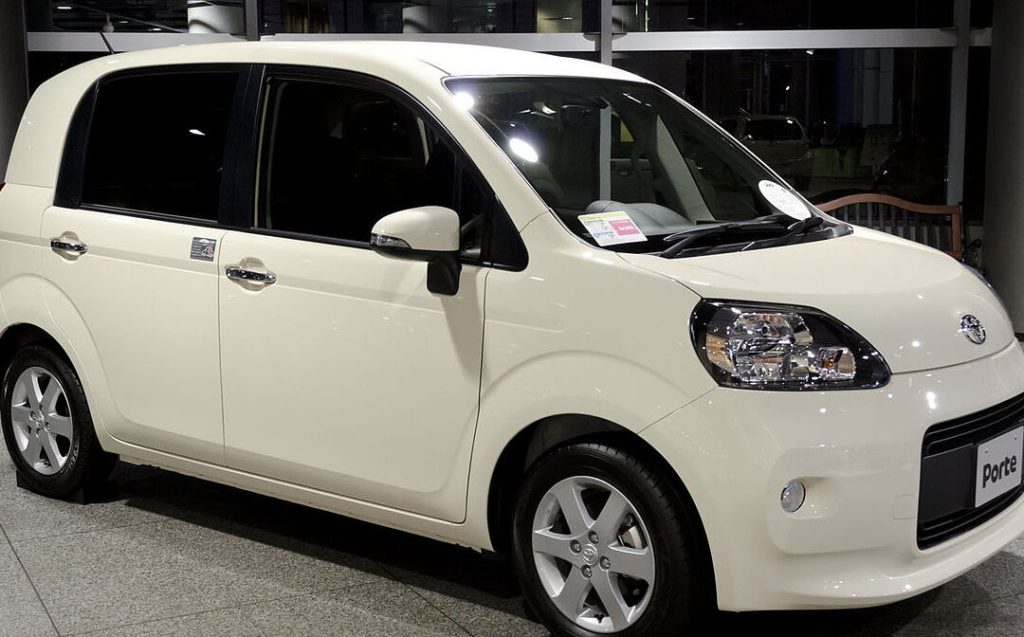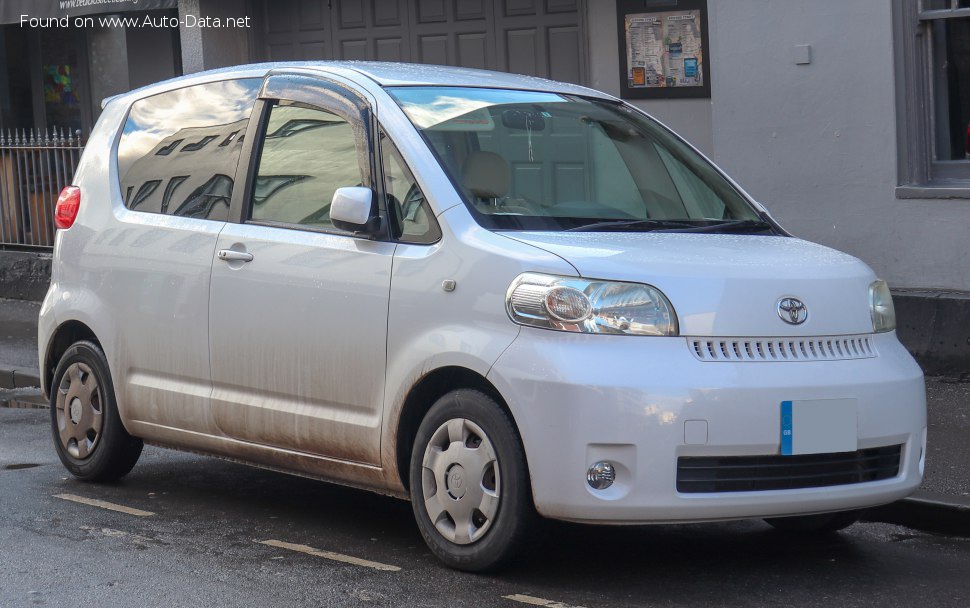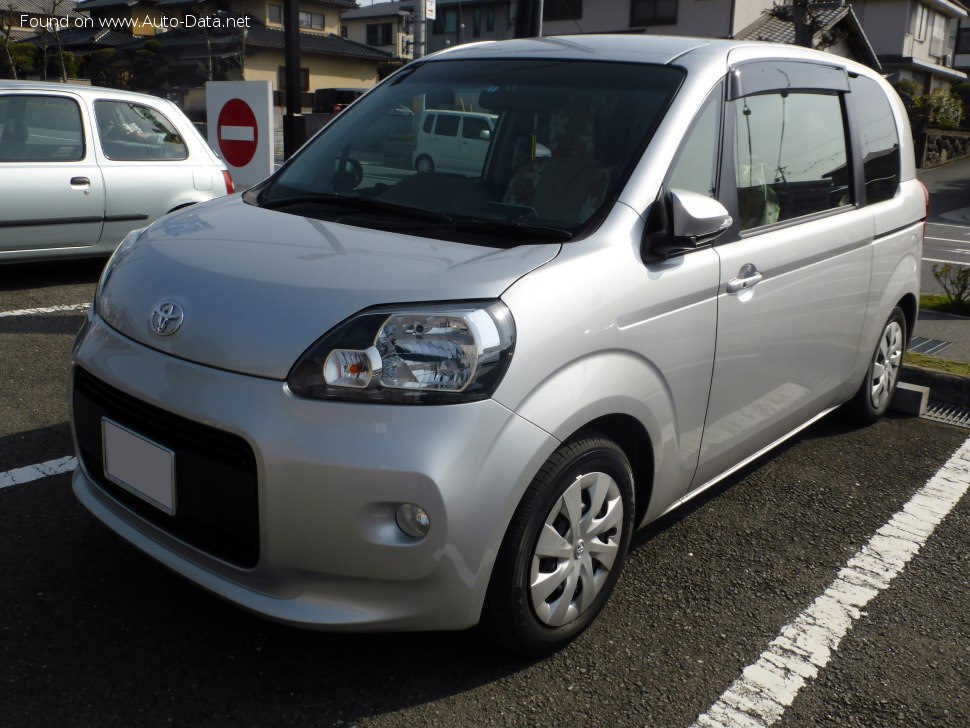
The Toyota Porte II 1.5i 4WD CVT-i, produced from July 2012 onwards, is a compact hatchback primarily designed for the Japanese domestic market (JDM). The Porte, known for its unique dual-sliding rear doors, aimed to provide ease of access in tight urban parking situations – a common need in Japanese cities. While not officially sold in the United States, the Porte II represents Toyota’s commitment to innovative space utilization and fuel efficiency within the subcompact segment. This generation built upon the original Porte’s strengths, offering improved styling, enhanced features, and a refined driving experience. It’s a vehicle that highlights Toyota’s engineering focus on practicality and adaptability for specific market demands.
Toyota Porte II: An Overview
The Porte II falls into the supercompact or kei car-adjacent category, though it exceeds kei car dimensions. It’s positioned as an affordable and versatile vehicle for small families or individuals navigating congested urban environments. The 1.5i 4WD CVT-i variant, detailed here, represents a higher trim level offering all-wheel drive capability and a continuously variable transmission (CVT) for optimized fuel economy and smooth acceleration. The vehicle’s design prioritizes interior space and accessibility, making it a popular choice for those seeking a practical and easy-to-maneuver city car.
Engine & Performance
Powering the Toyota Porte II 1.5i 4WD CVT-i is the 1NZ-FE 1.5-liter inline-four cylinder gasoline engine. This naturally aspirated engine produces 103 horsepower at 6000 rpm and 132 Nm (97.36 lb.-ft.) of torque at 4400 rpm. The engine features a multi-port fuel injection system and a double overhead camshaft (DOHC) valvetrain, contributing to its relatively efficient operation. The power-to-weight ratio of 11.9 kg/Hp (83.7 Hp/tonne) and torque-to-weight ratio of 9.3 kg/Nm (107.3 Nm/tonne) indicate a modest but adequate performance profile for urban driving. The engine’s 1496 cm3 (91.29 cu. in.) displacement provides a balance between fuel economy and usable power. The CVT-i transmission, a Toyota innovation, allows for seamless gear changes and optimizes engine efficiency, resulting in fuel consumption figures of 9.1 l/100 km (25.8 US mpg) in urban conditions and 6.2 l/100 km (37.9 US mpg) on the extra-urban cycle. The all-wheel-drive system enhances traction and stability, particularly in inclement weather conditions.
Design & Features
The Toyota Porte II is a five-seat, three-door hatchback distinguished by its unique dual-sliding rear doors. This feature, a hallmark of the Porte, provides exceptionally easy access to the rear seats, especially in confined parking spaces. The exterior styling is characterized by a rounded, contemporary design, typical of early 2010s Japanese automotive aesthetics. Inside, the cabin is designed to maximize space and practicality. While specific interior features vary depending on trim level, the Porte II generally includes basic amenities such as air conditioning, power windows, and a sound system. Safety features, while not as extensive as in modern vehicles, typically include ABS (Anti-lock Braking System) as standard equipment. The vehicle’s compact dimensions – 3995 mm (157.28 in.) in length, 1695 mm (66.73 in.) in width, and 1720 mm (67.72 in.) in height – make it highly maneuverable in urban traffic. The 2600 mm (102.36 in.) wheelbase contributes to a relatively stable ride. The kerb weight of 1230 kg (2711.69 lbs.) is relatively light, further aiding in fuel efficiency and agility.
Technical Specifications
| Brand | Toyota |
| Model | Porte |
| Generation | Porte II |
| Type (Engine) | 1.5i (103 Hp) 4WD CVT-i |
| Start of production | July, 2012 |
| Powertrain Architecture | Internal Combustion engine |
| Body type | Hatchback |
| Seats | 5 |
| Doors | 3 |
| Fuel consumption (urban) | 9.1 l/100 km (25.8 US mpg, 31 UK mpg, 11 km/l) |
| Fuel consumption (extra urban) | 6.2 l/100 km (37.9 US mpg, 45.6 UK mpg, 16.1 km/l) |
| Fuel Type | Petrol (Gasoline) |
| Weight-to-power ratio | 11.9 kg/Hp |
| Power | 103 Hp @ 6000 rpm |
| Power per litre | 68.9 Hp/l |
| Torque | 132 Nm @ 4400 rpm (97.36 lb.-ft. @ 4400 rpm) |
| Engine Model/Code | 1NZ-FE |
| Engine displacement | 1496 cm3 (91.29 cu. in.) |
| Number of cylinders | 4 |
| Engine configuration | Inline |
| Number of valves per cylinder | 4 |
| Fuel injection system | Multi-port manifold injection |
| Engine aspiration | Naturally aspirated |
| Valvetrain | DOHC |
| Engine oil capacity | 3.7 l (3.91 US qt | 3.26 UK qt) |
| Coolant capacity | 5 l (5.28 US qt | 4.4 UK qt) |
| Kerb Weight | 1230 kg (2711.69 lbs.) |
| Max. weight | 1505 kg (3317.96 lbs.) |
| Max load | 275 kg (606.27 lbs.) |
| Fuel tank capacity | 42 l (11.1 US gal | 9.24 UK gal) |
| Length | 3995 mm (157.28 in.) |
| Width | 1695 mm (66.73 in.) |
| Height | 1720 mm (67.72 in.) |
| Wheelbase | 2600 mm (102.36 in.) |
| Front track | 1485 mm (58.46 in.) |
| Rear track | 1475 mm (58.07 in.) |
| Ride height (ground clearance) | 130 mm (5.12 in.) |
| Minimum turning circle | 10.0 m (32.81 ft.) |
| Drive wheel | All wheel drive (4×4) |
| Number of gears and type of gearbox | automatic transmission CVT-i |
| Front suspension | Independent coil spring |
| Rear suspension | Torsion |
| Front brakes | Ventilated discs |
| Rear brakes | Drum |
| Assisting systems | ABS (Anti-lock braking system) |
| Steering type | Steering rack and pinion |
| Power steering | Electric |
The Toyota Porte II 1.5i 4WD CVT-i, while not a performance vehicle, offers a compelling package of practicality, fuel efficiency, and ease of use. Its unique design and focus on urban mobility make it a distinctive and valuable vehicle within the Japanese automotive landscape.