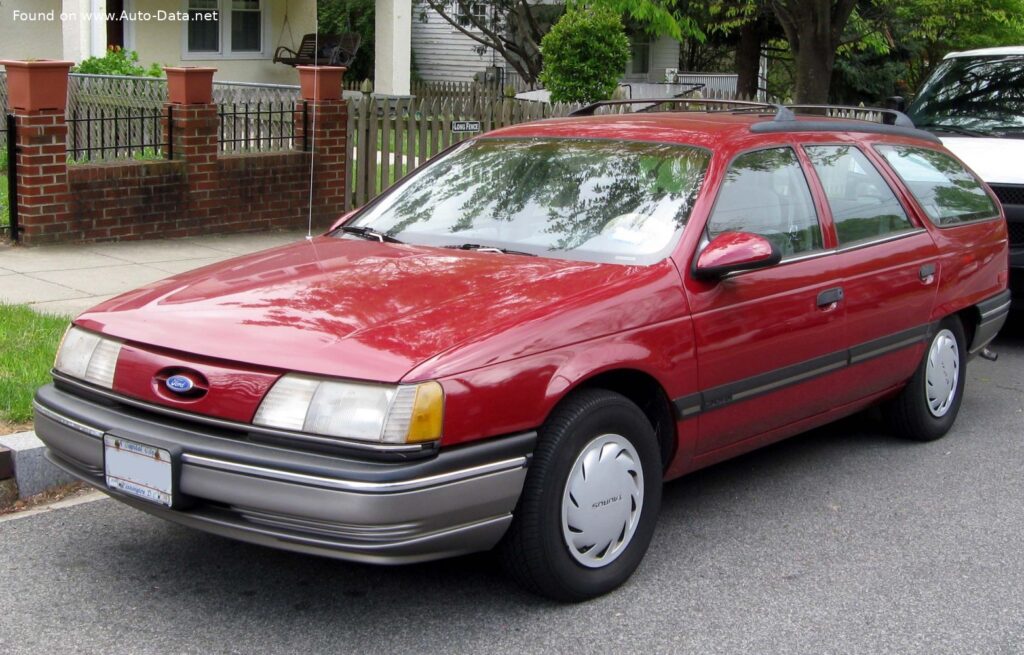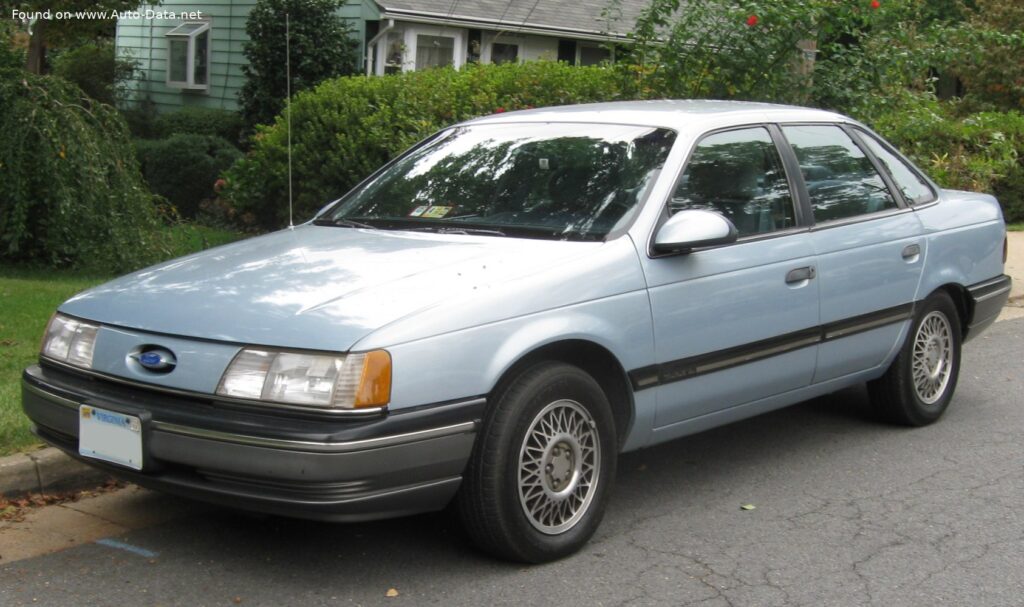
The Ford Taurus SHO, specifically the first generation (Taurus I) produced between 1989 and 1991, represents a unique chapter in Ford’s history. Standing for “Super High Output,” the SHO variant was designed to inject performance and a sporty image into the traditionally family-oriented Taurus lineup. This wasn’t simply a trim level; it was a distinct model aimed at attracting buyers who desired a more engaging driving experience without sacrificing the practicality of a mid-size sedan. The Taurus I SHO was a relatively short-lived but influential vehicle, paving the way for future performance-oriented Ford models.
The Ford Taurus I SHO: A Performance Sedan
The Taurus SHO distinguished itself from standard Taurus models through a combination of a potent engine, upgraded suspension, and subtle but purposeful styling cues. It was a response to the growing demand for performance sedans, particularly those offering a blend of practicality and driving enjoyment. While not a direct competitor to European sports sedans, the Taurus SHO offered a compelling alternative for American buyers seeking a more spirited driving experience within the domestic market.
Engine & Performance
The heart of the Taurus SHO was its Yamaha-designed 3.0-liter V6 engine. This wasn’t a typical Ford powerplant; Ford collaborated with Yamaha, renowned for its expertise in engine design and manufacturing, to create a high-revving, naturally aspirated V6. The engine produced 223 horsepower at 6200 rpm and 271 Nm (199.88 lb.-ft.) of torque at 4800 rpm. This output, combined with a five-speed manual transmission, allowed the SHO to accelerate from 0 to 60 mph in approximately 7.2 seconds and achieve a top speed of 230 km/h (142.92 mph). The engine’s specific output of 74.7 horsepower per liter was impressive for the time. The engine featured multi-port fuel injection and a relatively high 9.8:1 compression ratio, contributing to its responsive performance. The front-engine, transverse layout was standard for the Taurus platform.
Design & Features
The Taurus SHO retained the overall body style of the first-generation Taurus sedan – a four-door, five-seat configuration. However, it incorporated several visual enhancements to differentiate it from its more pedestrian counterparts. These included a unique front fascia with a more aggressive grille, a rear spoiler, and specific wheel designs. Inside, the SHO featured sport seats and a revised instrument cluster. While not overtly luxurious, the interior focused on providing a comfortable and supportive environment for spirited driving. Safety features for the era were present, including an Anti-lock Braking System (ABS), which was a notable addition for a performance-oriented vehicle of that time. The SHO’s suspension was also upgraded with stiffer springs and dampers, improving handling and reducing body roll. The vehicle’s curb weight of 1396 kg (3077.65 lbs) contributed to its relatively nimble handling characteristics.
Technical Specifications
| Brand | Ford |
| Model | Taurus |
| Generation | Taurus I |
| Type (Engine) | SHO 3.0 V6 (223 Hp) |
| Start of production | 1989 |
| End of production | 1991 |
| Powertrain Architecture | Internal Combustion engine |
| Body type | Sedan |
| Seats | 5 |
| Doors | 4 |
| Fuel Type | Petrol (Gasoline) |
| Acceleration 0 – 100 km/h | 7.6 sec |
| Acceleration 0 – 62 mph | 7.6 sec |
| Acceleration 0 – 60 mph | 7.2 sec |
| Maximum speed | 230 km/h (142.92 mph) |
| Weight-to-power ratio | 6.3 kg/Hp |
| Weight-to-torque ratio | 5.2 kg/Nm |
| Power | 223 Hp @ 6200 rpm |
| Power per litre | 74.7 Hp/l |
| Torque | 271 Nm @ 4800 rpm (199.88 lb.-ft. @ 4800 rpm) |
| Maximum engine speed | 7000 rpm |
| Engine layout | Front, Transverse |
| Engine displacement | 2986 cm3 (182.22 cu. in.) |
| Number of cylinders | 6 |
| Engine configuration | V-engine |
| Cylinder Bore | 89 mm (3.5 in.) |
| Piston Stroke | 80 mm (3.15 in.) |
| Compression ratio | 9.8:1 |
| Number of valves per cylinder | 4 |
| Fuel injection system | Multi-port manifold injection |
| Engine aspiration | Naturally aspirated engine |
| Kerb Weight | 1396 kg (3077.65 lbs) |
| Trunk (boot) space – minimum | 481 l (16.99 cu. ft.) |
| Fuel tank capacity | 70 l (18.49 US gal | 15.4 UK gal) |
| Length | 4785 mm (188.39 in.) |
| Width | 1793 mm (70.59 in.) |
| Height | 1379 mm (54.29 in.) |
| Wheelbase | 2692 mm (105.98 in.) |
| Front track | 1562 mm (61.5 in.) |
| Rear (Back) track | 1537 mm (60.51 in.) |
| Minimum turning circle (turning diameter) | 11.6 m (38.06 ft.) |
| Drivetrain Architecture | The Internal combustion engine (ICE) drives the front wheels of the vehicle. |
| Drive wheel | Front wheel drive |
| Number of gears and type of gearbox | 5 gears, manual transmission |
| Front suspension | Wishbone |
| Rear suspension | Wishbone |
| Front brakes | Ventilated discs |
| Rear brakes | Drum |
| Assisting systems | ABS (Anti-lock braking system) |
| Steering type | Steering rack and pinion |
| Tires size | 215/60 R15 |
| Wheel rims size | 15 |
The Ford Taurus I SHO, though a brief experiment, left a lasting impression on enthusiasts. It demonstrated Ford’s willingness to explore performance variants and showcased the benefits of collaboration with external engineering expertise. While later Taurus SHO models would evolve with more powerful engines and different features, the original SHO remains a significant and collectible vehicle, representing a unique blend of practicality, performance, and American automotive ingenuity.