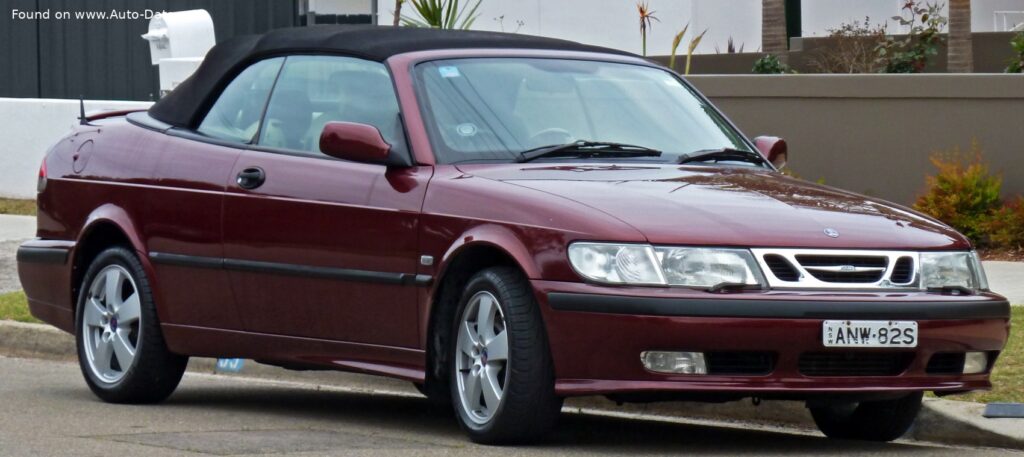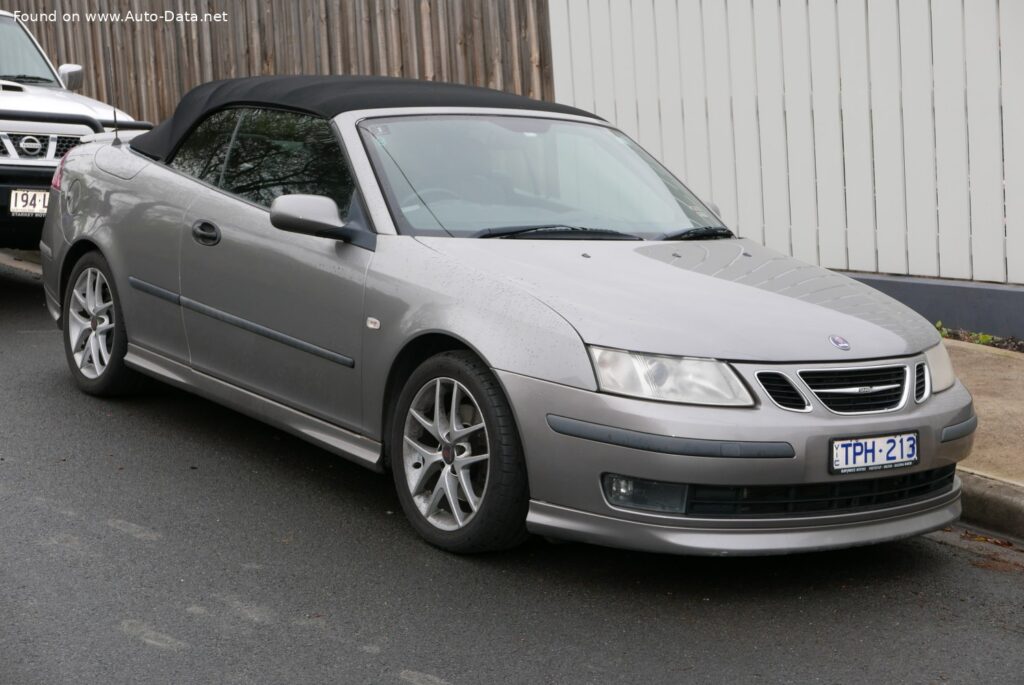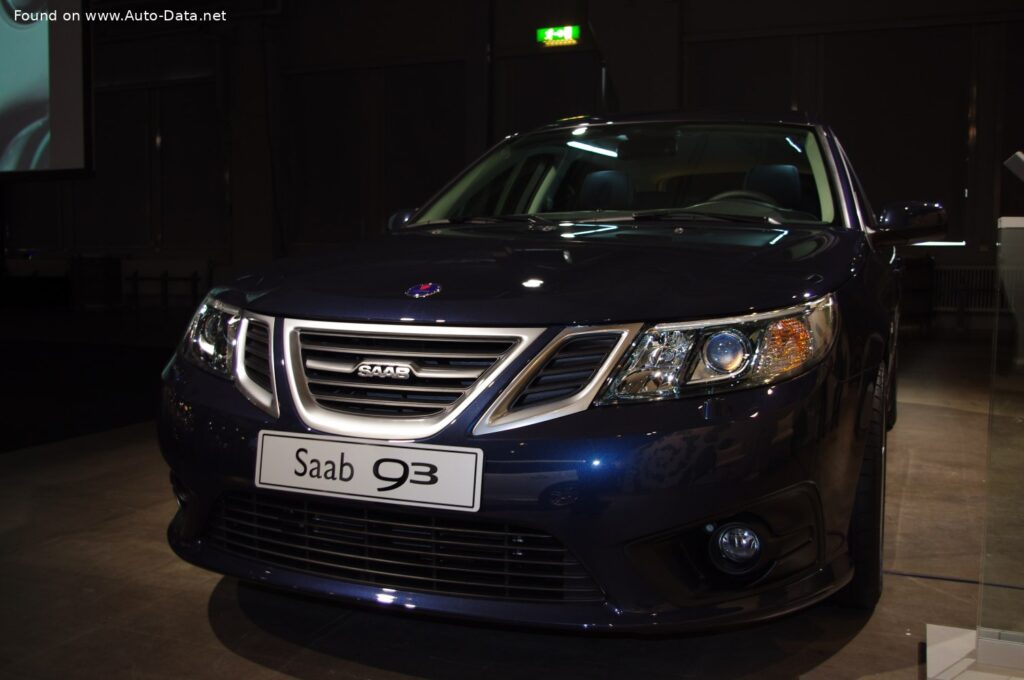
The Saab 9-3 Sport Combi II Griffin (facelift 2011) 2.0t BioPower represents a final refinement of Saab’s popular compact executive car before the brand’s unfortunate demise in December 2011. This iteration, a station wagon (estate) body style, was primarily aimed at the European market, offering a blend of practicality, Scandinavian design, and a unique flexible-fuel powertrain. While Saab never achieved mainstream success in the United States, the 9-3 series, and particularly the SportCombi, garnered a loyal following among enthusiasts who appreciated its distinctive character and engineering. The 2.0t BioPower variant, producing 220 horsepower, was designed to run on both gasoline and E85 ethanol, catering to markets with established biofuel infrastructure.
Saab 9-3 Sport Combi II Griffin: A Detailed Overview
The 9-3 Sport Combi II Griffin facelift, introduced in 2011, brought subtle but significant updates to the second-generation 9-3, which originally debuted in 2007. These changes included revised front-end styling, interior enhancements, and improvements to the chassis and powertrain. The “Griffin” designation typically indicated a higher trim level with more standard features. The SportCombi body style, a station wagon, was a key differentiator for Saab, offering increased cargo capacity and versatility compared to the sedan version. The 2.0t BioPower engine was a central feature, designed to appeal to environmentally conscious buyers and those seeking to take advantage of lower E85 fuel costs where available.
Engine & Performance
The heart of the 9-3 Sport Combi II Griffin 2.0t BioPower is a 1.998-liter (121.93 cubic inches) inline-four cylinder engine. This engine utilizes direct fuel injection and a twin-scroll turbocharger with an intercooler to deliver a power output of 220 horsepower at 5300 rpm and 350 Nm (258.15 lb.-ft.) of torque between 2000 and 4000 rpm. The “BioPower” designation signifies the engine’s capability to run on gasoline or a blend of up to 85% ethanol (E85). When running on E85, the engine management system adjusts to optimize performance and emissions. This flexibility allowed owners to choose the fuel source based on availability and cost. Performance figures include a 0-100 km/h (0-62 mph) acceleration time of 7.1 seconds and a maximum speed of 235 km/h (146.02 mph). The engine is transversely mounted at the front of the vehicle and is coupled with a 6-speed manual transmission, driving the front wheels.
Design & Features
The Saab 9-3 Sport Combi II Griffin boasts a distinctive Scandinavian design aesthetic. The station wagon body style provides a practical and spacious interior, with a focus on functionality and driver comfort. The facelifted model features a redesigned front grille, headlights, and bumper, giving it a more modern and aggressive appearance. Inside, the cabin is characterized by a clean and minimalist layout, with high-quality materials and attention to detail. Key features include comfortable seating for five passengers, a spacious cargo area with a minimum capacity of 477 liters (16.85 cubic feet) expanding to 1331 liters (47 cubic feet) with the rear seats folded down. Safety features, typical for a modern European vehicle, include ABS (Anti-lock Braking System), ventilated disc brakes on all four wheels, and a robust chassis designed for stability and handling. The vehicle’s suspension utilizes an independent McPherson strut setup at the front and an independent multi-link spring suspension at the rear, providing a comfortable ride and responsive handling.
Technical Specifications
| Brand | Saab |
| Model | 9-3 |
| Generation | 9-3 Sport Combi II Griffin (facelift 2011) |
| Type (Engine) | 2.0t BioPower (220 Hp) |
| Start of production | 2011 |
| End of production | December, 2011 |
| Powertrain Architecture | Internal Combustion engine |
| Body type | Station wagon (estate) |
| Seats | 5 |
| Doors | 5 |
| Fuel consumption (urban) | 9.9 l/100 km (23.8 US mpg, 28.5 UK mpg, 10.1 km/l) |
| Fuel consumption (extra urban) | 5 l/100 km (47 US mpg, 56.5 UK mpg, 20 km/l) |
| Fuel consumption (combined) | 6.8 l/100 km (34.6 US mpg, 41.5 UK mpg, 14.7 km/l) |
| CO2 emissions | 159 g/km |
| Fuel Type | Petrol / Ethanol – E85 |
| Acceleration 0 – 100 km/h | 7.1 sec |
| Acceleration 0 – 62 mph | 7.1 sec |
| Acceleration 0 – 60 mph | 6.7 sec |
| Maximum speed | 235 km/h (146.02 mph) |
| Emission standard | Euro 5 |
| Weight-to-power ratio | 6.8 kg/Hp, 147.2 Hp/tonne |
| Weight-to-torque ratio | 4.3 kg/Nm, 234.1 Nm/tonne |
| Power | 220 Hp @ 5300 rpm |
| Power per litre | 110.1 Hp/l |
| Torque | 350 Nm @ 2000-4000 rpm (258.15 lb.-ft. @ 2000-4000 rpm) |
| Engine layout | Front, Transverse |
| Engine Model/Code | A20NFT |
| Engine displacement | 1998 cm3 (121.93 cu. in.) |
| Number of cylinders | 4 |
| Engine configuration | Inline |
| Cylinder Bore | 86 mm (3.39 in.) |
| Piston Stroke | 86 mm (3.39 in.) |
| Number of valves per cylinder | 4 |
| Fuel injection system | Direct injection |
| Engine aspiration | Twin-scroll turbo, Intercooler |
| Valvetrain | DOHC |
| Engine oil capacity | 6 l (6.34 US qt | 5.28 UK qt) |
| Coolant | 7.5 l (7.93 US qt | 6.6 UK qt) |
| Kerb Weight | 1495-1640 kg (3295.91 – 3615.58 lbs.) |
| Max. weight | 2070 kg (4563.57 lbs.) |
| Max load | 430-575 kg (947.99 – 1267.66 lbs.) |
| Trunk (boot) space – minimum | 477 l (16.85 cu. ft.) |
| Trunk (boot) space – maximum | 1331 l (47 cu. ft.) |
| Fuel tank capacity | 62 l (16.38 US gal | 13.64 UK gal) |
| Max. roof load | 100 kg (220.46 lbs.) |
| Permitted trailer load with brakes (12%) | 1600 kg (3527.4 lbs.) |
| Permitted trailer load without brakes | 750 kg (1653.47 lbs.) |
| Length | 4691 mm (184.69 in.) |
| Width | 1762 mm (69.37 in.) |
| Width including mirrors | 2038 mm (80.24 in.) |
| Height | 1492 mm (58.74 in.) |
| Wheelbase | 2675 mm (105.31 in.) |
| Front track | 1524 mm (60 in.) |
| Rear (Back) track | 1506 mm (59.29 in.) |
| Front overhang | 1002 mm (39.45 in.) |
| Rear overhang | 1014 mm (39.92 in.) |
| Minimum turning circle (turning diameter) | 10.8 m (35.43 ft.) |
| Drivetrain Architecture | Front wheel drive |
| Number of gears and type of gearbox | 6 gears, manual transmission |
| Front suspension | Independent, type McPherson with coil spring and anti-roll bar |
| Rear suspension | Independent multi-link spring suspension with stabilizer |
| Front brakes | Ventilated discs, 302 mm |
| Rear brakes | Ventilated discs, 292 mm |
| Tires size | 215/65 R16; 225/45 R17; 235/45 R17; 225/45 R18; 235/45 R18; 235/40 R19 |
| Wheel rims size | 6.5J x 16; 7J x 17; 7.5J x 17; 7.5J x 18; 8J x 19 |
The Saab 9-3 Sport Combi II Griffin 2.0t BioPower, despite its short production run, remains a compelling example of Saab’s commitment to innovation and distinctive design. Its flexible-fuel capability, combined with its practical station wagon body style and Scandinavian aesthetic, made it a unique offering in the compact executive car segment.