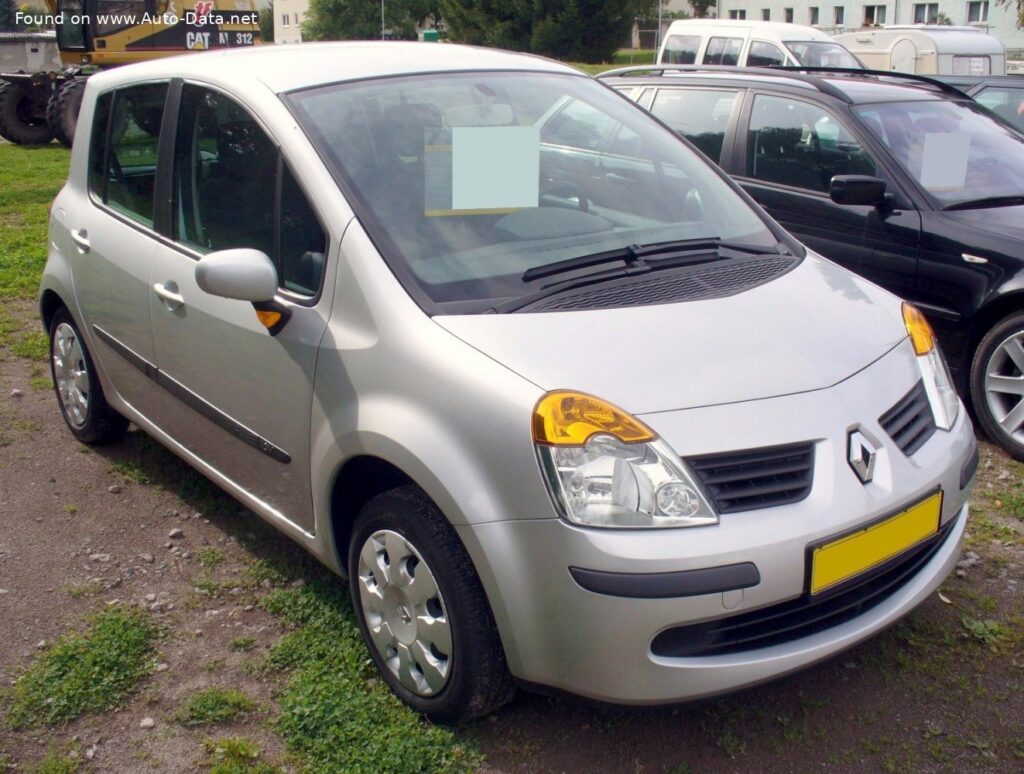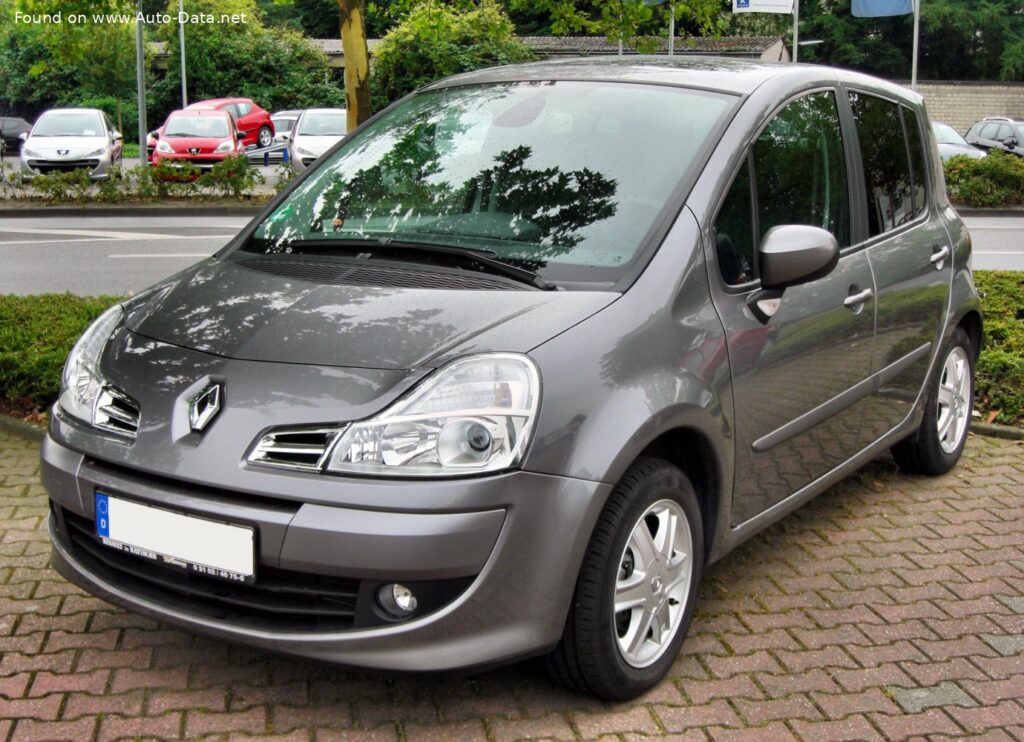
The Renault Modus (Phase II) 1.6 16V ESP Automatic is a subcompact multi-purpose vehicle (MPV), produced by the French manufacturer Renault from 2008 to 2012. Positioned as a practical and versatile option within the European market, the Modus aimed to provide a spacious interior and innovative features in a relatively small package. The Phase II update brought styling revisions and refinements to the original Modus, launched in 2004. While not officially sold in the United States, understanding the Modus provides insight into Renault’s approach to small-car design and the preferences of the European automotive consumer.
Renault Modus (Phase II): An Overview
The Modus occupied a niche between a traditional hatchback and a small MPV, offering a higher seating position and greater interior flexibility than conventional hatchbacks. It was designed to appeal to families and individuals seeking a compact vehicle with a surprising amount of space and practicality. The Phase II model, equipped with the 1.6-liter 16V engine and automatic transmission, represented a mid-range offering within the Modus lineup, balancing performance with fuel efficiency and ease of driving.
Engine & Performance
The Renault Modus (Phase II) 1.6 16V ESP Automatic is powered by a 1.6-liter inline-four cylinder gasoline engine, designated the K4M. This naturally aspirated engine produces 112 horsepower at 6000 rpm and 151 Nm (111.37 lb.-ft.) of torque at 4250 rpm. The engine features multi-port fuel injection and a compression ratio of 10:1. Power is delivered to the front wheels via a four-speed automatic transmission. Performance figures include a 0-100 km/h (0-62 mph) acceleration time of 12.3 seconds and a maximum speed of 184 km/h (114.33 mph). The weight-to-power ratio is 10.8 kg/Hp, and the weight-to-torque ratio is 8 kg/Nm. Fuel consumption is rated at 7.6 liters per 100 kilometers (30.9 US mpg) combined, with urban consumption at 10.2 l/100km (23.1 US mpg) and extra-urban at 6.1 l/100km (38.6 US mpg). CO2 emissions are 179 g/km, meeting Euro 4 emission standards.
Design & Features
The Renault Modus (Phase II) is a five-door hatchback with a distinctive, upright design. The Phase II revisions included subtle styling updates to the front and rear fascias, as well as interior enhancements. A key feature of the Modus was its modular interior, offering a range of seating configurations and cargo space options. The rear seats could be folded, removed, or slid forward to maximize passenger or luggage capacity. The trunk offers 217 liters (7.66 cu. ft.) of space with the rear seats in place, expanding to 1302 liters (45.98 cu. ft.) when folded. Safety features included ABS (Anti-lock Braking System) and ESP (Electronic Stability Program), which were becoming increasingly common on European vehicles during this period. Other features included electric power steering, ventilated front disc brakes, and disc brakes on the rear. The vehicle’s dimensions are 3874 mm (152.52 in.) in length, 1709 mm (67.28 in.) in width, and 1589 mm (62.56 in.) in height. The wheelbase measures 2482 mm (97.72 in.).
Technical Specifications
| Brand | Renault |
| Model | Modus |
| Generation | Modus (Phase II) |
| Type (Engine) | 1.6 16V (112 Hp) ESP Automatic |
| Start of production | 2008 |
| End of production | 2012 |
| Powertrain Architecture | Internal Combustion engine |
| Body type | Hatchback |
| Seats | 5 |
| Doors | 5 |
| Fuel consumption (urban) | 10.2 l/100 km (23.1 US mpg) |
| Fuel consumption (extra urban) | 6.1 l/100 km (38.6 US mpg) |
| Fuel consumption (combined) | 7.6 l/100 km (30.9 US mpg) |
| CO2 emissions | 179 g/km |
| Fuel Type | Petrol (Gasoline) |
| Acceleration 0 – 100 km/h | 12.3 sec |
| Acceleration 0 – 62 mph | 12.3 sec |
| Acceleration 0 – 60 mph | 11.7 sec |
| Maximum speed | 184 km/h (114.33 mph) |
| Emission standard | Euro 4 |
| Weight-to-power ratio | 10.8 kg/Hp |
| Weight-to-torque ratio | 8 kg/Nm |
| Power | 112 Hp @ 6000 rpm |
| Torque | 151 Nm @ 4250 rpm (111.37 lb.-ft. @ 4250 rpm) |
| Engine layout | Front, Transverse |
| Engine Model/Code | K4M |
| Engine displacement | 1598 cm3 (97.52 cu. in.) |
| Number of cylinders | 4 |
| Engine configuration | Inline |
| Cylinder Bore | 79.5 mm (3.13 in.) |
| Piston Stroke | 80.5 mm (3.17 in.) |
| Compression ratio | 10:1 |
| Number of valves per cylinder | 4 |
| Fuel injection system | Multi-port manifold injection |
| Engine aspiration | Naturally aspirated engine |
| Engine oil capacity | 5.1 l (5.39 US qt | 4.49 UK qt) |
| Coolant | 5.8 l (6.13 US qt | 5.1 UK qt) |
| Kerb Weight | 1205 kg (2656.57 lbs.) |
| Max. weight | 1695 kg (3736.84 lbs.) |
| Max load | 490 kg (1080.27 lbs.) |
| Trunk (boot) space – minimum | 217 l (7.66 cu. ft.) |
| Trunk (boot) space – maximum | 1302 l (45.98 cu. ft.) |
| Fuel tank capacity | 49 l (12.94 US gal | 10.78 UK gal) |
| Max. roof load | 80 kg (176.37 lbs.) |
| Permitted trailer load with brakes (12%) | 900 kg (1984.16 lbs.) |
| Permitted trailer load without brakes | 600 kg (1322.77 lbs.) |
| Permitted towbar download | 75 kg (165.35 lbs.) |
| Length | 3874 mm (152.52 in.) |
| Width | 1709 mm (67.28 in.) |
| Width including mirrors | 1960 mm (77.17 in.) |
| Height | 1589 mm (62.56 in.) |
| Wheelbase | 2482 mm (97.72 in.) |
| Front track | 1472 mm (57.95 in.) |
| Rear (Back) track | 1450 mm (57.09 in.) |
| Front overhang | 802 mm (31.57 in.) |
| Rear overhang | 590 mm (23.23 in.) |
| Ride height (ground clearance) | 120 mm (4.72 in.) |
| Minimum turning circle (turning diameter) | 10.4 m (34.12 ft.) |
| Drive wheel | Front wheel drive |
| Number of gears and type of gearbox | 4 gears, automatic transmission |
| Front suspension | Independent, type McPherson with coil spring and anti-roll bar |
| Rear suspension | Semi-independent, coil spring |
| Front brakes | Ventilated discs |
| Rear brakes | Disc |
| Assisting systems | ABS (Anti-lock braking system) |
| Steering type | Steering rack and pinion |
| Power steering | Electric Steering |
| Tires size | 185/60 R15; 185/55 R16 |
| Wheel rims size | 15; 16 |
The Renault Modus (Phase II) 1.6 16V ESP Automatic, while not a vehicle commonly found in the US market, represents a significant example of European small-car design focused on practicality, versatility, and efficiency. Its modular interior and available safety features made it a popular choice for families and individuals seeking a compact and adaptable vehicle.