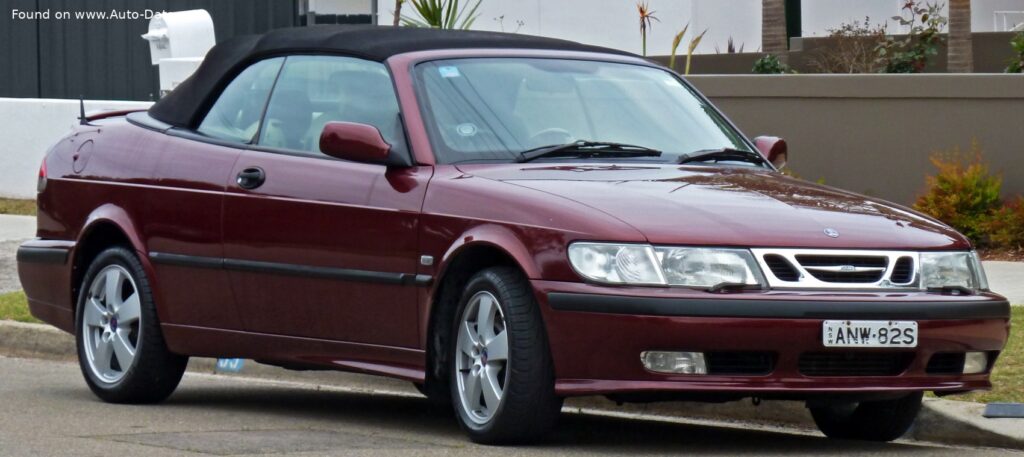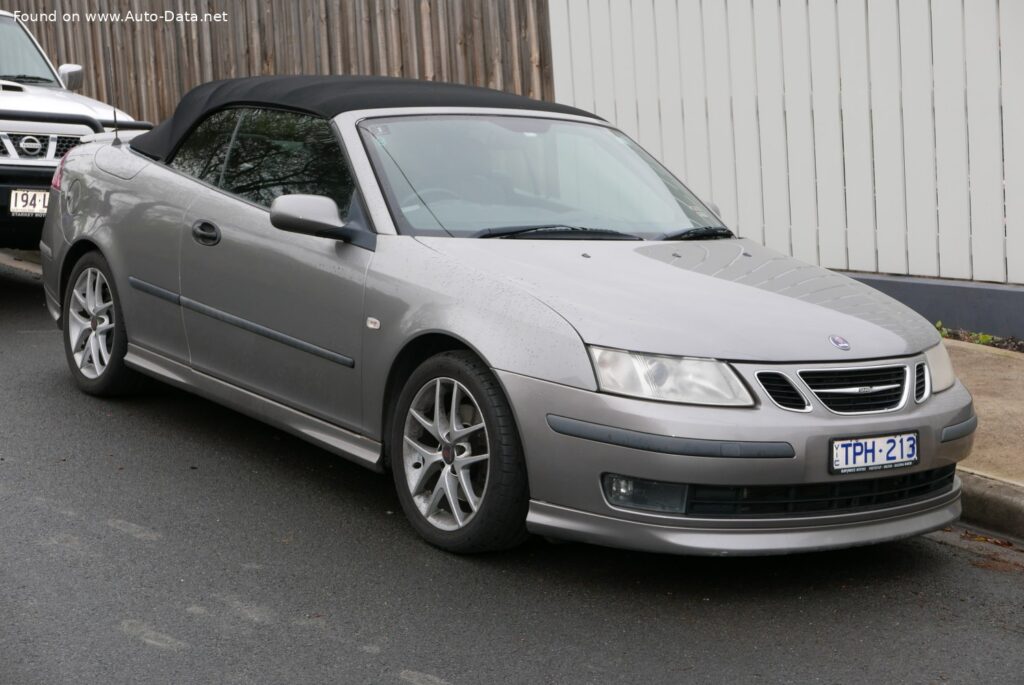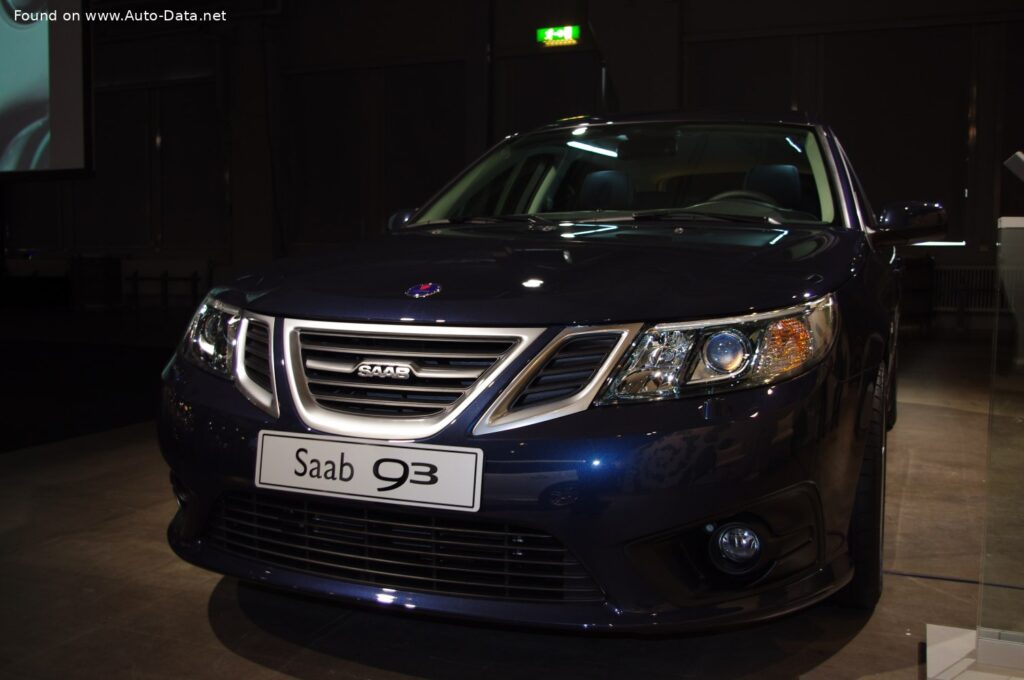
The Saab 9-3 Sport Combi II Griffin (facelift 2011) 2.0t BioPower Sentronic represents a final refinement of Saab’s popular compact executive car before the brand’s unfortunate demise in December 2011. Positioned as a station wagon (estate) within the European market, the 9-3 aimed to blend Scandinavian practicality with a sporty driving experience. This particular iteration, the Griffin, was a facelift introduced to enhance the model’s appeal and maintain competitiveness. The “BioPower” designation indicates the engine’s capability to run on both gasoline and E85 ethanol fuel, a feature reflecting Saab’s commitment to alternative fuels. While not officially sold in the United States, the 9-3 competed with vehicles like the Audi A4 Avant, BMW 3 Series Touring, and Volvo V60 in Europe.
Saab 9-3 Sport Combi II Griffin: Overview
The second generation Saab 9-3, launched in 2002, was a significant departure from its predecessor, sharing its platform with the General Motors Epsilon architecture. This platform underpinned several other GM vehicles, allowing for economies of scale. The Sport Combi body style, introduced in 2005, offered increased cargo capacity and versatility compared to the sedan. The 2011 facelift, denoted as the “Griffin” trim, brought subtle styling updates, improved interior materials, and enhanced standard equipment. The 2.0t BioPower engine was a key offering, providing a balance of performance and fuel efficiency, particularly when utilizing E85 fuel.
Engine & Performance
The heart of the 2011 Saab 9-3 Sport Combi II Griffin 2.0t BioPower is a 1.998-liter (121.93 cubic inches) inline-four cylinder engine. This engine utilizes direct fuel injection and a twin-scroll turbocharger with an intercooler to produce 220 horsepower at 5300 rpm and 350 Nm (258.15 lb.-ft.) of torque between 2000 and 4000 rpm. The BioPower capability allows the engine to run on gasoline or a blend of gasoline and ethanol up to E85, increasing power output when using higher ethanol concentrations. Power is delivered to the front wheels via a six-speed Sentronic automatic transmission. Performance figures include a 0-100 km/h (0-62 mph) acceleration time of 8.8 seconds and a top speed of 230 km/h (142.92 mph). The engine’s power-to-weight ratio is 6.8 kg/Hp, and the torque-to-weight ratio is 4.3 kg/Nm.
Design & Features
The Saab 9-3 Sport Combi II Griffin is a five-door, five-seat station wagon. Its exterior design retains the classic Saab aesthetic, characterized by a wraparound windshield and a distinctive front grille. The facelifted model features revised headlights, a new front bumper, and updated taillights. Inside, the Griffin trim level offers improved interior materials and a more refined ambiance. Standard features include air conditioning, power windows, power mirrors, and an audio system. Safety features, crucial for a modern vehicle, include ABS (Anti-lock Braking System) and a robust chassis designed for occupant protection. The Sport Combi body style provides a generous 477 liters (16.85 cubic feet) of trunk space with the rear seats up, expanding to 1331 liters (47 cubic feet) when the rear seats are folded down. The vehicle’s dimensions are 4691 mm (184.69 inches) in length, 1762 mm (69.37 inches) in width, and 1492 mm (58.74 inches) in height.
Technical Specifications
| Brand | Saab |
| Model | 9-3 |
| Generation | 9-3 Sport Combi II Griffin (facelift 2011) |
| Type (Engine) | 2.0t BioPower (220 Hp) Sentronic |
| Start of production | 2011 |
| End of production | December, 2011 |
| Powertrain Architecture | Internal Combustion engine |
| Body type | Station wagon (estate) |
| Seats | 5 |
| Doors | 5 |
| Fuel consumption (economy) – urban (NEDC) | 12.1 l/100 km (19.4 US mpg, 23.3 UK mpg, 8.3 km/l) |
| Fuel consumption (economy) – extra urban (NEDC) | 5.9 l/100 km (39.9 US mpg, 47.9 UK mpg, 16.9 km/l) |
| Fuel consumption (economy) – combined (NEDC) | 8.2 l/100 km (28.7 US mpg, 34.4 UK mpg, 12.2 km/l) |
| CO2 emissions (NEDC) | 190 g/km |
| Fuel Type | Petrol / Ethanol – E85 |
| Acceleration 0 – 100 km/h | 8.8 sec |
| Acceleration 0 – 62 mph | 8.8 sec |
| Acceleration 0 – 60 mph | 8.4 sec |
| Maximum speed | 230 km/h (142.92 mph) |
| Emission standard | Euro 5 |
| Weight-to-power ratio | 6.8 kg/Hp, 147.2 Hp/tonne |
| Weight-to-torque ratio | 4.3 kg/Nm, 234.1 Nm/tonne |
| Power | 220 Hp @ 5300 rpm |
| Power per litre | 110.1 Hp/l |
| Torque | 350 Nm @ 2000-4000 rpm (258.15 lb.-ft. @ 2000-4000 rpm) |
| Engine layout | Front, Transverse |
| Engine Model/Code | A20NFT |
| Engine displacement | 1998 cm3 (121.93 cu. in.) |
| Number of cylinders | 4 |
| Engine configuration | Inline |
| Cylinder Bore | 86 mm (3.39 in.) |
| Piston Stroke | 86 mm (3.39 in.) |
| Number of valves per cylinder | 4 |
| Fuel injection system | Direct injection |
| Engine aspiration | Twin-scroll turbo, Intercooler |
| Valvetrain | DOHC |
| Engine oil capacity | 6 l (6.34 US qt | 5.28 UK qt) |
| Coolant | 7.5 l (7.93 US qt | 6.6 UK qt) |
| Kerb Weight | 1495-1640 kg (3295.91 – 3615.58 lbs.) |
| Max. weight | 2090 kg (4607.66 lbs.) |
| Max load | 450-595 kg (992.08 – 1311.75 lbs.) |
| Trunk (boot) space – minimum | 477 l (16.85 cu. ft.) |
| Trunk (boot) space – maximum | 1331 l (47 cu. ft.) |
| Fuel tank capacity | 62 l (16.38 US gal | 13.64 UK gal) |
| Max. roof load | 100 kg (220.46 lbs.) |
| Permitted trailer load with brakes (12%) | 1600 kg (3527.4 lbs.) |
| Permitted trailer load without brakes | 750 kg (1653.47 lbs.) |
| Length | 4691 mm (184.69 in.) |
| Width | 1762 mm (69.37 in.) |
| Width including mirrors | 2038 mm (80.24 in.) |
| Height | 1492 mm (58.74 in.) |
| Wheelbase | 2675 mm (105.31 in.) |
| Front track | 1524 mm (60 in.) |
| Rear (Back) track | 1506 mm (59.29 in.) |
| Front overhang | 1002 mm (39.45 in.) |
| Rear overhang | 1014 mm (39.92 in.) |
| Minimum turning circle (turning diameter) | 10.8 m (35.43 ft.) |
| Drivetrain Architecture | The Internal combustion engine (ICE) drives the front wheels of the vehicle. |
| Drive wheel | Front wheel drive |
| Number of gears and type of gearbox | 6 gears, automatic transmission Sentronic |
| Front suspension | Independent, type McPherson with coil spring and anti-roll bar |
| Rear suspension | Independent multi-link spring suspension with stabilizer |
| Front brakes | Ventilated discs, 302 mm |
| Rear brakes | Ventilated discs, 292 mm |
| Assisting systems | ABS (Anti-lock braking system) |
| Steering type | Steering rack and pinion |
| Power steering | Electric Steering |
| Tires size | 215/65 R16; 225/45 R17; 235/45 R17; 225/45 R18; 235/45 R18; 235/40 R19 |
| Wheel rims size | 6.5J x 16; 7J x 17; 7.5J x 17; 7.5J x 18; 8J x 19 |
The Saab 9-3 Sport Combi II Griffin 2.0t BioPower, despite its short production run in this final form, represents a compelling blend of Scandinavian design, practicality, and performance. Its ability to run on renewable fuels and its focus on safety made it a noteworthy vehicle in the European market, and a poignant reminder of the innovative spirit of the Saab brand.