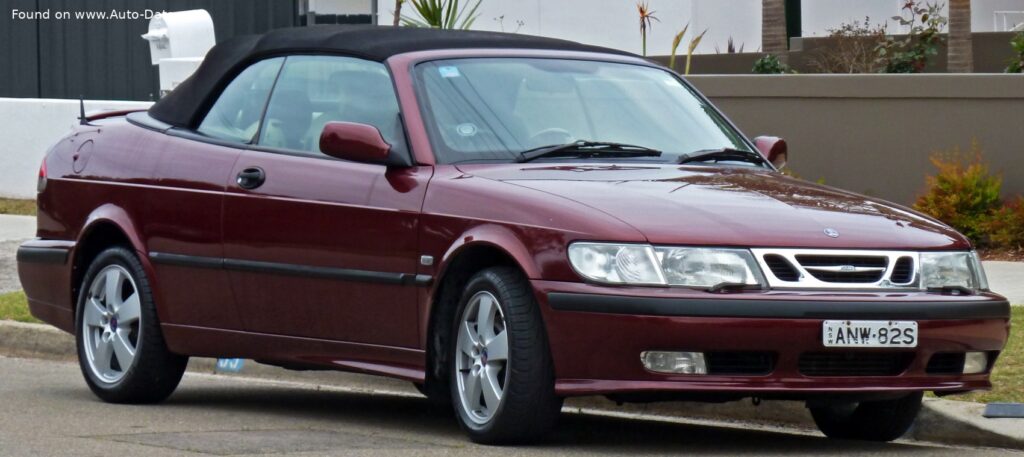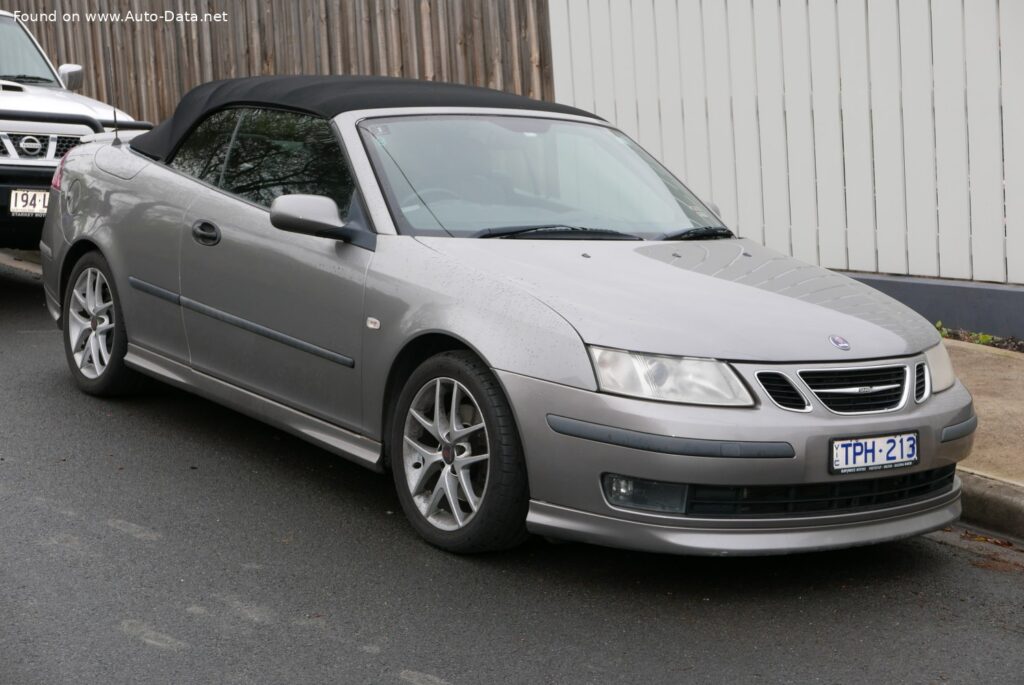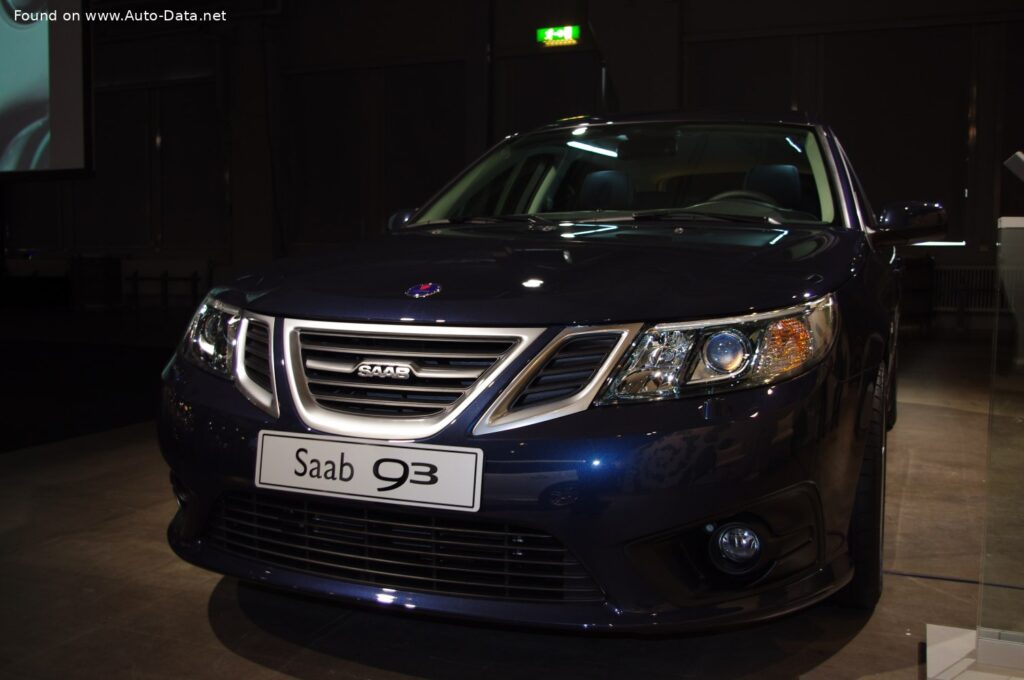
The Saab 9-3 Sport Combi II Griffin (facelift 2011) 2.0t BioPower XWD represents a final refinement of Saab’s popular compact executive wagon before the brand’s unfortunate demise in December 2011. Positioned as a practical and somewhat sporty alternative to more mainstream offerings, the 9-3 Sport Combi aimed to blend Scandinavian design with a focus on driver engagement. This particular iteration, the Griffin, was a late-life facelift intended to keep the model competitive, and the 2.0t BioPower XWD variant combined a turbocharged engine with all-wheel drive and flex-fuel capability, offering a unique proposition in the European market. While never officially sold in significant numbers in the United States, the 9-3 series, and particularly the Sport Combi, garnered a dedicated following among enthusiasts who appreciated its distinctive character and engineering.
Saab 9-3 Sport Combi II Griffin: A Detailed Overview
The 9-3 Sport Combi II Griffin, produced for a very short period in 2011, was the culmination of a lineage that began in 1998. The second generation 9-3, launched in 2002, brought a more refined and modern approach to the compact executive segment. The “Sport Combi” designation denotes the wagon (estate) body style, offering increased practicality without sacrificing the brand’s sporting intentions. The Griffin facelift introduced subtle styling updates, improved interior materials, and enhanced equipment levels. The “BioPower” designation indicates the engine’s ability to run on both gasoline and E85 ethanol, a feature popular in Scandinavian countries due to its environmental benefits and potential cost savings.
Engine & Performance
At the heart of the 2.0t BioPower XWD lies a 1.998-liter inline-four cylinder engine. This powerplant utilizes direct fuel injection and a twin-scroll turbocharger with an intercooler to produce 220 horsepower at 5300 rpm and 350 Nm (258.15 lb.-ft.) of torque between 2000 and 4000 rpm. The engine’s ability to run on E85 ethanol allows for increased power output when using higher ethanol blends, although official figures for E85 operation are not widely available. Power is delivered to all four wheels via a six-speed manual transmission and Saab’s XWD all-wheel-drive system. The XWD system employs an electronically controlled clutch to distribute torque between the front and rear axles, enhancing traction and stability in various driving conditions. Performance figures include a 0-100 km/h (0-62 mph) acceleration time of 6.9 seconds and a top speed of 235 km/h (146.02 mph). The weight-to-power ratio of 7.4 kg/Hp and weight-to-torque ratio of 4.6 kg/Nm contribute to a responsive driving experience.
Design & Features
The Saab 9-3 Sport Combi II Griffin is a five-door, five-seat station wagon. Its exterior design is characterized by clean lines, a distinctive wraparound windshield, and a sloping roofline that emphasizes its sporty profile. The Griffin facelift brought minor cosmetic changes, including revised front and rear bumpers, updated headlights, and new alloy wheel designs. Inside, the cabin features a driver-focused layout with comfortable seating and a functional dashboard. Standard features included air conditioning, power windows, and a basic audio system. Safety features, crucial for a modern vehicle, included ABS (Anti-lock Braking System) and ventilated disc brakes on all four wheels. The Sport Combi’s key advantage lies in its practicality, offering 477 liters (16.85 cu. ft.) of trunk space with the rear seats up, expanding to 1331 liters (47 cu. ft.) with the seats folded down. The vehicle also boasts a fuel tank capacity of 61 liters (16.11 US gal).
Technical Specifications
| Brand | Saab |
| Model | 9-3 |
| Generation | 9-3 Sport Combi II Griffin (facelift 2011) |
| Type (Engine) | 2.0t BioPower (220 Hp) XWD |
| Start of production | 2011 |
| End of production | December, 2011 |
| Powertrain Architecture | Internal Combustion engine |
| Body type | Station wagon (estate) |
| Seats | 5 |
| Doors | 5 |
| Fuel consumption (economy) – urban (NEDC) | 11.8 l/100 km (19.9 US mpg, 23.9 UK mpg, 8.5 km/l) |
| Fuel consumption (economy) – extra urban (NEDC) | 6.4 l/100 km (36.8 US mpg, 44.1 UK mpg, 15.6 km/l) |
| Fuel consumption (economy) – combined (NEDC) | 8.4 l/100 km (28 US mpg, 33.6 UK mpg, 11.9 km/l) |
| CO2 emissions (NEDC) | 195 g/km |
| Fuel Type | Petrol / Ethanol – E85 |
| Acceleration 0 – 100 km/h | 6.9 sec |
| Acceleration 0 – 62 mph | 6.9 sec |
| Acceleration 0 – 60 mph | 6.6 sec |
| Maximum speed | 235 km/h (146.02 mph) |
| Emission standard | Euro 5 |
| Weight-to-power ratio | 7.4 kg/Hp, 135.4 Hp/tonne |
| Weight-to-torque ratio | 4.6 kg/Nm, 215.4 Nm/tonne |
| Power | 220 Hp @ 5300 rpm |
| Power per litre | 110.1 Hp/l |
| Torque | 350 Nm @ 2000-4000 rpm (258.15 lb.-ft. @ 2000-4000 rpm) |
| Engine layout | Front, Transverse |
| Engine Model/Code | A20NFT |
| Engine displacement | 1998 cm3 (121.93 cu. in.) |
| Number of cylinders | 4 |
| Engine configuration | Inline |
| Cylinder Bore | 86 mm (3.39 in.) |
| Piston Stroke | 86 mm (3.39 in.) |
| Number of valves per cylinder | 4 |
| Fuel injection system | Direct injection |
| Engine aspiration | Twin-scroll turbo, Intercooler |
| Valvetrain | DOHC |
| Engine oil capacity | 6 l (6.34 US qt | 5.28 UK qt) |
| Coolant | 7.5 l (7.93 US qt | 6.6 UK qt) |
| Kerb Weight | 1625-1765 kg (3582.51 – 3891.16 lbs.) |
| Max. weight | 2200 kg (4850.17 lbs.) |
| Max load | 435-575 kg (959.01 – 1267.66 lbs.) |
| Trunk (boot) space – minimum | 477 l (16.85 cu. ft.) |
| Trunk (boot) space – maximum | 1331 l (47 cu. ft.) |
| Fuel tank capacity | 61 l (16.11 US gal | 13.42 UK gal) |
| Max. roof load | 100 kg (220.46 lbs.) |
| Permitted trailer load with brakes (12%) | 1600 kg (3527.4 lbs.) |
| Permitted trailer load without brakes | 750 kg (1653.47 lbs.) |
| Length | 4691 mm (184.69 in.) |
| Width | 1762 mm (69.37 in.) |
| Width including mirrors | 2038 mm (80.24 in.) |
| Height | 1492 mm (58.74 in.) |
| Wheelbase | 2675 mm (105.31 in.) |
| Front track | 1524 mm (60 in.) |
| Rear (Back) track | 1506 mm (59.29 in.) |
| Front overhang | 1002 mm (39.45 in.) |
| Rear overhang | 1014 mm (39.92 in.) |
| Drivetrain Architecture | The Internal combustion engine (ICE) drives the front wheels permanently, and the rear wheels are driven through an electrically or mechanically operated clutch if necessary. |
| Drive wheel | All wheel drive (4×4) |
| Number of gears and type of gearbox | 6 gears, manual transmission |
| Front suspension | Independent, type McPherson with coil spring and anti-roll bar |
| Rear suspension | Independent multi-link spring suspension with stabilizer |
| Front brakes | Ventilated discs, 302 mm |
| Rear brakes | Ventilated discs, 292 mm |
| Assisting systems | ABS (Anti-lock braking system) |
| Steering type | Steering rack and pinion |
| Power steering | Electric Steering |
| Tires size | 235/45 R17; 225/45 R18; 235/45 R18; 235/40 R19 |
| Wheel rims size | 7.5J x 17; 7.5J x 18; 8J x 19 |
The Saab 9-3 Sport Combi II Griffin 2.0t BioPower XWD, despite its short production run, represents a compelling blend of performance, practicality, and Scandinavian design. Its unique features, such as the BioPower capability and XWD all-wheel-drive system, set it apart from its competitors. While Saab’s demise is a regrettable chapter in automotive history, the 9-3 Sport Combi remains a fondly remembered vehicle among enthusiasts.