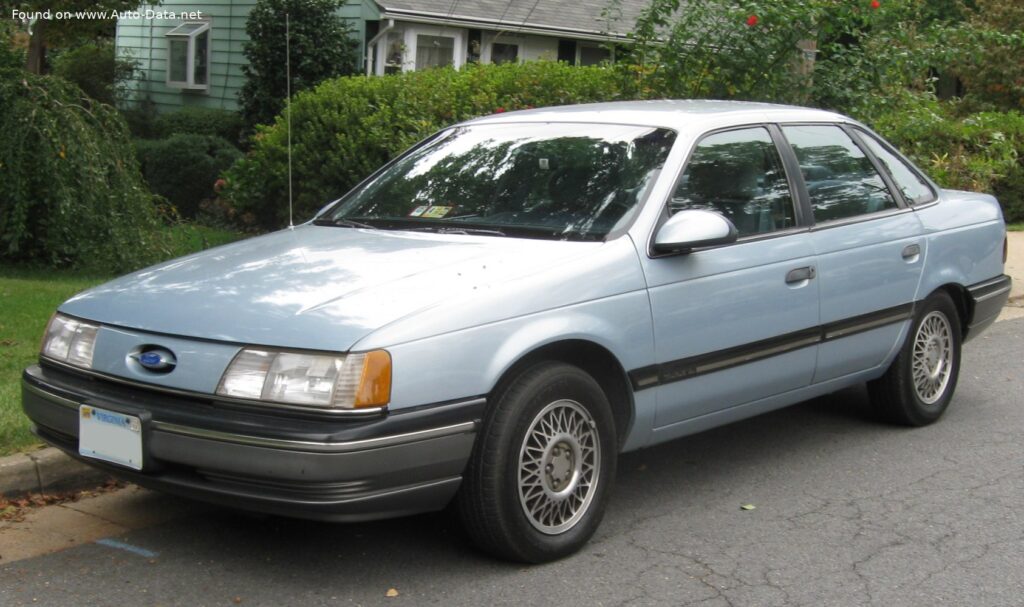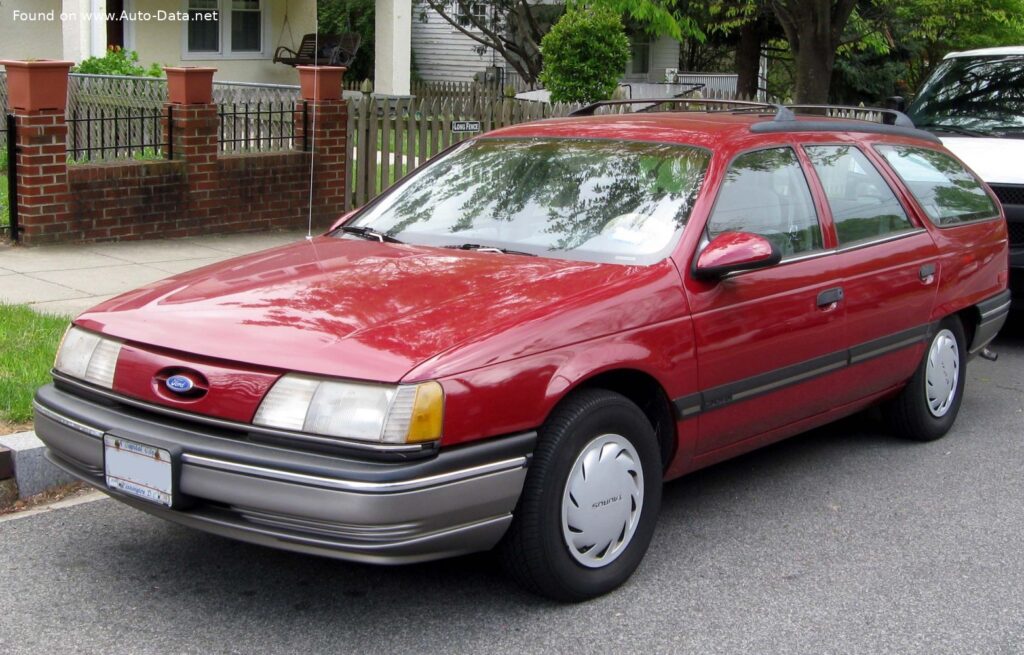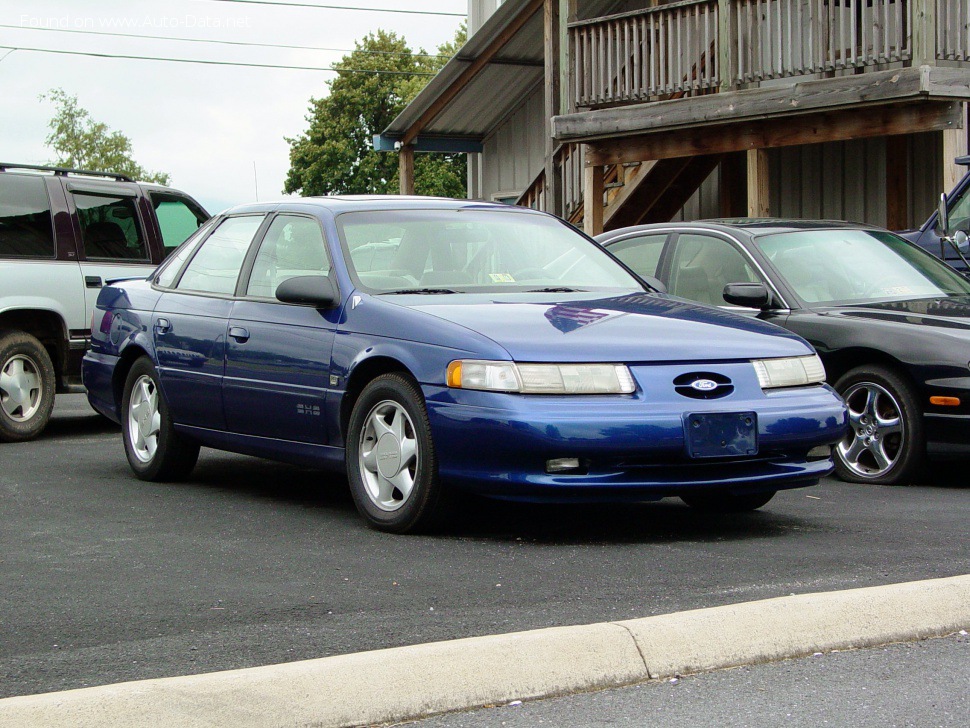
The Ford Taurus II 3.0 V6, produced between 1992 and 1995, represents a significant evolution of the original Ford Taurus, a model that played a pivotal role in reshaping the American family sedan landscape. As the second generation of the Taurus, this iteration continued the trend of aerodynamic styling and offered a blend of comfort, practicality, and affordability. While not initially a performance-focused vehicle, the 3.0 V6 engine option provided a reasonable level of power for everyday driving. The Taurus II was exclusively sold in North America, solidifying Ford’s dominance in the full-size sedan segment during the early to mid-1990s.
Ford Taurus II: A Detailed Overview
The Taurus II built upon the success of its predecessor, addressing some of the criticisms leveled at the first generation while retaining the core design principles. The focus remained on providing a spacious and comfortable interior, coupled with modern features for the time. The 3.0 V6 engine was a key component of the Taurus II lineup, offering a step up in performance compared to the base four-cylinder engine. This model aimed to appeal to families and commuters seeking a reliable and well-equipped vehicle.
Engine & Performance
The heart of the Ford Taurus II 3.0 V6 is, as the name suggests, a 3.0-liter V6 engine. Designated the Vulcan engine, this powerplant produced 141 horsepower at 4800 rpm and 217 Nm (160.05 lb.-ft.) of torque at 3000 rpm. While not a high-output engine by modern standards, it provided adequate power for comfortable cruising and acceleration. The engine featured a naturally aspirated configuration with multi-port fuel injection and an overhead valve (OHV) valvetrain. The engine’s displacement of 2986 cm3 (182.22 cu. in.) and a compression ratio of 9.3:1 contributed to its smooth operation and reasonable fuel efficiency for its time. Power delivery was managed through a four-speed automatic transmission, directing power to the front wheels. The weight-to-power ratio of 10 kg/Hp and 99.7 Hp/tonne indicates a balanced, if not particularly sporty, driving experience. The weight-to-torque ratio of 6.5 kg/Nm and 153.5 Nm/tonne further supports this assessment.
Design & Features
The Ford Taurus II maintained the aerodynamic, rounded styling of the first generation, but with subtle refinements. It continued to be offered as a four-door sedan with seating for five passengers. The body type was a traditional sedan, prioritizing practicality and passenger space. Key features included a spacious interior, comfortable seating, and a relatively large trunk with a minimum capacity of 507 liters (17.9 cu. ft.). Safety features, while not as advanced as those found in modern vehicles, included an Anti-lock Braking System (ABS) as an available option. The Taurus II’s design emphasized a clean and understated aesthetic, reflecting the prevailing automotive trends of the early 1990s. The vehicle’s dimensions – a length of 4877 mm (192.01 in.), a width of 1808 mm (71.18 in.), and a height of 1374 mm (54.09 in.) – positioned it squarely within the full-size sedan category. The wheelbase measured 2692 mm (105.98 in.), contributing to a stable and comfortable ride.
Technical Specifications
| Brand | Ford |
| Model | Taurus |
| Generation | Taurus II |
| Type (Engine) | 3.0 V6 (141 Hp) Automatic |
| Start of production | 1992 |
| End of production | 1995 |
| Powertrain Architecture | Internal Combustion engine |
| Body type | Sedan |
| Seats | 5 |
| Doors | 4 |
| Fuel Type | Petrol (Gasoline) |
| Weight-to-power ratio | 10 kg/Hp |
| Weight-to-torque ratio | 6.5 kg/Nm |
| Power | 141 Hp @ 4800 rpm |
| Power per litre | 47.2 Hp/l |
| Torque | 217 Nm @ 3000 rpm / 160.05 lb.-ft. @ 3000 rpm |
| Engine layout | Front, Transverse |
| Engine Model/Code | Vulcan |
| Engine displacement | 2986 cm3 / 182.22 cu. in. |
| Number of cylinders | 6 |
| Engine configuration | V-engine |
| Cylinder Bore | 89 mm / 3.5 in. |
| Piston Stroke | 80 mm / 3.15 in. |
| Compression ratio | 9.3:1 |
| Number of valves per cylinder | 2 |
| Fuel injection system | Multi-port manifold injection |
| Engine aspiration | Naturally aspirated engine |
| Valvetrain | OHV |
| Engine oil capacity | 4.3 l / 4.54 US qt | 3.78 UK qt |
| Coolant | 11.5 l / 12.15 US qt | 10.12 UK qt |
| Kerb Weight | 1414 kg / 3117.34 lbs |
| Trunk (boot) space – minimum | 507 l / 17.9 cu. ft |
| Fuel tank capacity | 61 l / 16.11 US gal | 13.42 UK gal |
| Length | 4877 mm / 192.01 in |
| Width | 1808 mm / 71.18 in |
| Height | 1374 mm / 54.09 in |
| Wheelbase | 2692 mm / 105.98 in |
| Front track | 1562 mm / 61.5 in |
| Rear (Back) track | 1537 mm / 60.51 in |
| Minimum turning circle (turning diameter) | 11.76 m / 38.58 ft |
| Drivetrain Architecture | Internal Combustion engine (ICE) drives the front wheels |
| Drive wheel | Front wheel drive |
| Number of gears and type of gearbox | 4 gears, automatic transmission |
| Front suspension | Wishbone |
| Rear suspension | Wishbone |
| Front brakes | Ventilated discs |
| Rear brakes | Drum |
| Assisting systems | ABS (Anti-lock braking system) |
| Steering type | Steering rack and pinion |
| Tires size | 205/70 R14 |
| Wheel rims size | 14 |
The Ford Taurus II 3.0 V6, while not a groundbreaking vehicle, represented a solid and reliable option for families seeking a comfortable and practical sedan during the early 1990s. Its blend of affordability, spaciousness, and reasonable performance contributed to its continued success in the competitive American automotive market.