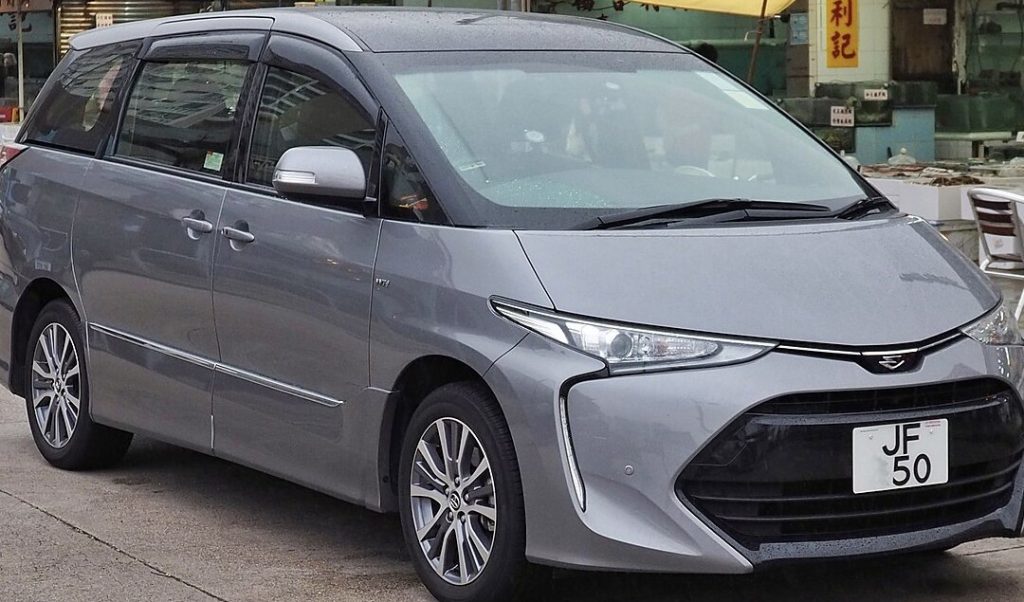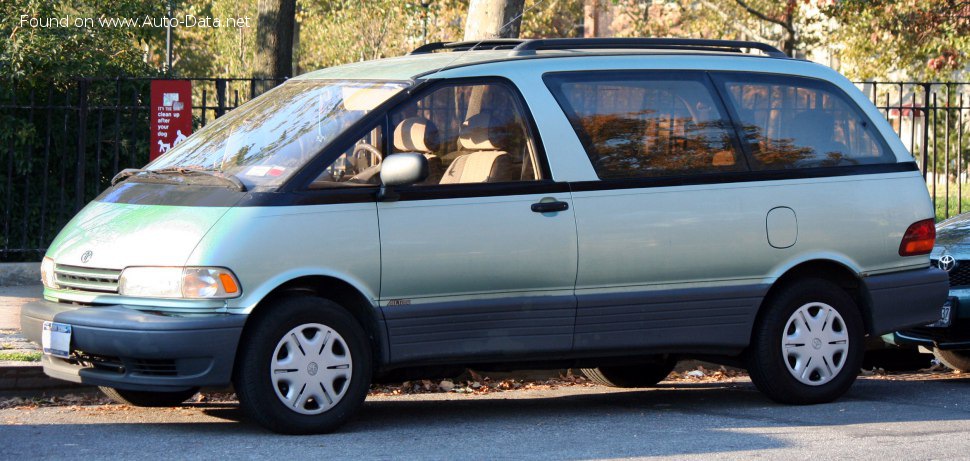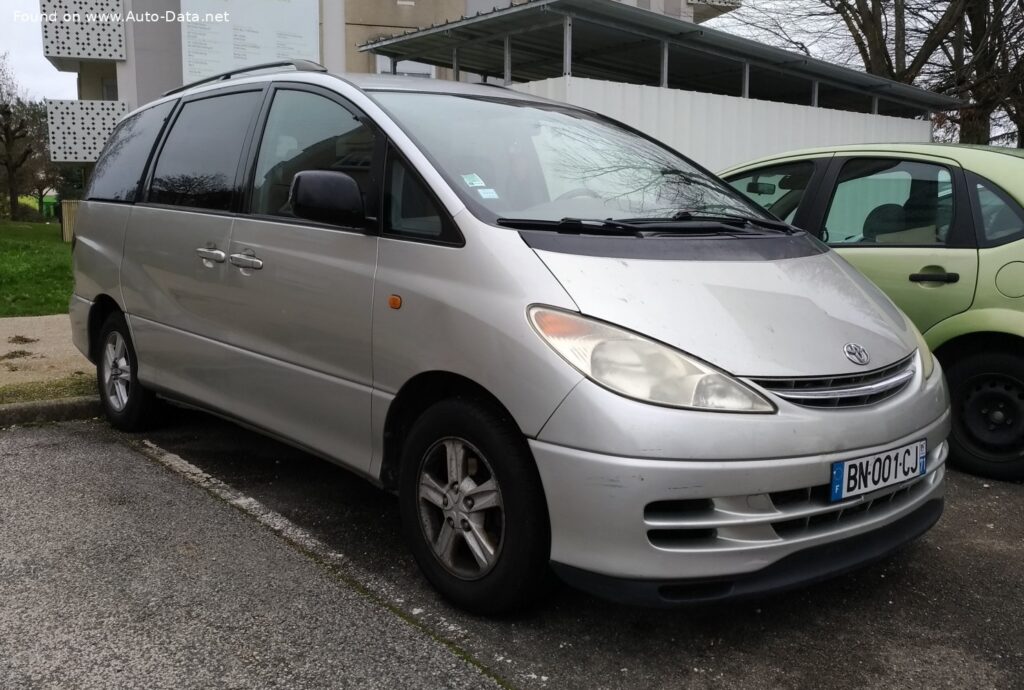
The Toyota Previa, known as the Estima in its native Japan, is a minivan that was produced from 1990 to 2019 across multiple generations. The second generation, produced from 2000 to 2005, represented a significant evolution of the model, offering increased space, improved refinement, and a focus on family-oriented features. While not officially sold in the United States during this generation, the Previa held a strong position in markets like Europe, Asia, and Australia as a premium and technologically advanced people carrier. This article details the 2.4-liter 16-valve version of the second-generation Toyota Previa, focusing on its technical specifications and characteristics.
Toyota Previa 2.4 16V: An Overview
The 2.4 16V Previa, produced between 2000 and 2005, was a key variant within the second generation. It aimed to balance performance with fuel efficiency, catering to buyers seeking a comfortable and practical minivan. The Previa distinguished itself from competitors with its mid-engine, rear-wheel-drive layout in earlier generations (later shifting to front-wheel drive as detailed below), offering a unique driving experience and improved weight distribution. The 2.4 16V model specifically targeted markets where fuel costs and emissions regulations were becoming increasingly important, offering a more economical option compared to larger-displacement engines.
Engine & Performance
The heart of the Previa 2.4 16V is the 2AZ-FE inline four-cylinder engine, displacing 2.4 liters (2362 cm3 or 144.14 cu. in.). This naturally aspirated engine produces 156 horsepower (Hp) at 5600 rpm and 225 Newton-meters (165.95 lb.-ft.) of torque at 4000 rpm. The engine features multi-port fuel injection and an overhead camshaft (OHC) valvetrain with four valves per cylinder. This configuration contributes to a power output of 66 Hp per liter, demonstrating a relatively efficient design for its time.
Power is delivered to the front wheels via a five-speed manual transmission. This drivetrain configuration allows for a 0 to 100 km/h (0 to 62 mph) acceleration time of 10.9 seconds, and a 0 to 60 mph time of 10.4 seconds. The Previa 2.4 16V achieves a maximum speed of 185 km/h (114.95 mph). The weight-to-power ratio is 10.4 kg/Hp, and the weight-to-torque ratio is 7.2 kg/Nm, indicating a reasonable balance between weight and performance. Fuel consumption is rated at 12.2 l/100 km (19.3 US mpg, 23.2 UK mpg, 8.2 km/l) in urban conditions, 8 l/100 km (29.4 US mpg, 35.3 UK mpg, 12.5 km/l) extra-urban, and 9.5 l/100 km (24.8 US mpg, 29.7 UK mpg, 10.5 km/l) combined.
Design & Features
The second-generation Toyota Previa maintains the minivan body style, offering seating for up to eight passengers across four doors. Its design emphasizes practicality and spaciousness, with a focus on passenger comfort. The Previa’s interior is known for its flexible seating arrangements, allowing for various configurations to accommodate different passenger and cargo needs. Trunk space ranges from a minimum of 495 liters (17.48 cu. ft.) to a maximum of 2370 liters (83.7 cu. ft.) with the rear seats folded down.
Safety features included Anti-lock Braking System (ABS) as standard equipment. The Previa’s suspension utilizes a wishbone setup at the front and coil springs at the rear, providing a comfortable ride. Steering is rack and pinion with hydraulic power assistance. The vehicle rides on 205/65 R15 tires. The Previa’s design, while functional, was generally considered more understated than some of its competitors, prioritizing practicality over overt styling. The focus was on creating a vehicle that was reliable, comfortable, and well-suited to the needs of families.
Technical Specifications
| Brand | Toyota |
| Model | Previa |
| Generation | Previa |
| Type (Engine) | 2.4 16V (156 Hp) |
| Start of production | January, 2000 |
| End of production | December, 2005 |
| Powertrain Architecture | Internal Combustion engine |
| Body type | Minivan |
| Seats | 8 |
| Doors | 4 |
| Fuel consumption (economy) – urban | 12.2 l/100 km (19.3 US mpg, 23.2 UK mpg, 8.2 km/l) |
| Fuel consumption (economy) – extra urban | 8 l/100 km (29.4 US mpg, 35.3 UK mpg, 12.5 km/l) |
| Fuel consumption (economy) – combined | 9.5 l/100 km (24.8 US mpg, 29.7 UK mpg, 10.5 km/l) |
| Fuel Type | Petrol (Gasoline) |
| Acceleration 0 – 100 km/h | 10.9 sec |
| Acceleration 0 – 62 mph | 10.9 sec |
| Acceleration 0 – 60 mph | 10.4 sec |
| Maximum speed | 185 km/h (114.95 mph) |
| Weight-to-power ratio | 10.4 kg/Hp |
| Weight-to-torque ratio | 7.2 kg/Nm |
| Power | 156 Hp @ 5600 rpm |
| Torque | 225 Nm @ 4000 rpm (165.95 lb.-ft. @ 4000 rpm) |
| Engine layout | Front, Transverse |
| Engine Model/Code | 2AZ-FE |
| Engine displacement | 2362 cm3 (144.14 cu. in.) |
| Number of cylinders | 4 |
| Engine configuration | Inline |
| Cylinder Bore | 88.5 mm (3.48 in.) |
| Piston Stroke | 96 mm (3.78 in.) |
| Compression ratio | 9.6:1 |
| Number of valves per cylinder | 4 |
| Fuel injection system | Multi-port manifold injection |
| Engine aspiration | Naturally aspirated engine |
| Valvetrain | OHC |
| Engine oil capacity | 4.3 l (4.54 US qt | 3.78 UK qt) |
| Coolant | 6.5 l (6.87 US qt | 5.72 UK qt) |
| Kerb Weight | 1630 kg (3593.53 lbs.) |
| Max. weight | 2240 kg (4938.35 lbs.) |
| Max load | 610 kg (1344.82 lbs.) |
| Trunk (boot) space – minimum | 495 l (17.48 cu. ft.) |
| Trunk (boot) space – maximum | 2370 l (83.7 cu. ft.) |
| Fuel tank capacity | 75 l (19.81 US gal | 16.5 UK gal) |
| Length | 4750 mm (187.01 in.) |
| Width | 1790 mm (70.47 in.) |
| Height | 1770 mm (69.69 in.) |
| Wheelbase | 2900 mm (114.17 in.) |
| Front track | 1545 mm (60.83 in.) |
| Rear (Back) track | 1530 mm (60.24 in.) |
| Drivetrain Architecture | The Internal combustion engine (ICE) drives the front wheels of the vehicle. |
| Drive wheel | Front wheel drive |
| Number of gears and type of gearbox | 5 gears, manual transmission |
| Front suspension | Wishbone |
| Rear suspension | Coil spring |
| Front brakes | Ventilated discs |
| Rear brakes | Disc |
| Assisting systems | ABS (Anti-lock braking system) |
| Steering type | Steering rack and pinion |
| Power steering | Hydraulic Steering |
| Tires size | 205/65 R15 |
The Toyota Previa 2.4 16V represented a well-rounded package for families seeking a comfortable, practical, and reliable minivan. While not available in all markets, it remained a popular choice in regions where it was offered, known for its spacious interior, efficient engine, and Toyota’s reputation for durability.