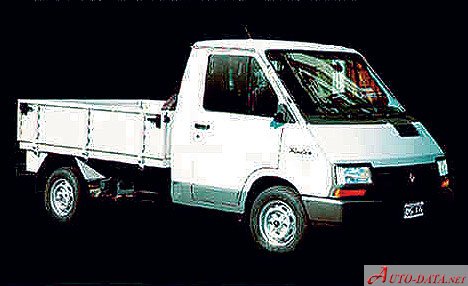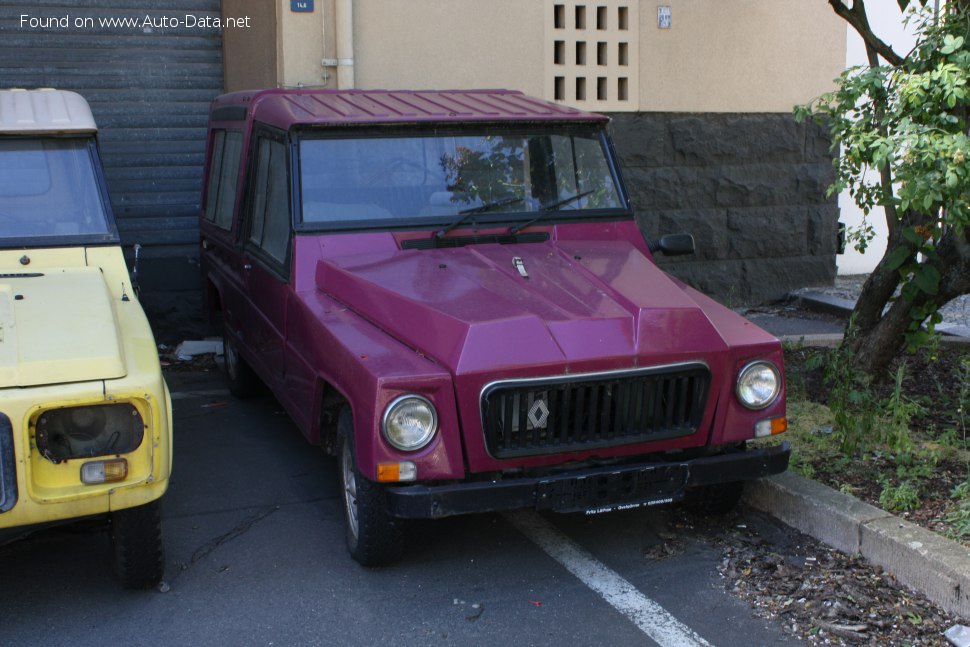
The Renault Rodeo 4 0.8, producing 34 horsepower, was a utilitarian off-road vehicle manufactured by Renault between 1970 and 1981. While largely unknown in the North American market, the Rodeo 4 occupied a unique niche in Europe, particularly in France, as an affordable and rugged vehicle intended for rural use, agricultural work, and the French military. It wasn’t designed for high-speed road travel but rather for tackling challenging terrain and providing basic transportation where paved roads were scarce. The Rodeo 4 represents a period of French automotive engineering focused on practicality and durability over luxury or performance. It’s a significant example of a vehicle built to meet specific, localized needs, rather than aiming for broad international appeal.
Renault Rodeo 4 0.8: A Detailed Overview
The Rodeo 4 was a direct descendant of earlier Renault Rodeo models, each iteration evolving to meet changing demands. The “4” designation signifies the fourth generation of the Rodeo line, and the 0.8 refers to the engine displacement. This particular version, with its modest 34 horsepower, was the most common and represents the vehicle in its most basic form. The Rodeo line itself was born out of a need for a simple, robust vehicle capable of operating in difficult conditions, a requirement particularly prevalent in post-war France where rural infrastructure was still developing. The Rodeo 4 continued this tradition, offering a low-cost, dependable solution for those needing a workhorse vehicle.
Origins and Market Position
The Renault Rodeo was never officially sold in the United States. Its design and intended purpose were geared towards the European market, specifically France and its former colonies. In France, it competed with similar utilitarian vehicles like the Citroën Méhari, though the Rodeo generally occupied a lower price point. It found favor with farmers, forestry workers, the military, and anyone needing a simple, four-wheel-drive vehicle for work or recreation. The Rodeo 4’s appeal lay in its simplicity; it was easy to maintain, relatively inexpensive to operate, and capable of traversing terrain that would be impassable for conventional passenger cars. It filled a gap in the market for a no-frills, highly functional off-road vehicle.
Engine & Performance
The heart of the Renault Rodeo 4 0.8 is a naturally aspirated, 0.8-liter (799cc) inline-four cylinder gasoline engine. This engine produced a modest 34 horsepower. While this output seems low by modern standards, it was sufficient for the Rodeo 4’s intended purpose. The engine’s design prioritized reliability and low-end torque over outright speed. It was paired with a four-speed manual transmission and a two-speed transfer case, providing four-wheel drive capability. The transfer case allowed the driver to select between two-wheel drive for on-road use and four-wheel drive for off-road conditions.
Performance figures were, unsurprisingly, modest. Acceleration was slow, and the Rodeo 4’s top speed was limited. However, its strength lay in its ability to crawl over obstacles and maintain traction in challenging terrain. The vehicle’s relatively light weight and short wheelbase contributed to its off-road prowess. The engine, while simple, was known for its durability and ease of maintenance, a crucial factor for owners operating in remote areas. Fuel economy, while not a primary concern, was reasonable for the era and the vehicle’s capabilities. The Rodeo 4 wasn’t about speed or comfort; it was about getting the job done, regardless of the conditions.
Design & Features
The Renault Rodeo 4’s design is distinctly utilitarian. It features a simple, boxy body-on-frame construction, prioritizing functionality over aesthetics. The body is constructed of steel panels, and the vehicle is characterized by its high ground clearance and short wheelbase. The Rodeo 4 is typically configured as a two-door, open-top vehicle, although some models were available with a basic canvas or metal hardtop. The interior is spartan, with minimal creature comforts. Seats are typically made of vinyl or canvas, and the dashboard is simple and functional.
Safety features were minimal by modern standards, reflecting the vehicle’s era and intended use. Seatbelts were often optional, and there were no airbags or anti-lock brakes. The Rodeo 4’s primary safety feature was its robust construction and its ability to navigate challenging terrain safely. The vehicle’s open-top design provided good visibility, and its simple mechanicals made it relatively easy to repair in the field. The Rodeo 4’s design was a direct response to the needs of its target market: a rugged, reliable, and affordable vehicle capable of performing demanding tasks in difficult conditions. It was a tool, first and foremost, and its design reflected that purpose.
Technical Specifications
| Brand | Renault |
| Model | Rodeo |
| Generation | Rodeo 4 |
| Type (Engine) | 0.8 (34 Hp) |
| Start of production | 1970 |
| End of production | 1981 |
| Powertrain Architecture | Internal Combustion engine |
| Body type | Off-road vehicle |
| Fuel Type | Petrol (Gasoline) |
| Power | 34 Hp |
| Engine aspiration | Naturally aspirated engine |
The Renault Rodeo 4 0.8, while not a vehicle that achieved widespread recognition outside of Europe, remains a significant example of automotive engineering focused on practicality and durability. Its simple design, robust construction, and affordable price point made it a valuable asset to those needing a reliable off-road vehicle for work or recreation. Today, the Rodeo 4 is a sought-after vehicle among collectors and enthusiasts who appreciate its unique character and its historical significance as a representative of a bygone era of utilitarian automotive design.