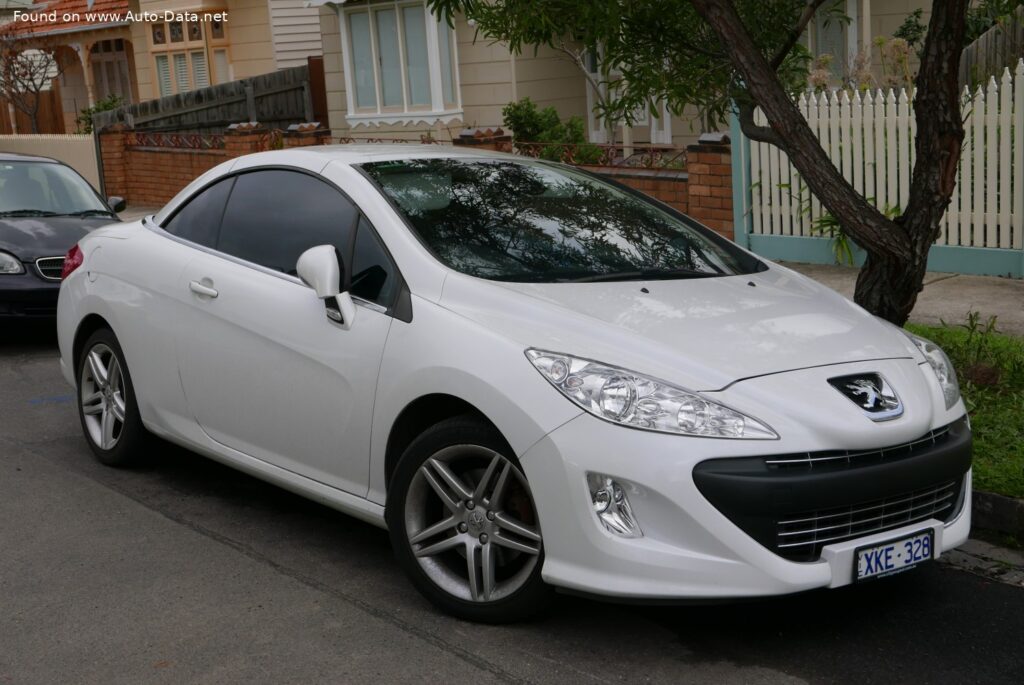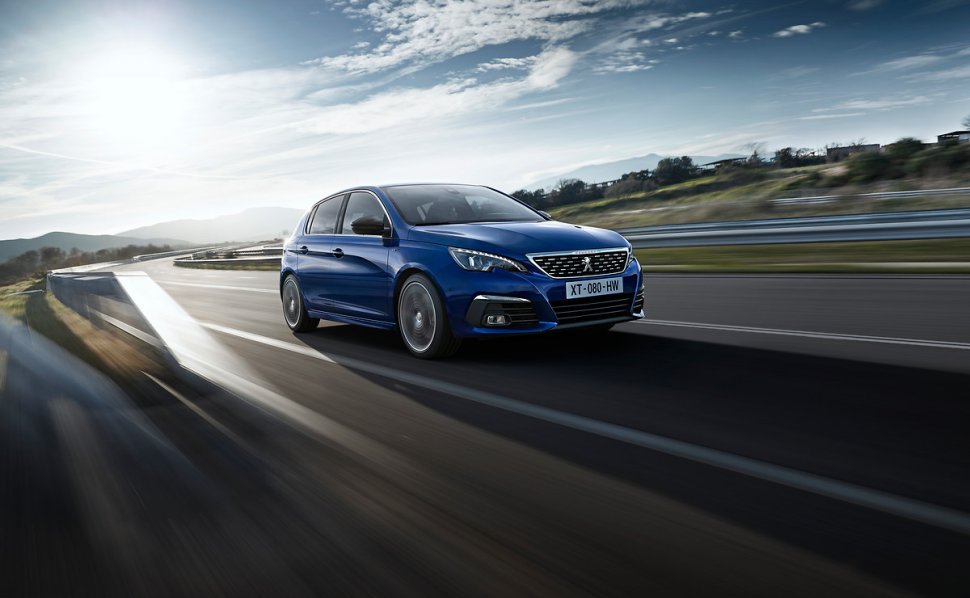
The Peugeot 308 SW II (Phase II), produced from 2017 to 2018, represents a significant iteration of Peugeot’s compact station wagon, known as the 308 SW. This model, specifically the 1.6 BlueHDi variant with 120 horsepower, was primarily aimed at the European market, where the station wagon body style remains highly popular. It offered a blend of practicality, fuel efficiency, and a relatively sporty driving experience within the competitive C-segment. The “SW” designation in Peugeot nomenclature denotes “Station Wagon,” emphasizing its focus on cargo capacity and family-oriented usability. This Phase II update brought refinements to the original 308 SW II, including styling tweaks, updated technology, and improvements to the already efficient BlueHDi diesel engine.
Peugeot 308 SW II (Phase II): Overview
The 308 SW II (Phase II) 1.6 BlueHDi (120 Hp) is a five-door, five-seat station wagon designed to compete with vehicles like the Volkswagen Golf Estate, Ford Focus Estate, and Skoda Octavia Combi. It distinguished itself through its stylish design, a comfortable interior, and a focus on maximizing space within a relatively compact footprint. The BlueHDi engine, a key feature of this model, was designed to meet stringent Euro 6 emissions standards, offering a balance between performance and environmental responsibility. While not officially sold in the United States, understanding its specifications and features provides insight into the preferences and demands of the European automotive market.
Engine & Performance
The heart of the 308 SW II (Phase II) 1.6 BlueHDi is a 1.6-liter inline four-cylinder diesel engine, designated BHZ DV6FC. This engine produces 120 horsepower at 3500 rpm and a substantial 300 Nm (221.27 lb.-ft.) of torque at 1750 rpm. The engine utilizes a turbocharger and intercooler to enhance performance and efficiency. Power is delivered to the front wheels via a six-speed manual transmission. Acceleration from 0 to 100 km/h (0-62 mph) takes between 9.9 and 10.7 seconds, while 0 to 60 mph is achieved in approximately 9.4 seconds. The vehicle boasts a maximum speed of 189-195 km/h (117.44 – 121.17 mph). A key strength of this powertrain is its fuel economy, achieving between 3.2 and 3.9 liters per 100 kilometers (73.5 – 60.3 US mpg) on the combined cycle, with CO2 emissions ranging from 96 to 102 g/km, adhering to Euro 6 emission standards.
Design & Features
The 308 SW II (Phase II) features a classic station wagon profile, characterized by its extended roofline and generous cargo area. The Phase II update included subtle styling revisions to the front and rear fascias, enhancing its modern appearance. Inside, the cabin is designed with practicality and comfort in mind. The 308 SW offers a spacious interior for passengers, and the rear seats can be folded down to significantly increase cargo capacity. With the rear seats up, the trunk provides 610 liters (21.54 cu. ft.) of space, expanding to a substantial 1660 liters (58.62 cu. ft.) when folded. Standard features typically included air conditioning, power windows, and a basic audio system. Higher trim levels offered features such as a touchscreen infotainment system, navigation, and advanced driver-assistance systems. Safety features, crucial in modern vehicles, included ABS (Anti-lock Braking System) and multiple airbags.
Technical Specifications
| Brand | Peugeot |
| Model | 308 |
| Generation | 308 SW II (Phase II, 2017) |
| Type (Engine) | 1.6 BlueHDi (120 Hp) |
| Start of production | 2017 |
| End of production | 2018 |
| Powertrain Architecture | Internal Combustion engine |
| Body type | Station wagon (estate) |
| Seats | 5 |
| Doors | 5 |
| Fuel consumption (urban) | 3.6-4.7 l/100 km (65.3 – 50 US mpg) |
| Fuel consumption (extra urban) | 3.0-3.5 l/100 km (78.4 – 67.2 US mpg) |
| Fuel consumption (combined) | 3.2-3.9 l/100 km (73.5 – 60.3 US mpg) |
| CO2 emissions | 96-102 g/km |
| Fuel Type | Diesel |
| Acceleration 0 – 100 km/h | 9.9-10.7 sec |
| Acceleration 0 – 62 mph | 9.9-10.7 sec |
| Acceleration 0 – 60 mph | 9.4 sec |
| Maximum speed | 189-195 km/h (117.44 – 121.17 mph) |
| Emission standard | Euro 6 |
| Weight-to-power ratio | 10.8 kg/Hp |
| Weight-to-torque ratio | 4.3 kg/Nm |
| Power | 120 Hp @ 3500 rpm |
| Torque | 300 Nm @ 1750 rpm (221.27 lb.-ft. @ 1750 rpm) |
| Engine layout | Front, Transverse |
| Engine Model/Code | BHZ DV6FC |
| Engine displacement | 1560 cm3 (95.2 cu. in.) |
| Number of cylinders | 4 |
| Engine configuration | Inline |
| Number of valves per cylinder | 4 |
| Fuel injection system | Diesel Commonrail |
| Engine aspiration | Turbocharger, Intercooler |
| Engine oil capacity | 3.75 l (3.96 US qt | 3.3 UK qt) |
| Kerb Weight | 1295-1459 kg (2854.99 – 3216.54 lbs.) |
| Max. weight | 1870-1900 kg (4122.64 – 4188.78 lbs.) |
| Max load | 441-575 kg (972.24 – 1267.66 lbs.) |
| Trunk (boot) space – minimum | 610 l (21.54 cu. ft.) |
| Trunk (boot) space – maximum | 1660 l (58.62 cu. ft.) |
| Fuel tank capacity | 52.5 l (13.87 US gal | 11.55 UK gal) |
| Length | 4585 mm (180.51 in.) |
| Width | 1804 mm (71.02 in.) |
| Height | 1472 mm (57.95 in.) |
| Wheelbase | 2730 mm (107.48 in.) |
| Drive wheel | Front wheel drive |
| Number of gears | 6 gears, manual transmission |
The Peugeot 308 SW II (Phase II) 1.6 BlueHDi (120 Hp) represents a well-rounded package for those seeking a practical and efficient station wagon. Its combination of fuel economy, spaciousness, and comfortable driving experience made it a popular choice in the European market. While not available in the US, it exemplifies the design and engineering priorities of European automakers focused on maximizing utility and minimizing environmental impact.