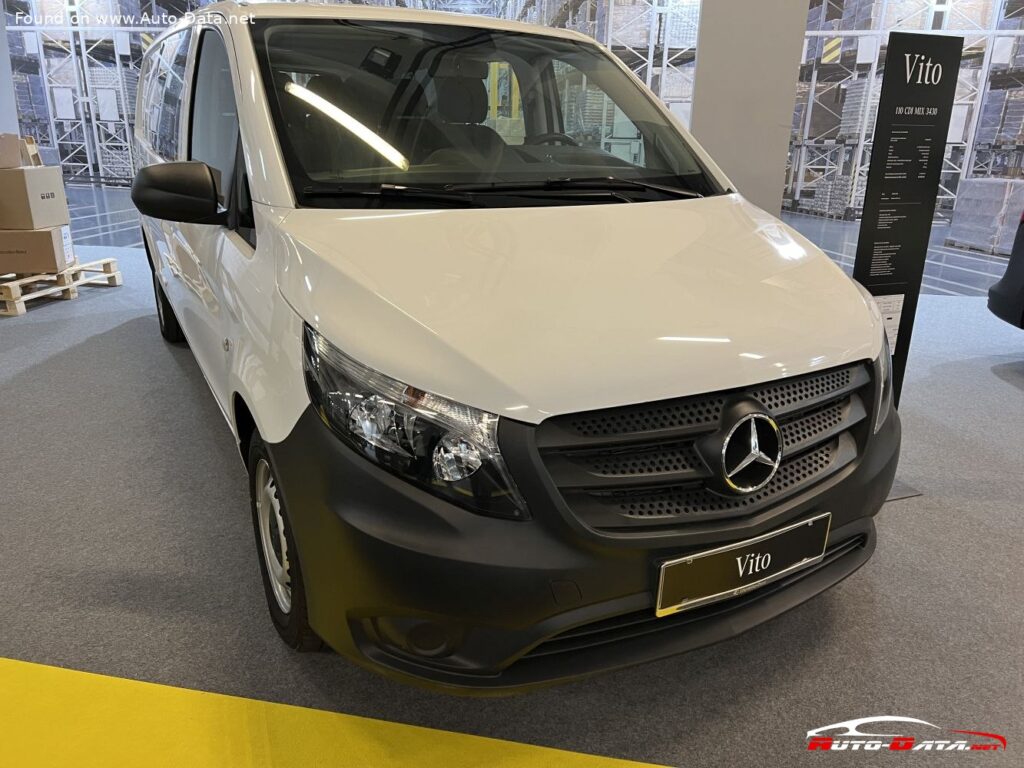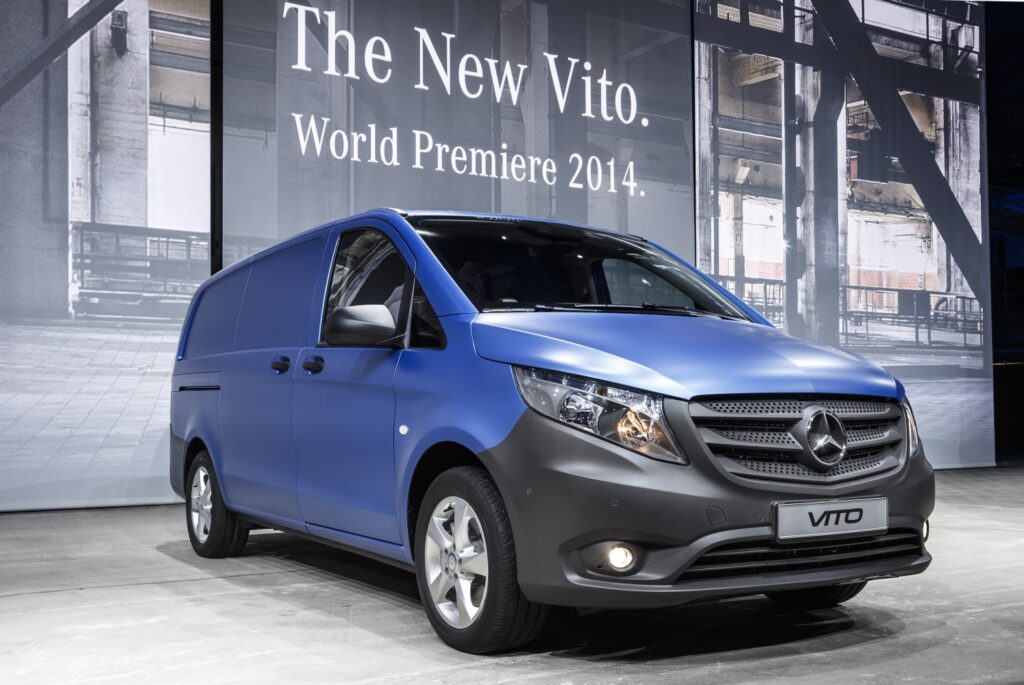
The Mercedes-Benz Vito (W447) is a light commercial vehicle produced by Mercedes-Benz. Introduced in 2014, the W447 generation represented a significant overhaul of the Vito line, offering increased efficiency, improved technology, and a wider range of configurations. This article focuses on the Panel Van Long 116 CDI BlueEFFICIENCY variant, equipped with a 2.1-liter diesel engine producing 163 horsepower and paired with a 7G-TRONIC PLUS automatic transmission. The Vito, while not directly sold in the United States in this configuration, is a popular choice in European and other international markets as a versatile workhorse for businesses and tradespeople.
Mercedes-Benz Vito W447: Overview
The W447 Vito occupies the mid-size van segment, competing with vehicles like the Volkswagen Transporter, Ford Transit, and Renault Trafic. It’s available in a variety of body lengths and heights, catering to diverse commercial needs. The “Panel Van Long” designation indicates an extended wheelbase and cargo area, maximizing usable space. The “116 CDI BlueEFFICIENCY” signifies the engine output (approximately 163 horsepower) and Mercedes-Benz’s efficiency-focused engineering package. The BlueEFFICIENCY models incorporated features designed to reduce fuel consumption and emissions.
Market Positioning
In Europe, the Vito is a mainstay for delivery services, tradespeople, and companies requiring a reliable and adaptable van. Its reputation for build quality, durability, and relatively refined driving experience sets it apart from some competitors. The W447 generation specifically aimed to improve upon the previous model’s shortcomings in terms of fuel economy and interior comfort.
Engine & Performance
The Vito 116 CDI BlueEFFICIENCY is powered by the OM 651.950, a 2.143-liter (130.77 cubic inches) inline-four cylinder diesel engine. This engine utilizes a bi-turbocharger system with an intercooler, delivering 163 horsepower at 3800 rpm and a substantial 380 Nm (280.27 lb.-ft.) of torque between 1400 and 2400 rpm. The engine features a diesel commonrail fuel injection system and a double overhead camshaft (DOHC) valvetrain with four valves per cylinder. A compression ratio of 16.2:1 contributes to efficient combustion.
Power is delivered to the rear wheels via a 7G-TRONIC PLUS seven-speed automatic transmission. This transmission is known for its smooth shifting and contributes to the van’s relatively refined driving experience. The inclusion of a Start & Stop system further enhances fuel efficiency by automatically shutting off the engine when the vehicle is stationary. The engine meets Euro 6b N1 emission standards, incorporating a particulate filter to reduce harmful emissions.
Fuel economy figures, measured using the New European Driving Cycle (NEDC), are rated at 5.7-5.8 liters per 100 kilometers combined (41.3-40.6 US mpg, 49.6-48.7 UK mpg), with urban consumption ranging from 6.6-6.7 l/100 km (35.6-35.1 US mpg) and extra-urban figures of 5.2-5.3 l/100 km (45.2-44.4 US mpg). CO2 emissions are rated between 150-153 g/km.
Design & Features
The Mercedes-Benz Vito W447 Panel Van Long is a four or five-door van designed primarily for commercial use. Its body style prioritizes practicality and cargo capacity. The long wheelbase provides a generous cargo volume of 6000 liters (211.89 cubic feet). The vehicle’s design emphasizes functionality, with a focus on maximizing usable space and ease of loading.
The W447 generation introduced a more modern and car-like interior compared to its predecessor. While still focused on durability, the cabin features improved materials and ergonomics. Standard safety features include ABS (Anti-lock Braking System). The Vito also benefits from electric power steering, providing a lighter and more responsive steering feel. The vehicle’s suspension consists of an independent McPherson strut setup at the front and an independent coil spring trailing arm arrangement at the rear, balancing ride comfort with load-carrying capability.
Technical Specifications
| Brand | Mercedes-Benz |
| Model | Vito |
| Generation | Vito (W447) Panel Van Long |
| Type | 116 CDI BlueEFFICIENCY (163 Hp) 7G-TRONIC PLUS |
| Start of production | August, 2014 |
| End of production | 2018 |
| Powertrain Architecture | Internal Combustion engine |
| Body type | Van |
| Seats | 2-3 |
| Doors | 4-5 |
| Fuel consumption (urban) | 6.6-6.7 l/100 km (35.6 – 35.1 US mpg) |
| Fuel consumption (extra urban) | 5.2-5.3 l/100 km (45.2 – 44.4 US mpg) |
| Fuel consumption (combined) | 5.7-5.8 l/100 km (41.3 – 40.6 US mpg) |
| CO2 emissions | 150-153 g/km |
| Fuel Type | Diesel |
| Emission standard | Euro 6b N1 |
| Power | 163 Hp @ 3800 rpm |
| Torque | 380 Nm @ 1400-2400 rpm (280.27 lb.-ft. @ 1400-2400 rpm) |
| Maximum engine speed | 4550 rpm |
| Engine layout | Front, Longitudinal |
| Engine Model/Code | OM 651.950 |
| Engine displacement | 2143 cm3 (130.77 cu. in.) |
| Number of cylinders | 4 |
| Engine configuration | Inline |
| Cylinder Bore | 83 mm (3.27 in.) |
| Piston Stroke | 99 mm (3.9 in.) |
| Compression ratio | 16.2:1 |
| Engine oil capacity | 10.5 l (11.1 US qt | 9.24 UK qt) |
| Coolant capacity | 10.4 l (10.99 US qt | 9.15 UK qt) |
| Max. weight | 2800-3200 kg (6172.94 – 7054.79 lbs.) |
| Trunk (boot) space (minimum) | 6000 l (211.89 cu. ft.) |
| Fuel tank capacity | 57 l (15.06 US gal | 12.54 UK gal) |
| Max. roof load | 150 kg (330.69 lbs.) |
| Permitted trailer load (braked) | 2000 kg (4409.25 lbs.) |
| Permitted trailer load (unbraked) | 750 kg (1653.47 lbs.) |
| Length | 5140 mm (202.36 in.) |
| Width | 1928 mm (75.91 in.) |
| Height | 1910 mm (75.2 in.) |
| Wheelbase | 3200 mm (125.98 in.) |
| Drivetrain | Rear wheel drive |
| Gearbox | 7 gears, automatic transmission G-TRONIC PLUS |
| Front suspension | Independent, McPherson with coil spring and anti-roll bar |
| Rear suspension | Independent coil spring, Trailing arm |
| Front brakes | Ventilated discs |
| Rear brakes | Disc |
| Tire size | 205/65 R16; 225/60 R16; 225/55 R17; 245/45 R18; 245/45 R19 |
The Mercedes-Benz Vito W447 116 CDI BlueEFFICIENCY represents a well-rounded package for commercial users, combining practicality, efficiency, and a degree of refinement uncommon in its class. Its robust diesel engine, comfortable interior, and versatile configuration made it a popular choice in the European van market.